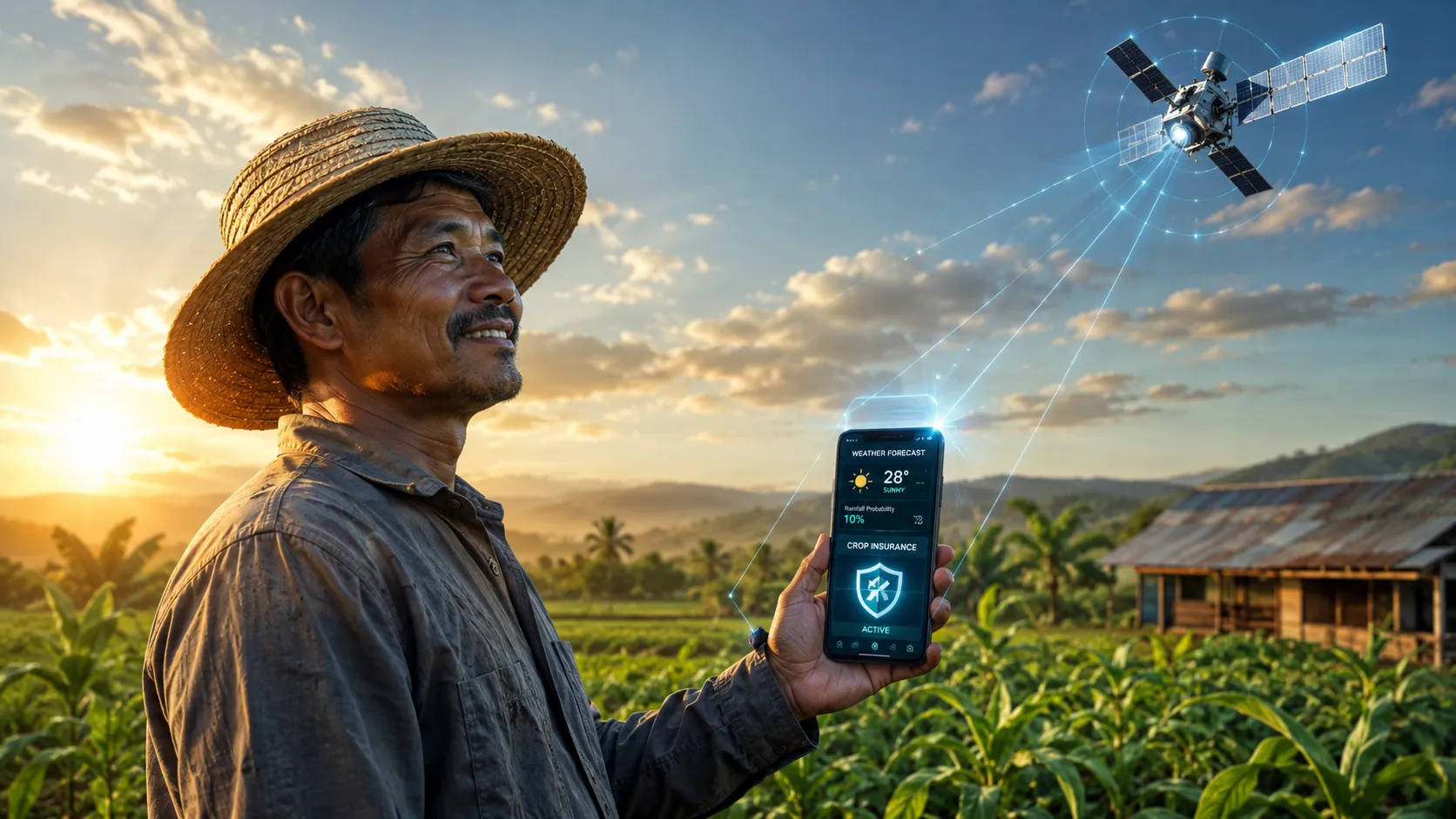
For generations, smallholder farmers have operated as the incredibly resilient yet deeply fragile foundation of our global food supply chain. Producing a vast majority of the sustenance consumed across developing nations, these hardworking individuals paradoxically remain 5. Picture-Based Insurancethe most financially vulnerable demographic on the planet when exposed to the escalating erraticism of our modern climate. A single agricultural season plagued by delayed monsoons, an unexpected catastrophic flash flood, or a prolonged unseasonable heatwave can entirely obliterate a household’s annual income. This forces families to sell off vital assets, pulls children out of local schools, and pushes entire rural communities into an unforgiving cycle of generational debt and poverty. Historically, the traditional indemnity-based crop insurance industry fundamentally failed this specific demographic. The sheer logistical and administrative costs associated with deploying human insurance adjusters to inspect remote, fragmented one-hectare rural plots were simply astronomical. Consequently, this led to exorbitant premium pricing that no rural subsistence farmer could ever practically afford. Furthermore, the manual claims process could easily take several months to finalize, with the desperate capital arriving long after the farmer actually needed it to replant their devastated fields.
However, as we progress deeply into 2026, the global landscape of agricultural risk management has experienced a radical, fundamental paradigm shift. A highly synergistic convergence of modern financial technology, next-generation space-based earth observation, and decentralized digital networking has finally transformed rural micro-insurance. It is now scalable, highly affordable, and profoundly reliable for the rural masses. Innovators operating within the agricultural technology and InsurTech spaces have decisively abandoned slow, reactive, and manual business models in favor of highly proactive, automated, and digital-first ecosystems. Let us deeply explore the top five transformative crop insurance innovations that are currently shielding vulnerable smallholder farmers from devastating climate shocks, ensuring localized food security, and cultivating unprecedented economic resilience at the absolute grassroots level.
1. Hyper-Local Parametric Insurance Powered by Next-Gen Satellite Swarms
The single greatest operational leap forward in the realm of agricultural insurance has undoubtedly been the technological maturation and mass global adoption of parametric insurance models. Unlike traditional, legacy insurance policies that mandate a physical, post-event assessment of structural or agricultural damage to authorize a payout, parametric insurance operates entirely differently. It automatically triggers a predefined financial payout when a specific, mutually agreed-upon environmental parameter is officially breached. This specific parameter could be anything from a defined number of consecutive days without measurable rainfall, to sustained wind speeds exceeding a certain destructive threshold, or extreme temperature spikes occurring during a crop’s most critical vegetative growth phase.
What makes this specific mechanism truly revolutionary in 2026 is the sheer, unprecedented high resolution of the data currently powering these environmental parameters. We are thankfully no longer reliant on outdated regional weather stations that might be fifty or a hundred miles away from a farmer’s actual plot—a flawed system which frequently led to highly inaccurate and frustrating weather assessments. Today, privately deployed satellite constellations, utilizing a powerful combination of ultra-high-resolution optical imagery and Synthetic Aperture Radar (SAR), monitor the earth’s surface continuously. These sophisticated low-earth orbit satellite swarms can accurately measure surface-level soil moisture and track microscopic vegetation health indexes down to a remarkable three-square-meter resolution. SAR technology is particularly vital in tropical and equatorial farming regions because its advanced radar capabilities can penetrate thick, heavy cloud cover, providing uninterrupted, mission-critical data streams even during the most intense heavy monsoon seasons.
Because the insurance payout trigger is completely objective and determined entirely by raw, unalterable satellite data rather than highly subjective human assessment, basis risk has been virtually eliminated. Basis risk—the frustrating mismatch between the actual physical financial loss experienced by the farmer and the eventual financial payout received—was once the greatest hurdle to parametric adoption. Now, when the satellite network confirms a severe, localized drought condition for a specific geolocated farm, the required payout is triggered automatically within the backend system. This entirely eliminates the costly need for human loss adjusters to travel out to the physical site, allowing insurance companies to massively slash their administrative overhead costs and dramatically reduce policy premiums to a micro-price point that smallholder farmers can finally, comfortably afford.
2. Blockchain Smart Contracts and Automated Claims Processing
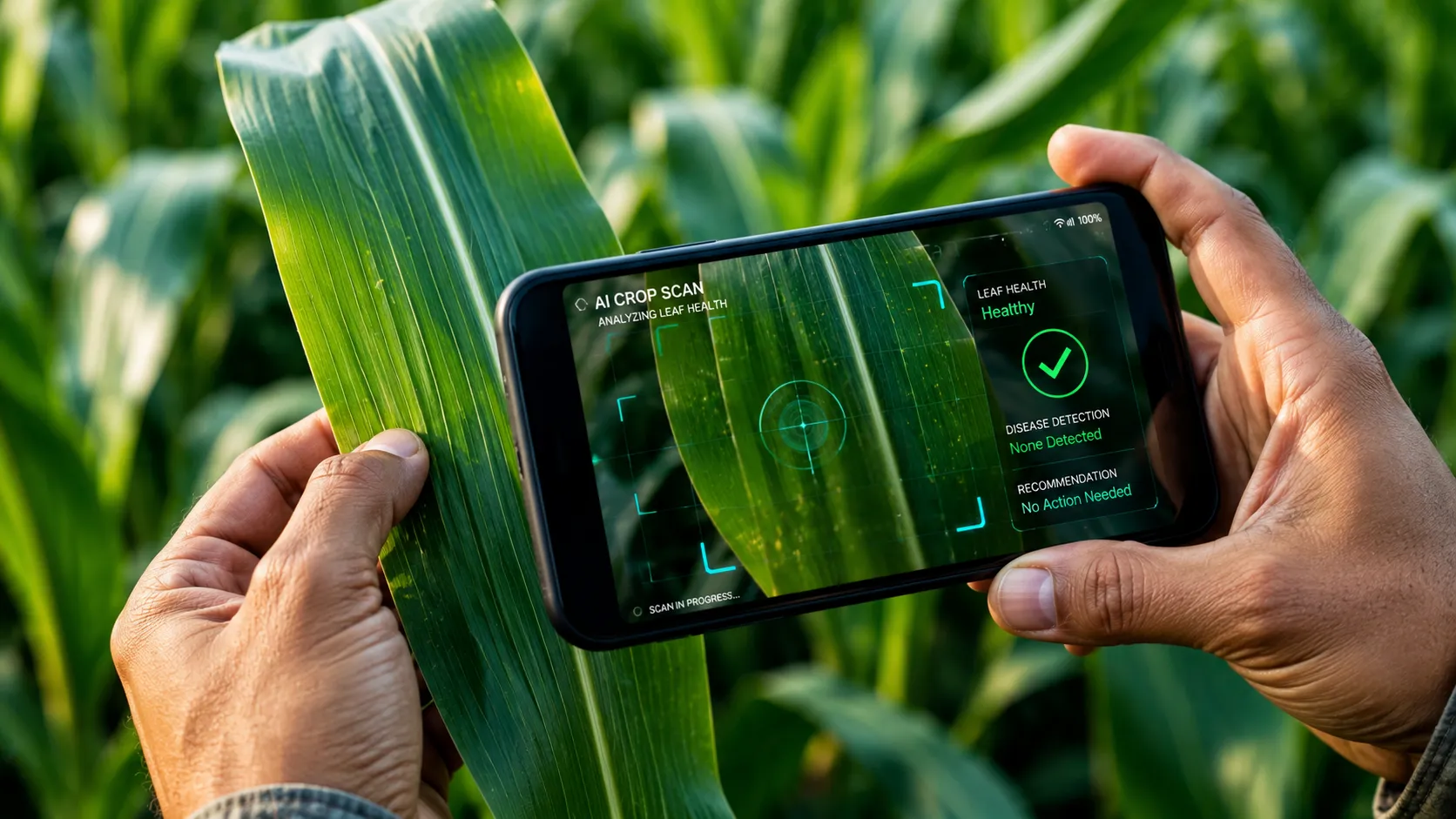
Institutional trust has always acted as a massive, historical barrier preventing widespread financial inclusion in remote rural agricultural areas. Smallholder farmers are entirely justified in their hesitation to part with their incredibly scarce cash reserves for an intangible, paper-based promise of a potential future payout. This is especially true when their historical, generational experiences with bureaucratic financial institutions have been largely characterized by endless, frustrating delays, systemic corruption, or arbitrarily denied insurance claims. To permanently bridge this deep trust gap and foster genuine adoption, the modern agricultural insurance sector has widely integrated blockchain technology and highly automated smart contracts to manage and execute policies.
In the functional reality of 2026, a modern crop insurance policy is no longer represented by a dense stack of confusing legal paperwork locked in a filing cabinet; rather, it exists as a self-executing digital agreement coded securely and directly onto an immutable blockchain ledger. When a rural farmer purchases a micro-policy, their premium funds are held securely in a transparent, fully automated digital escrow account. The smart contract governing the exact terms of the policy is directly connected to decentralized weather oracles. These oracles serve as highly secure data pipelines, linking directly to the aforementioned orbital satellite arrays and hyper-local Internet of Things (IoT) field weather sensors positioned in the soil.
The exact moment the digital oracle verifies beyond a shadow of a doubt that a critical climate parameter has been breached, the smart contract immediately executes the financial payout autonomously, entirely devoid of any human intervention or manual approval. There is absolutely no claims department required to review the file, no institutional middleman taking an administrative cut, and absolutely no possibility for the insurer to arbitrarily deny a perfectly valid claim. Payouts are routed directly and instantly to the farmer’s registered mobile money wallet, very often arriving within 24 to 48 hours of the disruptive extreme weather event. This unprecedented speed is absolutely critical for agricultural recovery and rural stability; it provides the farmer with immediate, unrestricted financial liquidity. They can use this capital to immediately buy drought-resistant, short-cycle seeds and replant their fields before the entire growing season is completely lost, effectively transforming what used to be an existential household financial crisis into a highly manageable operational hiccup.
3. AI-Driven Predictive Risk Modeling and Early Warning Systems
In the distant past, legacy insurance underwriters relied heavily on analyzing historical weather patterns to price risk and determine policy premiums. However, in our modern era—which is heavily characterized by rapid, violent, and deeply unpredictable climate shifts—historical data is no longer a safe or reliable indicator of future weather events. A localized region that hasn’t experienced a severe flood in over a century might suddenly face back-to-back catastrophic inundations. To conclusively solve this complex pricing crisis, the agricultural finance sector has pivoted heavily toward the utilization of advanced Artificial Intelligence and complex, deep-learning algorithms.
Modern AI risk assessment models deployed by the world’s leading insurance firms now smoothly ingest billions of unique data points on a daily basis. They rigorously analyze long-term global climate projections, highly localized topographical mapping, historical regional soil health records, real-time ocean current temperatures, and even shifting global macroeconomic supply chain trends. By continuously processing this massive, overwhelming volume of raw data, AI systems can predict the exact likelihood of localized crop failures with a stunning degree of statistical accuracy. This allows for highly dynamic, customized, and precise premium pricing that accurately reflects the real-time risk environment of a specific one-hectare plot.
Shifting from Reactive Compensation to Proactive Mitigation
Even more importantly, this incredibly advanced AI capability has successfully transformed traditional crop insurance from a purely reactive, post-disaster payout mechanism into a highly proactive agricultural advisory service. Innovative digital platforms now utilize their predictive AI models to automatically send hyper-local early warning SMS messages directly to their policyholders’ mobile phones. If the artificial intelligence engine predicts an 80% statistical probability of a severe, crop-killing frost within a specific, localized valley, it immediately alerts the subscribed farmers several days in advance, advising them on urgent, specific protective measures to take.
Taking this a step further, some of the most innovative insurance models operating in 2026 even offer the concept of “preventative payouts.” These systems disburse small, calculated amounts of capital ahead of an impending, highly probable extreme weather event. This capital injection allows vulnerable farmers to rapidly purchase protective physical tarps, secure emergency irrigation fuel, or hire emergency labor to harvest early, actively preventing the catastrophic crop loss before it even has the chance to happen. It is a brilliant pivot from managing disaster to actively funding resilience.
4. Mobile Money Integrations for Micro-Premium Ecosystems
The most advanced orbital satellite data and sophisticated artificial intelligence models in the world are entirely useless if the end-user—the rural farmer—cannot physically access or purchase the insurance policy. Given that the vast majority of the world’s 500 million smallholder farmers remain fundamentally unbanked and continue to operate strictly within informal, paper-cash economies, traditional payment routing and premium collection presented a massive logistical hurdle. The definitive, world-changing solution has been the deep, seamless technical integration of digital crop insurance products directly with rural mobile money telecommunication networks.
As of 2026, digital mobile money platforms are utterly ubiquitous across Sub-Saharan Africa, Southeast Asia, and deeply rural parts of Latin America. Insurance providers have strategically formed deep, symbiotic partnerships with regional telecommunications giants to create highly accessible micro-premium ecosystems. Farmers are thankfully no longer required to scrape together and pay a massive lump sum at the very beginning of the planting season—which is traditionally the precise time of year when their cash reserves are completely depleted. Instead, they can easily pay their micro-premiums digitally over time. They sometimes contribute just a few cents a day or can simply choose to seamlessly round up their daily mobile money transactions (like buying mobile data or paying a utility bill) to fund their insurance policy incrementally.
Furthermore, we are currently witnessing the widespread, phenomenal success of “bundled” agricultural products. When a rural farmer visits a local agro-dealer to purchase a 50kg bag of certified hybrid seeds or high-quality commercial fertilizer, they simply scan a QR code located on the bag with their basic smartphone or USSD-enabled feature phone. The total point-of-sale cost of the physical seeds actually includes a tiny, deeply embedded insurance premium. The farmer’s mobile phone number and exact geographic location are automatically registered into the parametric insurance backend system upon completion of the purchase. If the seasonal rains fail and the expensive seeds cannot properly germinate, the farmer automatically receives a swift mobile money refund for the original cost of those agricultural inputs, ensuring they are not pushed into crippling, high-interest debt by a completely failed planting cycle.
5. Picture-Based Insurance (PBI) Using Advanced Computer Vision
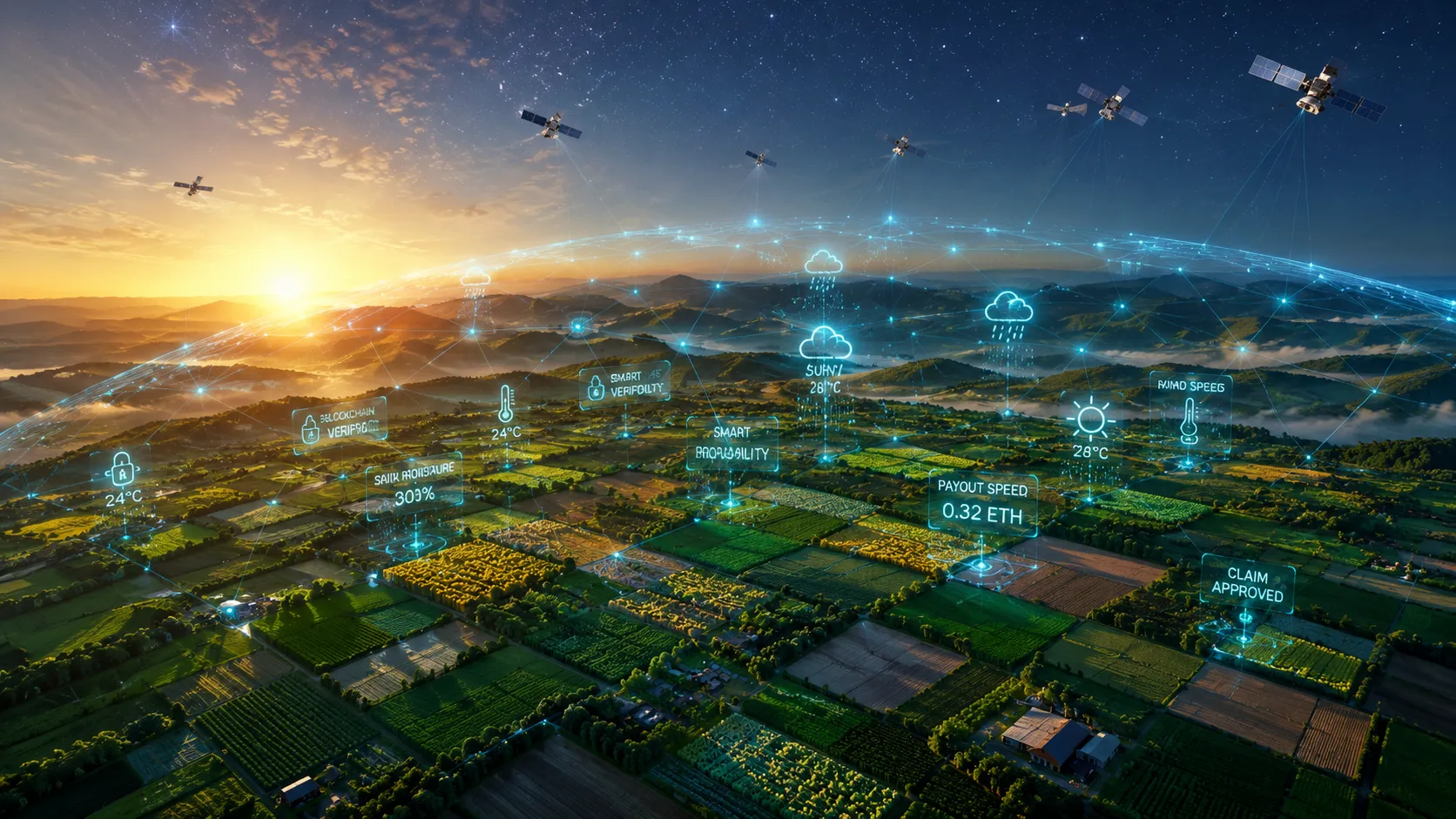
While parametric insurance triggered by high-altitude orbital satellites is exceptionally excellent for monitoring and covering wide-scale weather events like regional, sprawling droughts or massive flood plains, it admittedly struggles with highly localized, non-weather-related agricultural perils. Satellites cannot easily or reliably detect highly localized insect pest infestations, specific localized crop diseases like wheat rust or corn smut, or isolated hail damage that might only violently affect one side of a single, narrow valley. To effectively and permanently cover these operational blind spots, Picture-Based Insurance (PBI) has emerged as a truly groundbreaking complementary technology.
PBI fully leverages the massive, rapidly growing global penetration of low-cost, camera-enabled smartphones in remote rural communities. Throughout the active growing season, insured farmers are simply required to take regular, highly geo-tagged, and time-stamped digital photographs of their developing crops through a specialized, incredibly lightweight mobile application. These uploaded photos create a dense, undeniable visual timeline of the specific crop’s health and development stage. If a highly localized destructive event occurs—such as a sudden, devastating swarm of locusts completely destroying a specific field while leaving the neighbor’s field untouched—the farmer simply uploads the current visual evidence of the damage to the digital platform.
Rather than dispatching a human agent to drive out and manually verify the photos, highly advanced computer vision algorithms instantly analyze the uploaded imagery. The AI rapidly compares the damaged leaves and stalks to massive, cloud-based visual databases of global agricultural pathology. It can accurately assess the exact percentage of crop destruction within a matter of seconds. This ground-level visual data effectively acts as a precise localized index, perfectly bridging the vast gap between macro-level satellite observations and the intense micro-level realities of individual farm plots. It strongly empowers the farmer, making them an active, essential participant in the monitoring and claims process, while providing insurers with indisputable, timestamped visual evidence of highly localized claims, dramatically reducing insurance fraud in the process.
The Broader Impact on Global Food Security and Economic Resilience
The intentional financial stabilization of smallholder farmer incomes through these incredible, synergistic technological innovations has a profound, cascading ripple effect on overall global food security. When rural farmers are forced to operate entirely without a reliable financial safety net, they are inherently forced to be highly risk-averse. They naturally tend to stick to low-yield, traditional seed varieties that require minimal upfront financial investment. They actively avoid purchasing high-yield commercial seeds or essential, yield-boosting fertilizers because the absolute financial ruin of a failed harvest is simply too massive a risk for their family to bear.
By effectively providing a guaranteed, rapid-payout financial safety net, these modern insurance innovations fundamentally alter the operational psychology of rural farming. Financially protected, insured farmers are statistically far more likely to invest heavily in improving their land, purchase better, higher-quality inputs, and actively adopt modern, highly sustainable agricultural practices. They rapidly and confidently transition from mere subsistence survival to operating a highly profitable agribusiness. This significant, measurable increase in localized agricultural yield not only directly feeds the immediate surrounding community but also actively stabilizes regional food prices and drastically reduces national reliance on expensive international food aid imports.
Conclusion
As we thoroughly analyze the agricultural and financial landscape of 2026, it is abundantly clear that consumer technology has finally caught up with the urgent, systemic needs of the world’s most vulnerable food producers. The brilliant, seamless fusion of orbital satellite surveillance, unalterable blockchain smart contracts, predictive artificial intelligence, frictionless mobile money payments, and granular computer vision has entirely dismantled the traditional, legacy barriers that previously made rural micro-crop insurance an absolute impossibility. These top five transformative innovations are not merely protecting seasonal crops; they are actively protecting human livelihoods, keeping rural children securely in school, and definitively ensuring that the vital smallholder farmers who physically feed the world are no longer left to face the escalating wrath of a changing global climate alone.