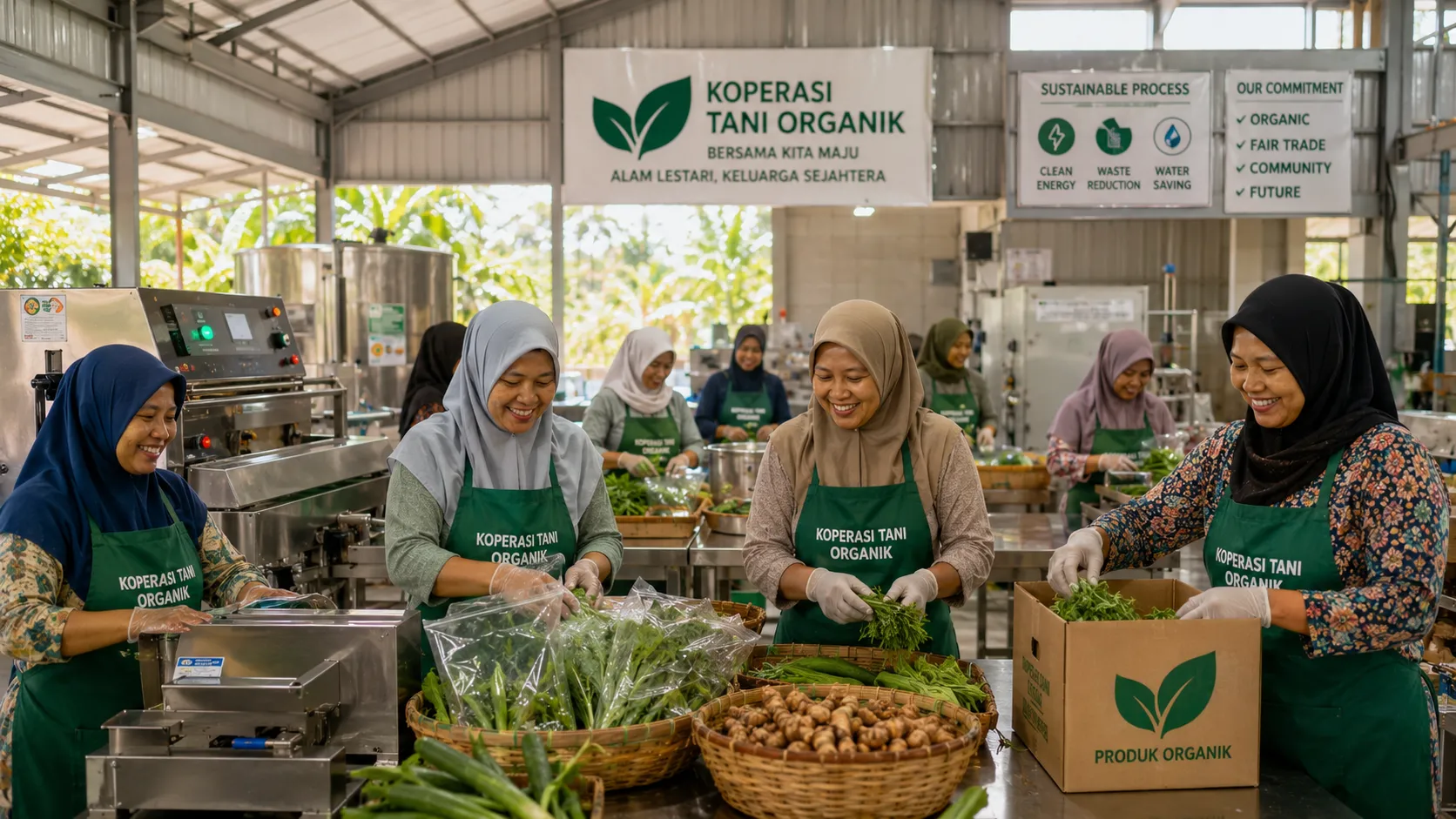
Women-led agricultural cooperatives have emerged as a premier vehicle for channeling international philanthropic capital directly into sustainable rural development. Across developing economies, women perform more than half of the manual labor required to sustain domestic food security and drive local market supply chains. Yet, despite their monumental physical contribution, female farmers face massive, systemic discrimination when attempting to secure formal credit, inherit fertile land parcels, or access specialized commercial training. Traditional financial institutions routinely overlook rural women due to their lack of individual property deeds to offer as traditional collateral, trapping them in low-yield subsistence workflows. However, the global rise of gender-lens investing has completely altered this funding dynamic. By shifting the international deployment of capital away from rigid, legacy commercial banking toward equity-focused philanthropic grants, global foundations are unlocking massive institutional capital pools specifically designed to empower women-led agricultural cooperatives.
Related Insights


As we navigate through the fiscal year 2026, corporate corporate social responsibility (CSR) budgets, international non-governmental organizations (NGOs), and massive private foundations—such as the Bill & Melinda Gates Foundation—are massively accelerating their allocations toward gender-equitable rural interventions. Under the modern Environmental, Social, and Governance (ESG) mandates dictated by international asset managers, development aid is no longer distributed based on basic agricultural utility alone. Funding committees now demand that projects explicitly integrate social justice metrics, proving that their interventions directly narrow the gender wealth gap, improve community health indicators, and foster independent local governance. For project managers and cooperative leaders, this represents a golden era of funding availability. However, securing these highly competitive international green grants requires a sophisticated understanding of how to build data-driven, legally auditable proposal frameworks that cleanly capture the attention of tier-one global philanthropic organizations.
Why Global Philanthropy Prioritizes Women-Led Agricultural Cooperatives
To successfully capture large-scale international grant allocations, project developers must first comprehend the macroeconomic logic driving the gender-lens investing movement. International development research has continuously validated a profound socioeconomic phenomenon known as the multiplier effect of female capital integration. When financial resources are distributed to male heads of households in remote rural areas, capital allocation frequently shifts toward non-essential domestic consumption or external investments.
Conversely, when women-led agricultural cooperatives secure direct financial autonomy, the spending behavior shifts entirely toward community-wide optimization. Female producers statistically allocate up to 90% of their net agricultural earnings directly back into their families’ nutritional security, clean healthcare access, and high-quality children’s schooling. By explicitly supporting women-led agricultural cooperatives, global philanthropic institutions are not simply funding a localized crop enterprise; they are deploying a high-velocity social intervention that systematically eradicates multi-generational poverty, stabilizes regional food supply chains, and accelerates long-term community resilience from the ground up.
The Core Criteria: What International Donors Demands in a Grant Proposal
International foundations will immediately discard grant applications that rely on vague descriptions of local poverty or purely qualitative human-interest stories. Review committees operating within the current ESG funding landscape manage capital with corporate-grade discipline. To pass the rigorous preliminary technical screening phases, a proposal submitted by women-led agricultural cooperatives must demonstrate complete alignment with three non-negotiable operational parameters.
Related Insights

- Rigorous Gender-Disaggregated Data: The proposal must lead with precise, field-level baseline statistics. Developers must quantify the exact current income gap between male and female farmers in the target region, the specific percentage of female land management exclusion, and the precise target yield expansion the grant capital will achieve.
- Verified Social and Health Co-Benefits: Applications must explicitly map out how the agricultural profits generated by the cooperative will systematically improve local child nutrition metrics, expand maternal healthcare access, or support localized educational infrastructure.
- Flawless Administrative Governance: Donors require absolute transparency regarding corporate anti-corruption frameworks, open-book digital accounting systems, and independent financial auditing tracking systems to guarantee that not a single cent of the grant suffers from local bureaucratic leakage.
When these three structural criteria are seamlessly integrated into a single proposal, the application transitions from a localized humanitarian request into a high-integrity, institutional-grade social investment asset, drastically maximizing its competitive edge in the global selection pipeline.
A Strategic Framework for Securing International Philanthropic Grants
Navigating the complex submission pipelines of global donor agencies requires a systematic, step-by-step approach to project architecture. Women-led agricultural cooperatives can maximize their funding eligibility by structuring their implementation timelines around a clear logical framework (logframe) that proves long-term financial self-reliance.
First, the cooperative must establish a clear legal identity that bypasses discriminatory local land ownership laws. By formally registering the enterprise as a collective legal entity, the cooperative can secure multi-decade land management leases, satisfying the permanence requirements demanded by international donors. Second, the technical proposal must detail the exact acquisition of high-yield, climate-smart assets—such as automated solar-powered irrigation pumps, organic bio-pesticides, and cold-storage processing facilities—proving that the operation can maximize its output despite changing environmental conditions. Finally, the budget must include dedicated allocations for ongoing technical training, ensuring that local female producers develop advanced agronomic, administrative, and digital capabilities to operate the tech-enabled hub independently over the long term.

Synergizing Philanthropic Grants with the Wider Rural FinTech Ecosystem
The long-term economic scalability of women-led agricultural cooperatives achieves its maximum potential when the injected international grant capital is directly integrated into existing, data-driven rural financial networks. Non-repayable philanthropic capital should never function as a continuous, permanent crutch; instead, it must serve as the critical foundational launchpad that transitions marginalized female producers into highly bankable participants within the global formal economy.
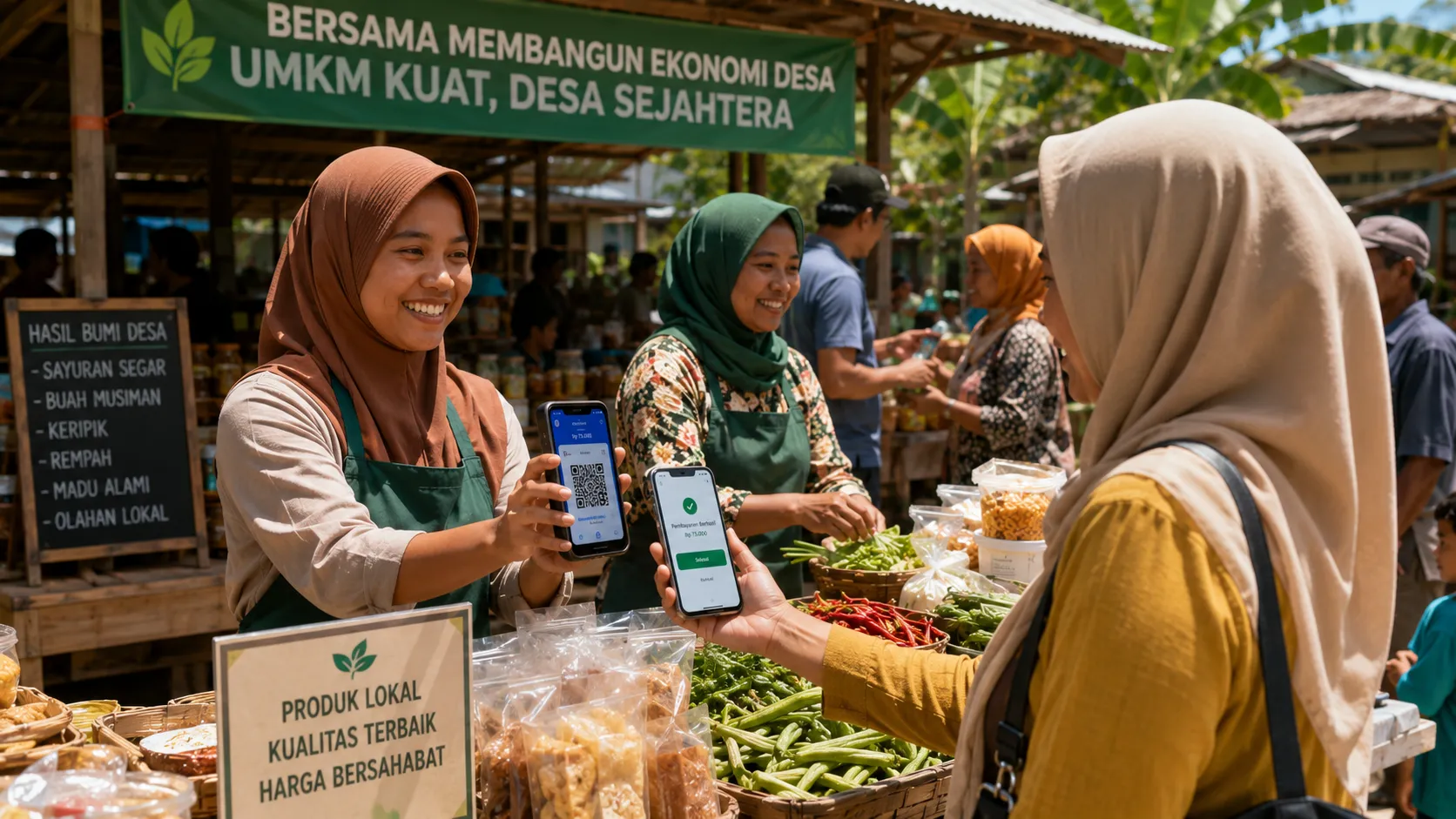
This cross-platform digital integration creates an exceptionally resilient, self-reinforcing financial loop. For example, the reliable baseline infrastructure provided by a philanthropic grant allows cooperative members to easily deploy proximity payment terminals, rapidly driving up localized mobile wallet adoption rates and expanding regional retail commerce. Furthermore, this electronic formalization generates an unalterable transactional ledger that allows thin-file female merchants to seamlessly qualify for advanced de-risking rural credit initiatives and access short-term expansion capital via automated AI-driven credit scoring models. By removing institutional borrowing barriers, women-led agricultural cooperatives can confidently safeguard their fields against climate shocks via automated parametric insurance models, access large-scale structural funding via decentralized peer-to-peer microfinance networks, and participate directly in premium corporate sustainable supply chain finance networks, ensuring the entire community seamlessly qualifies for larger capital pools raised through structured rural green bonds and additional allocations distributed via global international green grants.
According to comprehensive microfinance equity briefs published by the United Nations Entity for Gender Equality and the Empowerment of Women (UN Women), anchoring philanthropic grant administration within transparent digital tracking systems is the single most effective methodology to protect rural women’s enterprises from systemic exploitation. It provides global institutional asset managers with absolute certainty that every single dollar of development capital is deployed directly to field operations, maximizing social returns while eliminating administrative corruption at every single stage of the asset lifecycle.
Conclusion
The global ascension of gender-lens investing marks a permanent, structural evolution in the execution of international development finance, turning the historic challenge of rural gender inequality into a highly secure, data-verified funding opportunity for proactive communities. By replacing rigid, asset-dependent legacy banking underwriting with flexible, impact-driven philanthropic frameworks, the global ESG movement has built an unassailable bridge toward universal economic empowerment. The historical borderlines of geographical isolation, lack of property deeds, and financial invisibility are no longer absolute roadblocks to progress. As digital tracking technologies continue to mature, automated monitoring platforms achieve absolute transparency, and corporate CSR mandate compliance tightens across all international borders, the women-led agricultural cooperatives that confidently design and execute these structured green grant solutions will secure their position as the highly resilient, self-sustaining, and prosperous anchors of the modern global economy.