Parametric insurance has rapidly shifted from a niche financial experiment into the most powerful risk-management tool for global agriculture, completely transforming how vulnerable communities survive environmental shocks. Globally, the agricultural industry is confronting an unprecedented operational crisis brought on by extreme, unpredictable weather patterns. Traditional multi-peril crop insurance models have fundamentally failed smallholder farmers and large-scale agribusinesses alike. The legacy system relies on manual claims verification—requiring human adjusters to physically travel to remote, fragmented plots to assess plant damage. This administrative framework is logistically expensive, plagued by human bias, and notoriously slow, often taking months to disburse critical capital. By the time a traditional payout arrives, the planting season is long gone, forcing rural families into catastrophic debt cycles. However, the integration of parametric insurance with decentralized blockchain technology is permanently disrupting this broken paradigm, replacing slow human bureaucracy with instantaneous, trustless financial protection.
Related Insights
As we navigate through 2026, the convergence of space-based remote sensing, decentralized data frameworks, and automated Web3 infrastructure has created a new era of climate resilience. Institutional crypto exchanges, global insurance brokers, and pioneering InsurTech firms are heavily backing this intersection of agriculture and decentralized finance (DeFi). In this modern ecosystem, smallholders are no longer passive victims of weather volatility. By leveraging self-executing smart contracts, parametric insurance has been compressed from a months-long legal ordeal into a seamless, data-driven transaction that executes in near real-time. This digital evolution is not just expanding financial inclusion; it is actively rewriting global economic safety nets by establishing a borderless, transparent, and highly efficient marketplace for environmental risk transfer.
The Index-Based Blueprint: Decoupling Payouts from Physical Damage
To fully appreciate the revolutionary impact of modern InsurTech, one must first master the core operational differences between traditional indemnity insurance and parametric insurance. Legacy underwriting relies entirely on verifying actual physical crop loss post-disaster, creating massive informational asymmetry and administrative friction. In stark contrast, parametric insurance models decouple payouts from physical crop damage entirely, anchoring the financial policy strictly to verifiable, objective environmental data indices.
A parametric insurance policy is structured around specific, pre-agreed weather thresholds—such as total regional rainfall dropping below a critical millimeter level over a consecutive 30-day vegetative period, or local wind speeds exceeding a specific knot threshold during a tropical storm. Because the underlying parametric insurance measures the environmental cause rather than the physical effect, there is no need to wait for a crop to wither or for an adjuster to verify the destruction. The data itself serves as the ultimate source of truth. This mathematical framework completely eliminates basis risk—the historical mismatch between the actual financial loss experienced by the farmer and the eventual compensation received—allowing providers of parametric insurance to slash operational overhead and offer highly affordable micro-premiums to unbanked rural markets worldwide.
The Architecture of Smart Contracts in Decentralized Underwriting
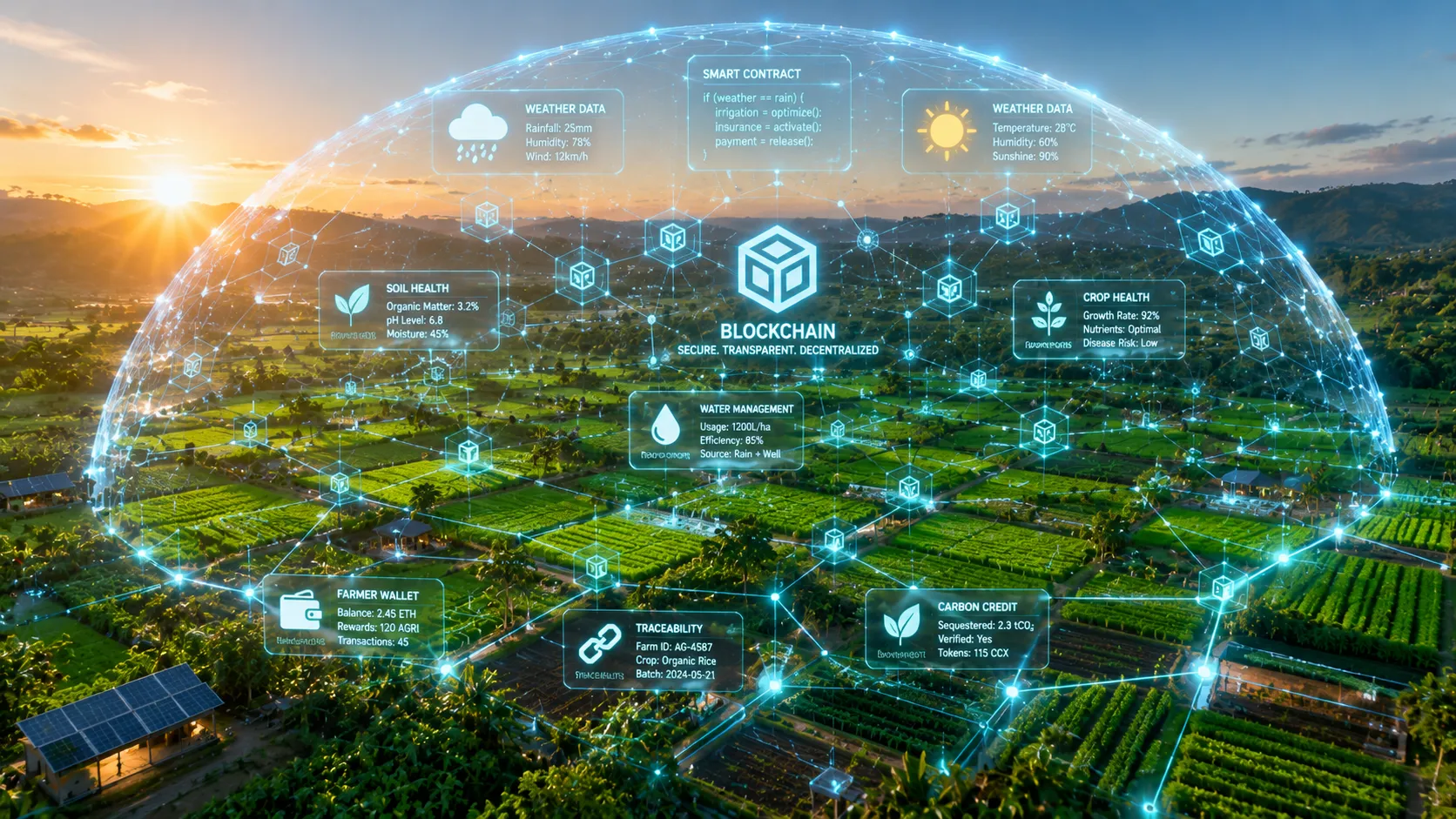
Transforming index-based data into an instantaneous, fraud-proof financial asset requires the deployment of blockchain technology and self-executing smart contracts. In the functional reality of 2026, a modern parametric insurance policy is no longer represented by a dense, confusing paper contract locked away in a corporate vault; rather, the entire agreement is written as immutable software code deployed directly onto a secure, decentralized ledger network.
Related Insights
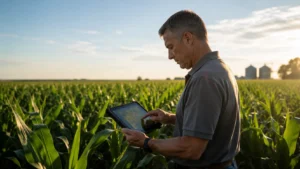
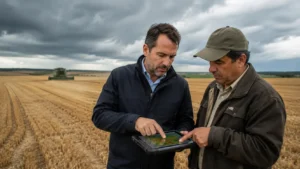
When a farmer or agricultural cooperative purchases a parametric insurance policy, their premium funds are securely deposited into a transparent, automated digital escrow contract. The exact execution rules of the parametric insurance are permanently locked into the network architecture. There are no claims departments to review the file, no legal loop-holes for corporate lawyers to exploit, and absolutely no possibility for the underwriting institution to arbitrarily deny a valid claim. The smart contracts wait silently on the blockchain ledger, continuously listening for verified data inputs. The moment a predefined climate threshold is officially breached, the software executes autonomously, instantly unlocking the digital escrow and routing the appropriate financial compensation directly to the policyholder’s registered mobile wallet without a single second of human delay.
Bridging the Real World with Decentralized Weather Oracles
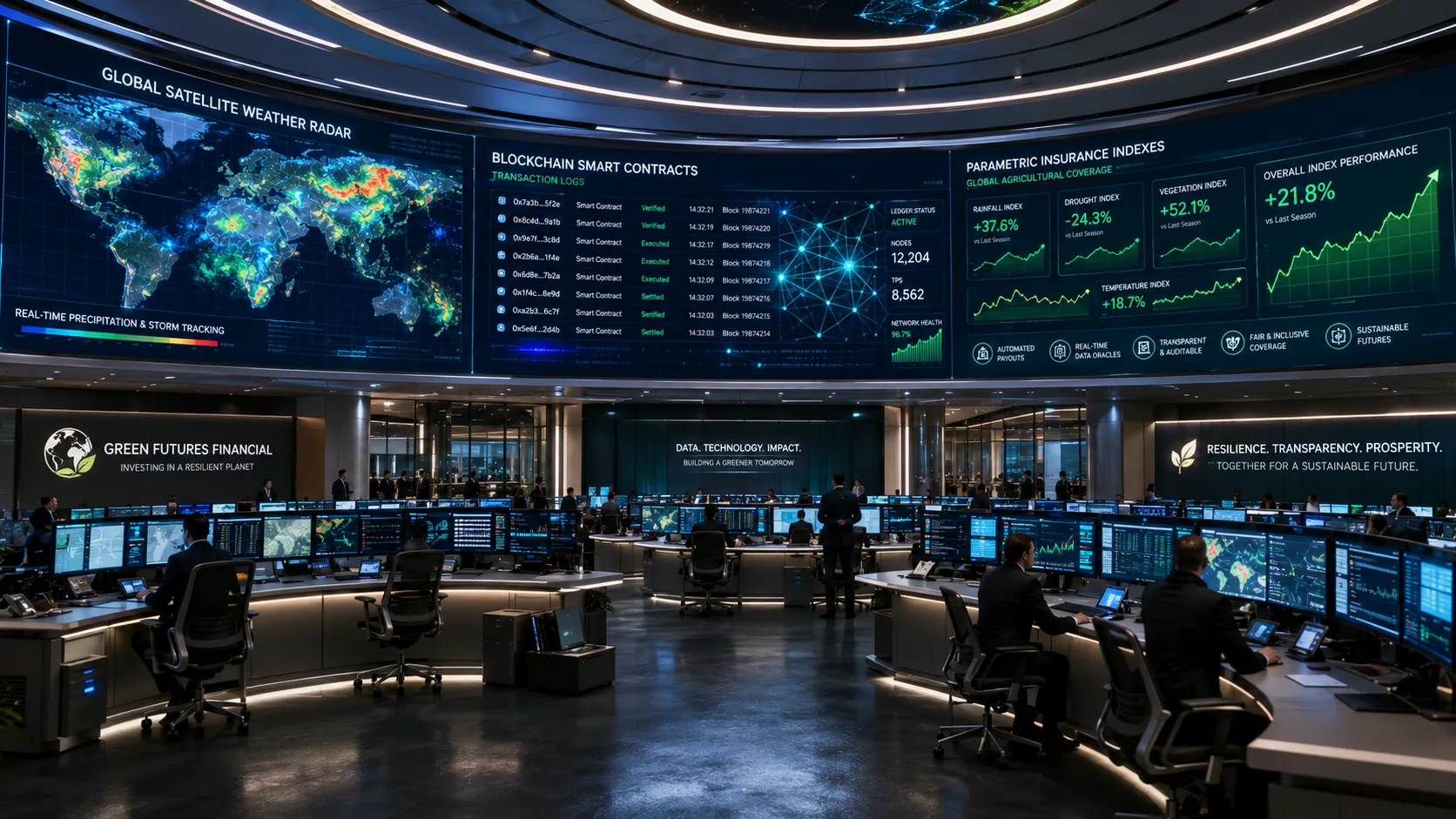
How do smart contracts on a digital blockchain ledger know what is happening in the physical atmosphere of a remote rural village? This critical data bridge is achieved through the integration of decentralized weather oracles. A blockchain network is inherently isolated to maintain maximum cryptographic security; it cannot natively fetch data from external internet sources. Decentralized oracles act as highly secure, tamper-proof data pipelines that continuously ingest real-time environmental metrics from trusted external hardware networks and broadcast them directly onto the ledger to activate the parametric insurance protocols.
Modern oracles aggregate inputs from a diverse multi-layered matrix of advanced telemetry sources:
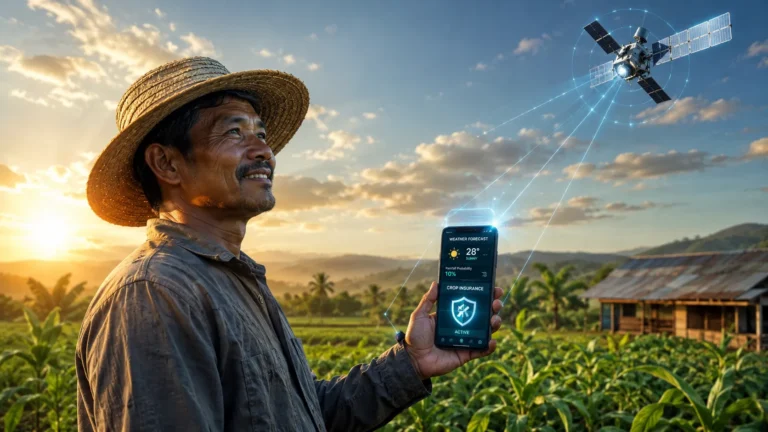
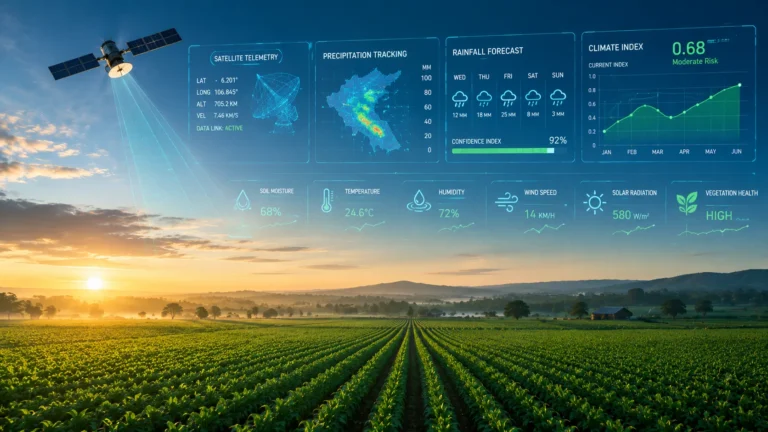
- Synthetic Aperture Radar (SAR) Satellites: Next-generation orbital satellite swarms monitor surface-level soil moisture and track crop vegetation health indexes down to a three-meter resolution, penetrating thick cloud cover seamlessly to verify parametric insurance indices.
- Internet of Things (IoT) Ground Sensors: Automated weather stations installed directly in local fields record exact daily rainfall accumulations, surface temperatures, and ambient humidity metrics for the smart contracts.
- Global Meteorological Registries: Real-time climate tracking networks maintained by international scientific agencies provide independent, cross-verified historical weather data streams for parametric insurance calibration.
By pulling data from multiple independent sources simultaneously, the oracle network applies sophisticated cryptographic consensus algorithms to validate the accuracy of the environmental inputs. This completely prevents malicious data manipulation, ensuring that neither a fraudulent borrower nor a corrupt insurance company can falsify the weather records, guaranteeing absolute data integrity for the parametric insurance ecosystem.
Unparalleled Capital Velocity: Stabilizing Rural Economies
The core macroeconomic benefit of utilizing smart contracts to orchestrate parametric insurance is the radical acceleration of capital velocity during an environmental crisis. In traditional agricultural microfinance, a major climate disaster acts as a long-term economic shockwave. When a severe drought destroys a harvest, the prolonged multi-month delay required to process a manual insurance claim triggers a devastating financial domino effect. Farmers face immediate insolvency, lose their ability to purchase daily domestic necessities, and default on existing agricultural loans, effectively paralyzing the entire localized village marketplace. This is where modern parametric insurance changes everything.
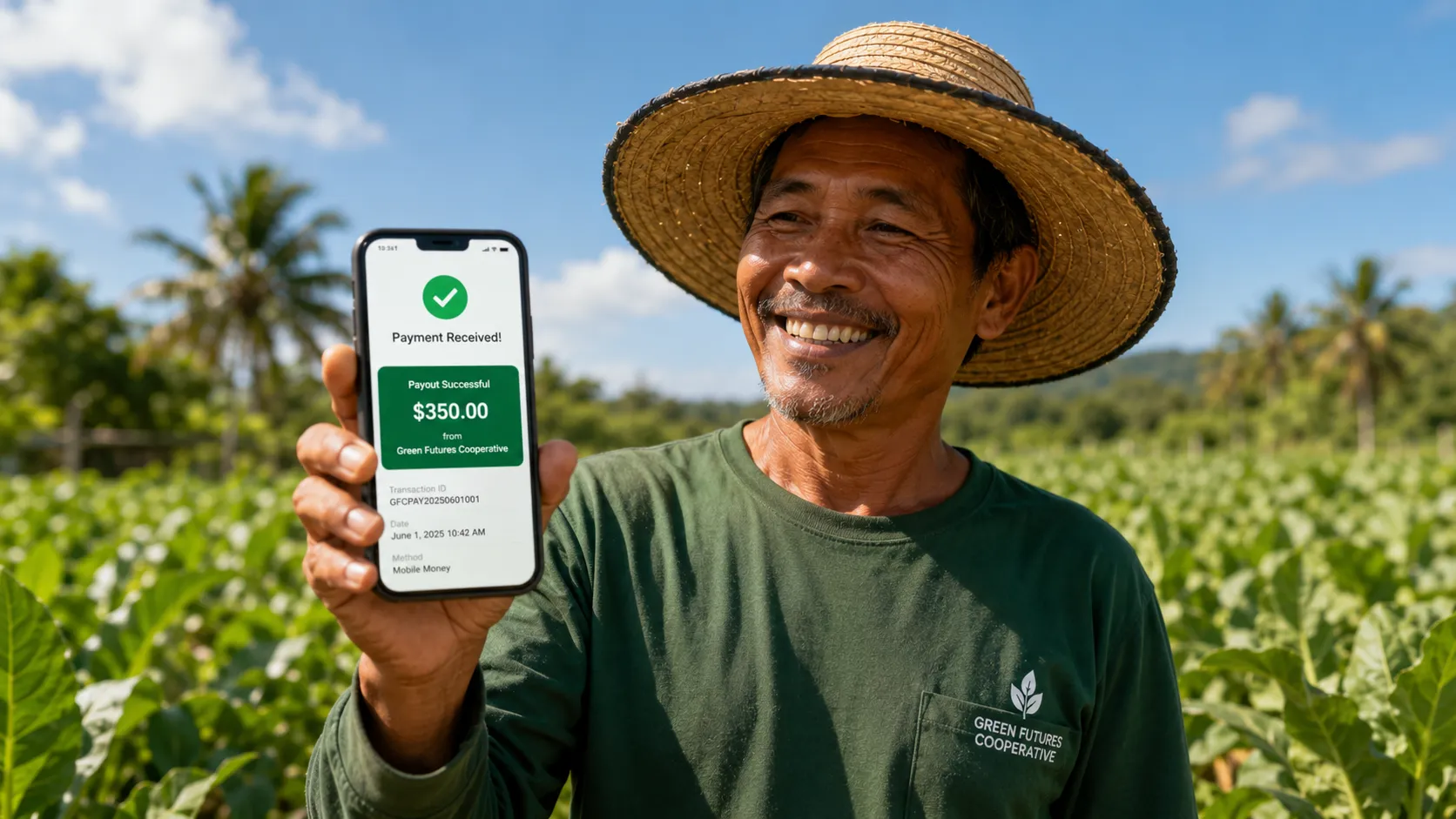
By compressing the entire claims lifecycle into sub-minute automated transaction flows, modern web3-driven parametric insurance portfolios completely decouple disaster from long-term economic collapse. When the decentralized oracles broadcast a verified parameter breach to the ledger, the smart contracts trigger mobile money transfers that arrive within seconds. This instantaneous liquidity gives smallholders the vital economic buffer needed to pivot proactively mid-season. Because their parametric insurance pays out immediately, they can source short-cycle seeds from local agro-dealers, cover emergency irrigation fuel expenses, or hire temporary labor to salvage remaining crops before the agricultural window completely closes, transforming a potential humanitarian disaster into a highly manageable operational bump.
Synergizing Parametric Models with the Global Web3 Ecosystem
The mainstream expansion of parametric insurance architectures does not occur in a technological silo; rather, it serves as a highly scalable foundational layer that enhances the performance of the entire digital agricultural finance universe. When a rural community secures its seasonal crop assets against environmental volatility through automated parametric insurance, it systematically elevates its eligibility for advanced financial optimization.
This structural connectivity creates a highly secure, self-reinforcing economic framework. For instance, holding an auditable, code-gated parametric insurance policy allows local agricultural cooperatives to seamlessly minimize lending risks, making them highly attractive partners for modern de-risking rural credit initiatives managed by global commercial lenders. Furthermore, this absolute transactional transparency allows thin-file farmers to cleanly build verifiable digital identities, empowering them to secure competitive expansion capital through global peer-to-peer microfinance networks and accelerate local retail transaction volumes via rising rural mobile wallet adoption rates. By eliminating administrative opacity via parametric insurance, tech-enabled communities position themselves perfectly to capture large-scale, long-term capital distributed through competitive corporate international green grants.
According to extensive web3 research briefs published by the Ethereum Foundation, utilizing transparent decentralized ledgers to coordinate climate parametric insurance completely removes counterparty risk for global investors. Institutional capital pools can confidently underwrite thousands of remote agricultural plots simultaneously, secure in the knowledge that all operational funds are held in transparent public code, insulated from local corporate corruption or domestic inflation crises.
Conclusion
The mass integration of parametric insurance and blockchain smart contracts represents a permanent, structural revolution in the global execution of climate risk mitigation. By replacing slow, subjective, and exclusive legacy indemnity frameworks with automated, tamper-proof, and near-instantaneous digital transaction rails, the global InsurTech movement has successfully built an unassailable highway toward grass-roots economic resilience. The historical barriers of geographical isolation, institutional mistrust, and crippling claims delays are no longer insurmountable roadblocks to financial security. As decentralized oracle technologies continue to refine their multi-spectral aggregation models, satellite remote sensing grids expand their global tracking frequency, and corporate ESG capital alignment intensifies worldwide, the agricultural networks that confidently adopt these code-gated parametric insurance systems will secure their position as the highly resilient, self-sustaining, and prosperous anchors of the modern global green economy.