Executive Summary: For decades, international venture capital and institutional debt syndicates have fundamentally avoided primary agricultural production in emerging markets. Traditional farming was correctly perceived as structurally uninvestable—a volatile, weather-dependent gamble plagued by fragmented land ownership, erratic yields, and severe informational opacity.
Related Insights

However, the rapid technological maturation of the Internet of Things (IoT), advanced geospatial analytics, and smart-farming hardware has completely rewritten the macroeconomic risk profile of rural cultivation. By actively deploying capital into Precision Agriculture infrastructure, international Venture Capital (VC) can effectively transform biological uncertainty into a highly predictable, data-driven manufacturing process. This profound technological shift elevates rural farming from an unpredictable survival mechanism into a strictly managed, highly investable institutional asset class.
The structural barrier to implementing these advanced technologies across Southeast Asia has always been the Capital Expenditure (CapEx) threshold. Individual smallholder farmers simply cannot afford industrial drones, automated drip-irrigation networks, or sub-surface soil telemetry sensors. The solution lies in strategic aggregation.
By channeling Agritech funding directly through state-backed Badan Usaha Milik Desa (BUM Desa) hubs, global investors can deploy massive technological infrastructure across thousands of consolidated hectares. The BUM Desa acts as the central technological operator, leasing access to these high-tech systems back to the local farmers. This model ensures rapid technological adoption while securing hardware investments within a legally recognized corporate entity.
For VC funds, impact investors, and microfinance institutions, capitalizing Precision Agriculture networks offers immense, uncorrelated returns. This executive briefing details the financial mechanics of deploying Agritech at scale. We analyze how funding connected farming infrastructure radically mitigates environmental risk, hyper-optimizes crop yields, and creates the definitive data streams required to underwrite high-value rural microfinance portfolios, mirroring the systemic risk reduction seen in financing decentralized renewable energy micro-grids.
Related Insights

De-risking the Farm-Gate: The Architecture of Smart Farming
To view farming as a bankable asset class, investors must first understand how technology engineers risk out of the equation. Traditional agriculture relies on subjective human intuition regarding soil health, watering schedules, and pest mitigation. Precision Agriculture replaces intuition with algorithmic certainty. The foundational layer of this transformation is the aggressive deployment of connected IoT sensor networks directly into the agrarian soil.
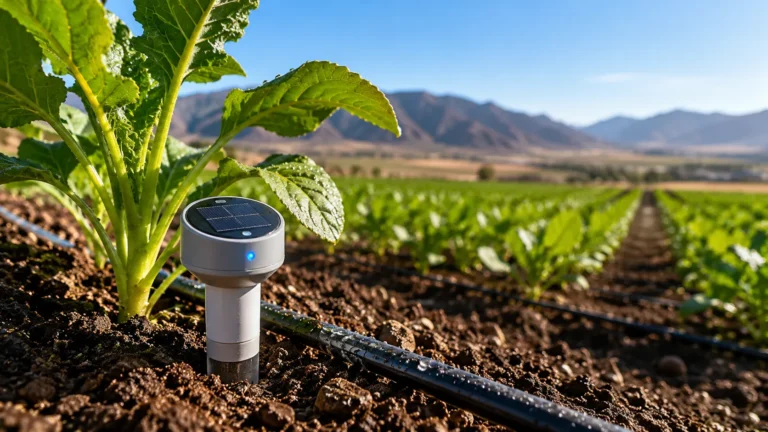
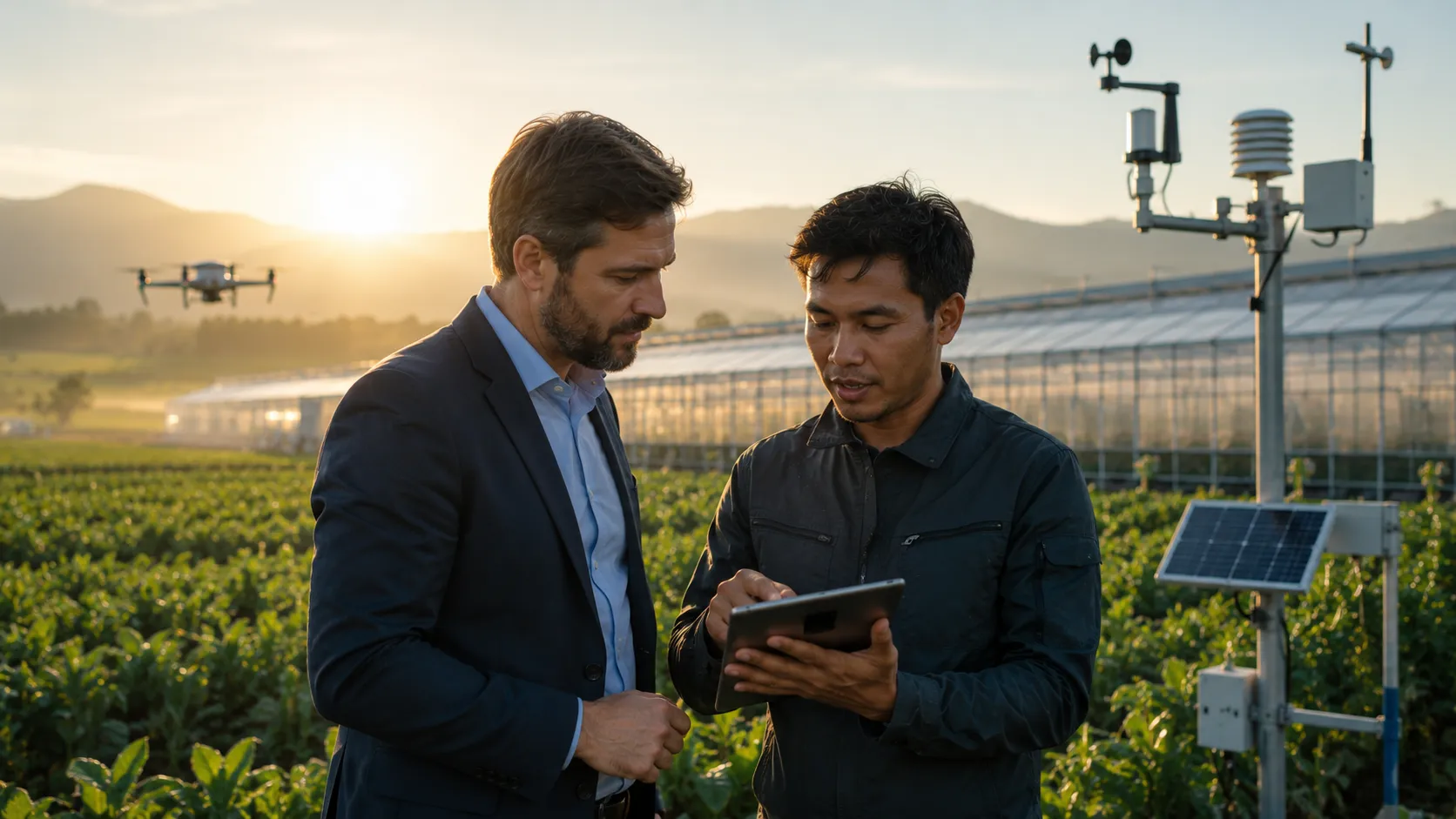
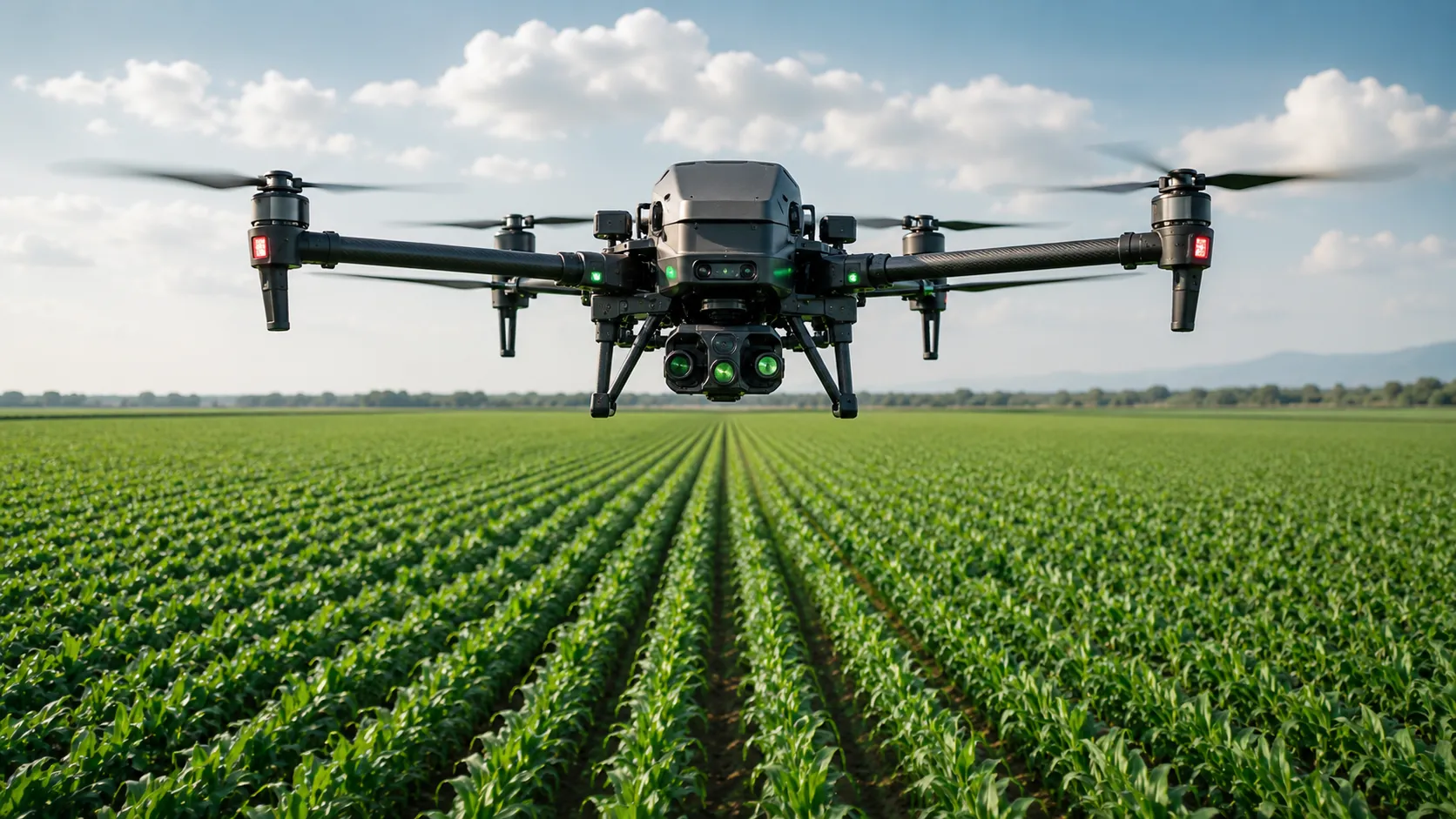
When venture capital funds an Agritech deployment through a village BUM Desa, the capital is immediately utilized to install massive networks of subterranean moisture and NPK (Nitrogen, Phosphorus, Potassium) sensors across the village’s consolidated land blocks. Above ground, autonomous multispectral drones conduct weekly aerial surveys, identifying micro-variations in crop stress, chlorophyll levels, and incipient disease outbreaks weeks before they are visible to the naked eye.
This continuous stream of telemetry is fed into centralized artificial intelligence models housed within the BUM Desa command center. The system algorithmically dictates exactly when, where, and how much water or fertilizer to apply, communicating directly with automated, solenoid-valve irrigation systems.
This level of technological intervention fundamentally alters the agricultural yield curve. By eliminating resource waste and pre-empting crop failure, the variance in output is drastically reduced. The World Bank and the Food and Agriculture Organization (FAO) repeatedly emphasize that optimized water and input management is the single most critical factor in achieving food security and economic stability in emerging markets. For the institutional investor, a farm managed by Precision Agriculture is no longer subjected to the whims of the climate; it operates with the statistical predictability of an automated factory floor.
The Financialization of Crop Yields via BUM Desa Cooperatives
The ultimate objective of deploying Agritech is not simply to grow more crops; it is to financialize the yield. Traditional microfinance models in rural areas suffer from exorbitant interest rates (often exceeding 30% annually) precisely because the lending institution cannot accurately assess the probability of crop failure. The lender must price in the massive risk of total default. The data generated by Precision Agriculture completely obliterates this informational asymmetry.
Because the BUM Desa manages the IoT infrastructure, it holds a continuous, mathematically verifiable record of the crop’s health and projected yield throughout the entire growing season. International microfinance institutions and decentralized finance (DeFi) liquidity pools can integrate directly via APIs into the BUM Desa’s agricultural dashboard.
A lender sitting in London or New York can monitor the real-time soil moisture and algorithmic yield projections of a specific farm block in Indonesia. This unprecedented transparency allows lenders to offer highly competitive, single-digit interest rates, secured against the mathematically guaranteed future value of the harvest. This financial architecture is vital for securing the raw inputs needed for complex downstream industries, heavily supporting the biofuel supply chain and resolving feedstock dilemmas.
Furthermore, this data allows for the implementation of parametric insurance policies. If a sensor network detects a prolonged drought that triggers an algorithmic threshold, the insurance smart contract executes an automatic payout to the BUM Desa, ensuring the farmers are compensated and the VC’s hardware lease payments are secured without the need for manual, bureaucratic claims adjustments.

Venture Capital Deployment Strategy in Rural Agritech
For deep-tech venture capital and infrastructure funds preparing to allocate capital into emerging market Agritech, deploying standalone software apps is a historically proven path to failure. To secure dominant market positioning and ensure high capital utilization, funds must structure their deployments through strategic partnerships with the BUM Desa network utilizing the following methodologies:
- Implement CapEx Leasing Models: BUM Desa entities operate on tight municipal budgets. VC funds should finance the heavy hardware (drones, sensor arrays, automated pumps) and lease them to the cooperative over a 5-to-7-year term, taking repayment as a fractional percentage of the increased agricultural yield.
- Monetize the Agrarian Data: The physical crop is only one part of the asset. The massive longitudinal datasets regarding soil health, localized weather patterns, and fertilizer efficacy generated by Precision Agriculture are highly valuable to global agrochemical conglomerates and climate-modeling agencies. VC funds should retain secondary rights to aggregate and anonymize this data for institutional licensing.
- Integrate with Sovereign Food Security Mandates: Align technology deployments with national government initiatives aiming to boost domestic agricultural output. Sovereign backing often provides crucial tax incentives, rapid importation clearances for high-tech hardware, and partial credit guarantees from state-owned agricultural banks.
Conclusion
The strategic deployment of Precision Agriculture across organized rural hubs represents a monumental shift in emerging market finance. By aggressively funding the integration of IoT sensors, automated infrastructure, and algorithmic telemetry through formalized BUM Desa cooperatives, venture capital is systematically dismantling the historical risks of agrarian investment. This capital injection transforms highly volatile smallholder farming into a predictable, data-driven industrial asset class. Ultimately, those institutional investors who build and control this technological infrastructure will not only secure immense, uncorrelated financial returns but will also architect the resilient future of global food security.