
Rural carbon markets have emerged as a transformative macroeconomic frontier, offering a powerful, sustainable mechanism for forest-dwelling communities to turn environmental conservation into predictable, long-term economic prosperity. For decades, the financial blueprint for rural village economies across developing nations followed an extractive, environmentally degrading trajectory. To generate immediate liquidity, local communities were often forced to clear primary forests for commercial timber logging, slash-and-burn agriculture, or high-density charcoal production.
Related Insights


While these destructive practices provided short-term survival capital, they permanently stripped villages of their biodiversity, accelerated soil erosion, and decimated their long-term climate resilience. Today, the global transition toward a net-zero carbon economy is completely flipping this dynamic on its head. By assigning a clear, liquid monetary value to carbon sequestration, international finance has created an alternative pathway where trees are worth far more standing than they are cut down.
As we navigate through the year 2026, the demand for high-integrity, nature-based carbon offsets has skyrocketed to historic heights. Global corporations, institutional investors, and sovereign nations are facing rigid, mandatory emissions reduction targets, forcing them to purchase billions of dollars in voluntary and compliance carbon credits annually. This massive influx of green capital is flowing directly toward rural landscapes that can prove verified, permanent carbon storage. For project developers and local village governments, this represents a unique opportunity to build self-sustaining economies. However, successfully accessing rural carbon markets requires more than just planting trees; it demands a sophisticated understanding of international carbon accounting, rigorous mathematical baseline modeling, and strict compliance with global corporate governance standards.
Understanding the Carbon Economy: Compliance vs. Voluntary Markets
To establish a highly profitable carbon monetization framework, village project managers must first master the structural differences between the two primary pillars of the global carbon economy: compliance markets and voluntary carbon markets (VCM). Each network operates under vastly different regulatory requirements, verification timelines, and pricing dynamics.
- Compliance Carbon Markets: These are highly regulated systems legally mandated by sovereign governments or regional blocs, such as the European Union Emissions Trading System (EU ETS). In these cap-and-trade systems, heavy industries are legally restricted to a strict emissions allowance. If they exceed their cap, they must purchase compliance offsets. These markets offer immense financial scale but feature highly restrictive entry requirements and complex international legal frameworks.
- Voluntary Carbon Markets: This is the primary sandbox where innovative rural development projects thrive. In the VCM, corporations willingly purchase carbon offsets to satisfy internal corporate social responsibility (CSR) goals, hit voluntary net-zero benchmarks, and enhance their brand equity among climate-conscious consumers. The VCM is highly dynamic, rewarding projects that demonstrate exceptional biodiversity and local community co-benefits.
For smallholder collectives, targeting the voluntary market allows for far greater flexibility in project design. Lenders and impact funds are highly eager to back village-led initiatives because they provide compelling human-interest narratives, directly advancing global social justice alongside measurable environmental metrics.
Related Insights


Monetizing Sustainable Forestry: The Rigorous Verification Pipeline
Villages cannot simply declare their forests protected and immediately expect to receive international financial wire transfers. The journey to generating a tradeable carbon asset requires passing through a meticulous, multi-stage international verification pipeline managed by global registries such as Verra (VCS) or the Gold Standard. The entire monetization process hinges upon proving three core mathematical and operational principles: additionality, permanence, and the prevention of leakage.
Additionality dictates that the carbon sequestration achieved by the project must be entirely above and beyond what would have occurred under a business-as-usual scenario. If a forest was already legally protected by national park status, it cannot claim carbon credits because it was not actively threatened. The village must definitively prove that without carbon credit funding, the forest would face an active, immediate threat of degradation or conversion to agriculture.
Permanence requires the project to guarantee that the stored carbon will remain locked away for a prolonged period, typically 30 to 100 years, backed by a robust local forest guard infrastructure and emergency buffer pools. Finally, the project must prove that protecting one forest will not cause leakage—which is the simple displacement of logging activities to an adjacent, unprotected village territory.
Agroforestry Systems: High-Yield Carbon Sinks for Smallholders
While preserving existing primary forests is vital, rural communities can dramatically accelerate their financial returns by actively establishing diversified agroforestry systems. Agroforestry involves the intentional integration of high-canopy, carbon-dense trees directly into active crop production landscapes. Rather than clearing fields to grow standalone monocrops like maize or rice, smallholder farmers cultivate a multi-layered ecosystem where high-value cash crops—such as shade-grown coffee, cacao, or vanilla—are grown beneath a protective canopy of native timber and nitrogen-fixing trees.
This multi-tiered approach creates an exceptionally resilient, high-yield carbon sink. The deep root networks of the canopy trees rapidly pump organic carbon deep into the subsoil, drastically improving soil moisture retention and nutrient availability for the ground-level crops. From an economic perspective, agroforestry provides smallholders with a diversified portfolio of independent revenue streams: seasonal income from food crops, annual revenue from cash crop harvests, long-term equity from sustainable timber, and a continuous, quarterly cash flow generated directly from the sale of verified carbon credits on global exchanges.
The Premium Valuation of Nature-Based Carbon Offsets
Investors are no longer treating all carbon credits equally. In the current marketplace, simple industrial carbon capture credits are being heavily discounted, while nature-based carbon credits that feature exceptional social and economic co-benefits are commanding massive pricing premiums. Buyers are highly willing to pay top dollar for credits that actively lift rural families out of poverty and protect endangered local wildlife.
“As corporate scrutiny intensifies globally, premium nature-based carbon credits featuring verified smallholder social co-benefits have soared to unprecedented trading heights, commanding between $35 and $85+ per ton in voluntary rural carbon markets, compared to just $8 for basic industrial offsets.”
This premium pricing structure directly rewards village projects that prioritize human equity. By embedding clear local governance structures, ensuring equal financial distribution to female-led households, and funding local healthcare infrastructure using carbon profits, a village can cleanly categorize its credits as “Premium Core-Benefits Offsets,” drastically maximizing their long-term institutional revenue generation.
Digital MRV: Overcoming the Barriers of Scale via Technology
Historically, the biggest roadblock preventing rural villages from accessing lucrative carbon financing was the high cost of Measurement, Reporting, and Verification (MRV). Legacy MRV required hiring expensive international forestry consultants to manually walk through remote jungles, measuring tree trunk diameters with tape measures. This manual methodology was incredibly slow, prone to human error, and logistically cost-prohibitive for small communities.
Today, advanced digital MRV technology has completely democratized access to the market. Projects utilize autonomous drone arrays equipped with LiDAR sensors to fly over vast forest canopies, generating precise, three-dimensional digital models of the entire forest biomass within hours. Furthermore, advanced AI algorithms process high-resolution satellite radar data to continuously monitor canopy thickness and verify forest preservation in real time. This automated digital pipeline slashes verification costs by up to 70%, ensuring that the vast majority of the carbon credit sales revenue goes directly into the bank accounts of the local communities who protect the land rather than being absorbed by international intermediaries.

Synergizing Carbon Revenue with Local Financial Infrastructures
The influx of international carbon credit capital acts as a powerful catalyst that can supercharge the entire financial ecosystem of a rural village. However, managing millions of dollars in external carbon payouts requires the existence of transparent, reliable local financial networks. Progressive project developers are increasingly designing integrated models that cleanly link carbon credit revenues directly with advanced rural financial systems.
For instance, forward-thinking village cooperatives utilize their guaranteed future carbon credit payouts as collateral to secure upfront financing through innovative peer-to-peer microfinance platforms. This immediate liquidity allows them to purchase high-quality agroforestry inputs and scale field operations rapidly. Furthermore, by anchoring their community accounting protocols within verified, algorithmically auditable frameworks, these eco-enterprises can seamlessly qualify for competitive digital financial inclusion tools that de-risk local credit profiles. This multi-layered financial integration ensures that communities can cleanly transition away from extractive practices without facing immediate cash-flow crises, positioning themselves to attract substantial, long-term capital from institutional investors looking to deploy resources via international global green grants.
Conclusion
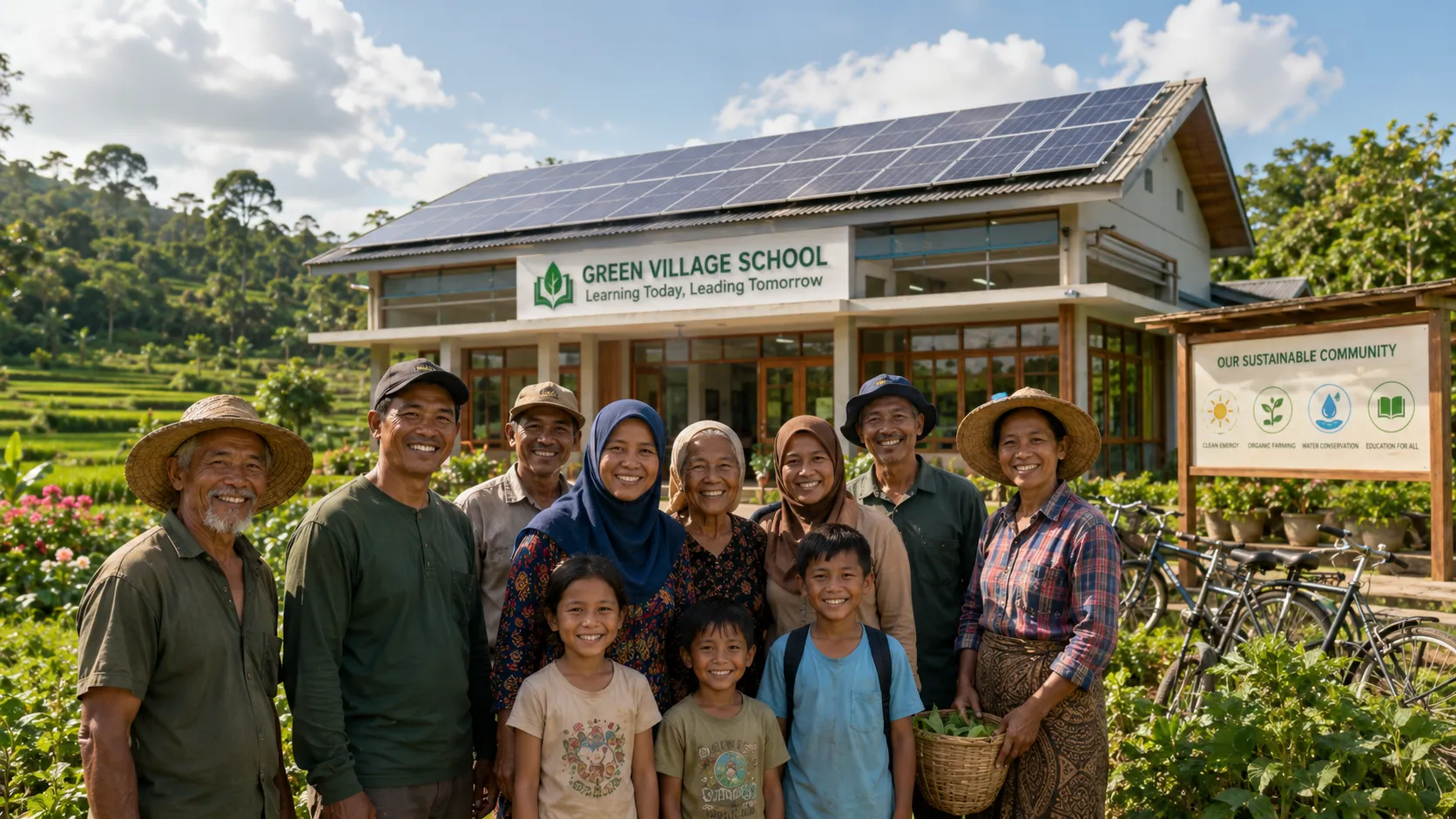
The carbon credit frontier represents a permanent, structural shift in how the world values and funds rural economic development. By converting the intangible ecological service of carbon sequestration into a highly liquid, premium digital asset, rural carbon markets have effectively broken the historical dependency on extractive, short-term industries like destructive logging and clear-cut agriculture. The successful deployment of hyper-local sustainable forestry and diverse agroforestry systems empowers once-marginalized village economies to operate as high-value stakeholders in the global fight against climate change. As technical measurement tools become more accessible, data tracking platforms achieve absolute transparency, and corporate governance mandates tighten globally, the villages that act decisively to protect and restore their natural ecosystems will secure their place as the primary beneficiaries of the modern global green economy.