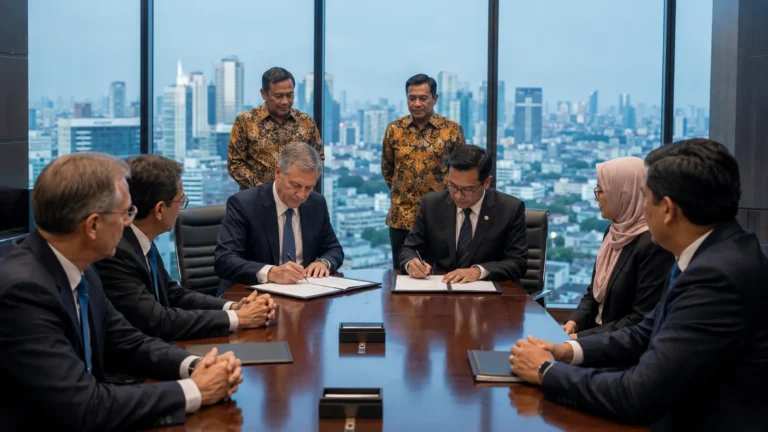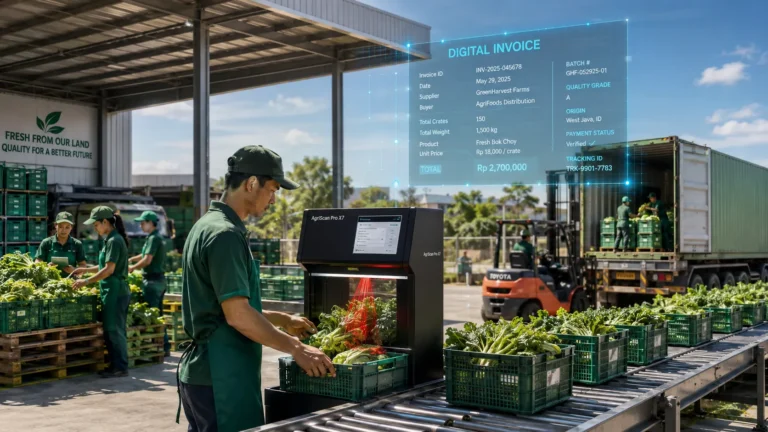

Executive Summary: The implementation of Government Regulation No. 29/2021 marks a historic inflection point for Indonesia’s domestic trade architecture. Historically, modern retail networks operated with high barriers to entry, enforcing prohibitive listing and registration fees that effectively locked out the vast majority of Micro, Small, and Medium Enterprises (MSMEs). The recent landmark partnership between the Ministry of MSMEs and the Indonesian Retail Association (Aprindo) dismantles these systemic barriers by completely eliminating listing fees for micro-enterprises.
Related Insights

Implementing robust policies aimed at Deregulating Retail Supply Chains has become a macroeconomic imperative to stimulate domestic consumption, formalize shadow economies, and enhance overall systemic resilience in 2026. This strategic advisory brief analyzes the structural impact of this deregulation, evaluating how the removal of financial gatekeeping expands market access and accelerates capital velocity, while providing a strict operational roadmap for enterprise retailers adapting to a newly democratized procurement landscape.
For institutional investors and supply chain strategists, the current mandate for Deregulating Retail Supply Chains provides a necessary structural adjustment. By shifting the procurement filter from “capital availability” to “product quality and consistency,” the government is forcing the retail sector to become far more competitive and diversified. This legislative pivot actively mitigates the concentration risk that plagued global supply chains over the past decade, ensuring that modern domestic retail networks are heavily capitalized by a broad, decentralized base of local producers rather than a handful of monopolistic conglomerates.
1. Levelling the Playing Field: Expanding Market Access
To fully comprehend the magnitude of this policy shift, one must understand the regressive nature of traditional retail listing fees. In the legacy model, a micro-enterprise producing high-quality agricultural goods or consumer packaged goods (CPG) was required to pay upfront registration fees, gondola placement fees, and promotional levies just to have their products stocked on modern supermarket shelves. For a micro-enterprise with limited working capital, these fees functioned as an insurmountable toll, restricting their sales channels exclusively to informal traditional markets.
By proactively Deregulating Retail Supply Chains, the Ministry of MSME and Aprindo have fundamentally leveled the playing field. The primary mechanism of Deregulating Retail Supply Chains involves the outright elimination of these upfront financial penalties for verified micro-enterprises. This allows small-scale producers to allocate their limited working capital directly into product development, packaging quality, and capacity expansion rather than sinking it into administrative retail tolls. This capital reallocation is critical for sustaining grassroots economic growth and aligns with broader institutional strategies for liquidity optimization in agrarian supply chains.
Related Insights

Furthermore, Deregulating Retail Supply Chains creates a frictionless entry point that incentivizes informal businesses to formalize. To qualify for the fee waiver under Government Regulation No. 29/2021, micro-enterprises must possess formal business identification numbers (NIB) and meet basic national standards (SNI) or Halal certifications. This transforms a punitive regulatory environment into an incentivized one, massively accelerating the formalization of Indonesia’s massive MSME sector. According to data frameworks established by the World Bank, bringing micro-enterprises into the formal financial sector is the single most effective method for expanding a developing nation’s tax base and stabilizing its gross domestic product (GDP).
2. Macro Implications: The Kumitra 2026 Milestone
The theoretical benefits of reduced entry barriers are already manifesting as hard, quantifiable economic data. The macroeconomic velocity generated by Deregulating Retail Supply Chains was recently validated at the Kumitra (Kemitraan Usaha Mikro, Kecil, dan Menengah) 2026 business matching event held in Yogyakarta. This strategic summit connected hundreds of verified local MSMEs directly with national retail conglomerates, entirely bypassing the legacy friction of intermediary brokers and prohibitive listing fees.
The results of the event serve as a powerful leading indicator for the national economy. The Kumitra 2026 summit generated an impressive IDR 7.155 billion in direct transaction commitments, underscoring how Deregulating Retail Supply Chains unlocks trapped domestic capital. When micro-enterprises secure massive, reliable purchase orders from modern retail networks without paying upfront listing fees, their institutional creditworthiness skyrockets.
They become instantly bankable, allowing them to access the formal digital micro-lending facilities necessary to fulfill those orders. This rapid capital cycle dramatically accelerates the velocity of money within the regional economy.
In the context of Deregulating Retail Supply Chains, institutional allocators recognize that this IDR 7.155 billion is not just a one-off transactional figure; it is recurring revenue. Once an MSME is successfully integrated into a modern retail supply chain, the compounding effect of monthly re-orders creates long-term structural stability. This decentralized network of suppliers acts as a macroeconomic buffer, insulating the domestic economy from external macroeconomic shocks and global inflation that disrupt international imports.

3. Strategic Advisory for Enterprise Retailers
While the elimination of listing fees is a massive victory for micro-enterprises, it introduces complex operational challenges for the national retail conglomerates. Successfully navigating the realities of Deregulating Retail Supply Chains requires enterprise retailers to overhaul their legacy procurement frameworks. Replacing a few large suppliers with hundreds of decentralized local producers exponentially increases the administrative and logistical burden on the corporate treasury and supply chain divisions.
To maintain profitability and operational excellence, enterprise retailers must implement the following strategic imperatives:
A. Enforcing Supply Chain Consistency and Algorithmic Redundancy
The primary risk of sourcing from micro-enterprises is volume consistency. A micro-enterprise may easily fulfill an initial order of 1,000 units but struggle to scale production when consumer demand spikes to 10,000 units during a holiday season. Enterprise retailers must counter this by deploying intelligent, algorithmic redundancy models. Rather than relying on a single MSME for a specific product category in a given region, procurement algorithms should automatically distribute purchase orders across a localized syndicate of micro-producers. If one producer faces a capacity bottleneck, the network autonomously shifts the excess volume to another, ensuring zero out-of-stock scenarios on the retail floor while protecting the micro-enterprises from over-leveraging their production capacity.
B. Technology Adoption and Automated Compliance
Onboarding thousands of new micro-suppliers manually is structurally impossible and financially ruinous. To fully leverage the benefits of Deregulating Retail Supply Chains, institutional retailers must invest heavily in automated procurement Regulatory Technology (RegTech).
By deploying specialized supplier portals that utilize strict API integrations, retailers can automate the verification of business licenses (NIB), halal certificates, and real-time tax compliance. This methodology perfectly mirrors the high-efficiency frameworks used in automated compliance gates for cross-border trade. By doing so, the retailer’s compliance team can manage exponentially more suppliers without linearly increasing their corporate headcount, preserving the firm’s net operating margins.
C. Standardizing Quality Assurance (QA) Protocols
Finally, a core requirement for executing Deregulating Retail Supply Chains successfully is the implementation of decentralized, yet rigorous Quality Assurance (QA) standards. The absence of a listing fee must not equate to the absence of quality control. Retailers must establish clear, non-negotiable packaging, hygiene, and durability metrics before the first purchase order is signed. By treating MSMEs not just as disposable vendors, but as long-term strategic partners, enterprise retailers can offer digital training modules and standardized packaging templates. This cooperative approach effectively elevates the overall quality of the domestic CPG market to meet international export standards.
Conclusion
Ultimately, the institutional policy of Deregulating Retail Supply Chains represents a massive opportunity for the Indonesian economy to achieve robust, decentralized, and highly inclusive growth in 2026. The partnership between the Ministry of MSME and Aprindo, bolstered by the regulatory force of Government Regulation No. 29/2021, successfully proves that removing punitive financial barriers unlocks billions in immediate domestic trade, as clearly witnessed at Kumitra 2026. However, for this macroeconomic policy to translate into sustained long-term financial success, enterprise retailers must abandon analog procurement methods. By embracing deep technological integration, automated compliance verifications, and proactive supplier development, institutional retailers can transform the sheer complexity of a decentralized supply chain into a formidable, highly resilient competitive advantage.