Executive Summary: The global transition from internal combustion engines to electric mobility is no longer merely an environmental mandate; it represents the most significant macroeconomic restructuring of the 21st century. In this new industrial paradigm, the lithium-ion cell has become the definitive equivalent of the barrel of oil. However, unlike the relatively straightforward extraction and refinement processes of the legacy fossil fuel era, the EV Battery Value Chain is an immensely complex, capital-intensive labyrinth. It spans from the extraction of critical minerals deep within emerging markets to the sterile, high-tech assembly lines of global automotive hubs. For institutional investors, understanding the systemic friction points and value multipliers within this chain is the key to unlocking generational alpha.
Related Insights


As we navigate the complex economic realities of 2026, the strategy for capitalizing on this megatrend has fundamentally shifted. The era of fragmented, globalized supply chains—where raw ore was mined in one hemisphere, refined in another, and assembled in a third—is effectively over. Today, the most lucrative opportunities lie in regional industrial resilience. Sovereign nations rich in critical minerals are rewriting the rules of engagement, forcing foreign capital to participate not just in extraction, but in the total industrialization of the EV Battery Value Chain.
This structural pivot is known as “industrial downstreaming.” It is a sovereign strategy designed to capture the maximum value-add of raw commodities domestically. For asset managers, private equity firms, and corporate treasurers, this means that capital can no longer be deployed passively into pure-play mining equities. Sustained returns require deep, structural investments into vertically integrated ecosystems—industrial parks that combine high-pressure acid leaching (HPAL) smelters, precursor manufacturing, and renewable energy grids in a single, localized footprint. This aligns with broader efforts in sovereign capital allocation for infrastructure to build long-term economic stability.
The Downstreaming Imperative: From Extraction to Ecosystem
To grasp the financial magnitude of the EV Battery Value Chain, one must look at the economic multiplier effect of downstreaming. Historically, resource-rich emerging markets operated under a heavy systemic disadvantage: they exported raw dirt at bottom-tier commodity prices and imported finished, high-margin technological goods. The downstreaming mandate aggressively reverses this dynamic.
By banning or heavily taxing the export of raw nickel, lithium, or bauxite, nations force global battery manufacturers to bring their billions of dollars in Capital Expenditure (CapEx) to the source of the minerals. According to industrial development frameworks published by the World Bank, this value-add process is crucial for sustainable economic growth.
Related Insights


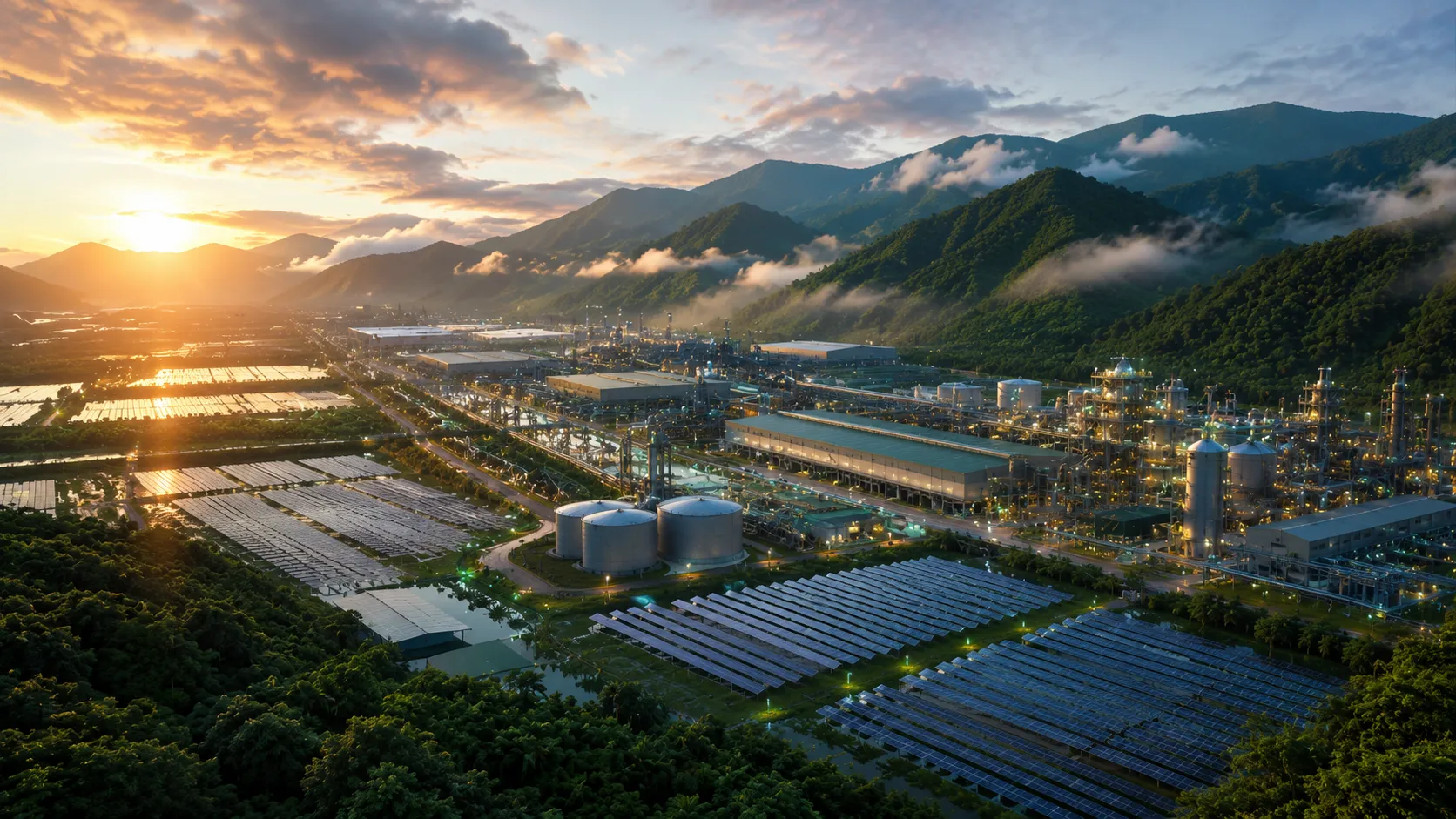
The blueprint for this success is vividly demonstrated in Southeast Asia, particularly within specialized zones like the Morowali Green Industrial Park. Here, the entire EV Battery Value Chain is being compressed into a unified geographic radius. Ore is extracted, transported via short-haul conveyors, processed into mixed hydroxide precipitate (MHP), refined into battery-grade sulfates, and eventually synthesized into cathode active materials (CAM) without ever crossing an international border.
This geographic compression slashes logistical costs, mitigates cross-border trade tariffs, and drastically accelerates the velocity of capital for the operators involved. This model of liquidity optimization in supply chain finance is essential for firms managing large-scale infrastructure projects.
For the institutional allocator, these integrated hubs represent a fortress of risk-adjusted yield. When you invest in a localized downstream ecosystem, you are not betting on the spot price of nickel; you are investing in the indispensable infrastructure of the global energy transition. The off-take agreements generated by these facilities are typically locked in for a decade or more by Tier-1 global automakers, providing a predictability of revenue that is highly attractive to Sovereign Wealth Funds and infrastructure debt portfolios.

The Green Premium: ESG Mandates and Sustainable Refining
Despite the immense financial upside, participating in the EV Battery Value Chain comes with a profound paradox: the clean energy revolution requires incredibly energy-intensive, and historically dirty, industrial processes. The refining of battery-grade metals, particularly through HPAL technology, demands massive amounts of electricity and generates complex tailings (waste).
In previous decades, this environmental cost was externalized. In 2026, regulatory frameworks and institutional ESG mandates have internalized these costs completely. Institutional capital is now governed by stringent decarbonization targets. Consequently, a battery produced using a coal-fired grid trades at a significant discount—or is entirely locked out of premium Western markets—compared to a battery produced using renewable energy.
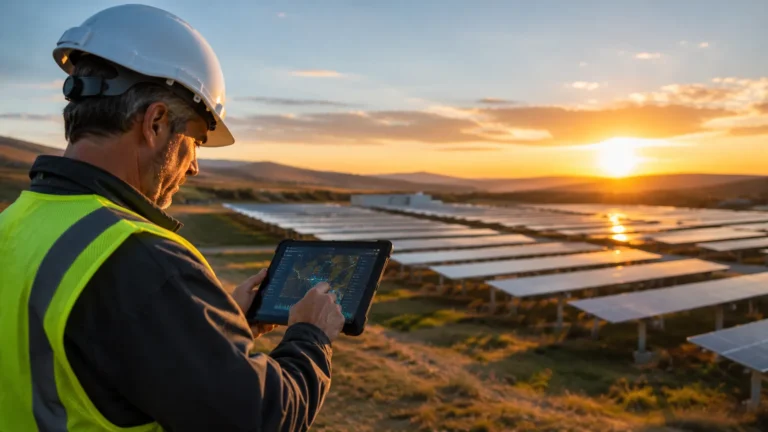
This has created the “Green Premium.” The most forward-thinking industrial parks are addressing this by aggressively integrating large-scale 100 GW Solar PV programs and Battery Energy Storage Systems (BESS) directly into their refining operations. This intersection of the EV Battery Value Chain and green infrastructure debt is where the most sophisticated financial engineering is occurring today. Project finance is increasingly tied to sustainability-linked loans, where the cost of capital decreases if the industrial park meets strict, auditable carbon-reduction and waste-management metrics.
As reported by the International Energy Agency (IEA), the integration of ESG metrics into mineral processing is now the primary determinant of long-term project bankability. For the investor, financing the “greening” of the battery supply chain is the ultimate double-bottom-line investment, ensuring both compliance with global standards and securing long-term, high-margin off-take contracts. This approach is fundamental to integrating ESG metrics into institutional capital allocation.

Strategic Advisory for Institutional Capital Allocators
The sheer scale and complexity of the modern battery supply chain require a fundamental evolution in how firms conduct due diligence. Passive exposure via ETFs or broad commodity indices is no longer a viable strategy for outperformance. To effectively capture alpha within the EV Battery Value Chain, we advise corporate boards, private equity directors, and institutional funds to focus on three critical investment pillars:
- Prioritize Vertical Integration: Capital should be directed toward consortiums that control multiple nodes of the supply chain. A joint venture between a local mining conglomerate, a global chemical refiner, and an international automaker creates a closed-loop system that is highly resilient to external macroeconomic shocks and spot-market volatility.
- Demand Algorithmic Traceability: As regulatory gates become stricter, the provenance of every ounce of lithium and nickel must be verifiable. Investors must require their portfolio companies to implement advanced RegTech and automated compliance gates. A mineral that cannot be ethically traced is a stranded asset.
- Capitalize on the Circular Economy (Recycling): The final, and arguably most overlooked, segment of the value chain is end-of-life recycling (urban mining). Investing in scalable recycling technologies today provides a necessary hedge against future raw commodity deficits in the EV Battery Value Chain.
Ultimately, the EV Battery Value Chain is not just a sub-sector of the automotive industry; it is the foundational infrastructure of the next fifty years of global economic growth. By aligning capital with sovereign downstreaming policies and uncompromising ESG standards, institutional investors can secure their position at the epicenter of this historic industrial renaissance. Successfully navigating the EV Battery Value Chain requires a disciplined approach, ensuring that every stage of production—from the HPAL refinery to the final cell assembly—remains within a robust, EV Battery Value Chain-focused governance framework. Those who master the complexities of the EV Battery Value Chain today will define the industrial landscape of tomorrow.