
Executive Summary: The landscape of global agricultural trade has irreversibly shifted from an era of voluntary corporate social responsibility to one of strict, mathematically verifiable legal compliance. Multinational corporations, particularly those exporting to the European Union and the United States, are now subjected to uncompromising regulatory frameworks that demand absolute proof of ethical sourcing, fair labor practices, and zero-deforestation origins. For foreign venture capital firms and institutional investors strictly bound by Environmental, Social, and Governance (ESG) mandates, navigating this regulatory minefield in emerging markets presents a formidable challenge. However, the integration of advanced Regulatory Technology (RegTech) with grassroots agricultural networks is unlocking a massive structural opportunity. By deploying rigorous Blockchain Traceability frameworks directly through Badan Usaha Milik Desa (BUM Desa) hubs, global capital can definitively tokenize physical harvests, transforming historically opaque rural supply chains into transparent, institutional-grade digital assets.
Related Insights


The traditional agrarian supply chain relies on fragmented, multi-tiered networks of middlemen utilizing easily falsified paper documentation. This legacy model is structurally incompatible with modern regulatory standards such as the European Union Deforestation Regulation (EUDR). To survive in the 2026 global market, international off-takers must adopt cryptographic verification. Deploying Blockchain Traceability directly at the farm-gate level solves this informational asymmetry. By establishing the BUM Desa as the legally recognized digital anchor, rural cooperatives can issue immutable, time-stamped ledgers for every kilogram of coffee, cocoa, or palm oil harvested. This digital provenance provides international buyers with the ultimate legal shield against supply chain contamination and regulatory fines.
For technology-focused Venture Capital (VC) and global microfinance syndicates, funding the digital infrastructure required to build these ledgers is highly lucrative. This executive briefing dissects the financial and operational mechanics of tokenizing the harvest. We explore how integrating distributed ledgers with village-level corporate governance not only satisfies international ESG mandates but actively increases the premium valuation of the underlying agricultural commodities, building upon the foundations of the rural aggregator model for multinational supply chains.
The Compliance Imperative: Navigating the EUDR and US Import Regulations
The primary macroeconomic catalyst driving the adoption of distributed ledger technology in agriculture is regulatory enforcement. Governing bodies in Western markets no longer accept self-reported corporate sustainability claims. Legislation like the EUDR explicitly requires highly precise geospatial coordinates mapping the exact polygon of land where a commodity was cultivated, cross-referenced against historical satellite imagery to prove no deforestation occurred after a specific cutoff date. Without this data, massive shipments are unilaterally blocked at customs ports, creating catastrophic liquidity crises for importers.
Blockchain Traceability serves as the definitive technological answer to these rigid mandates. Unlike centralized databases, which are vulnerable to localized corruption or administrative manipulation, a distributed ledger provides an immutable record. When a smallholder farmer delivers their harvest to the BUM Desa aggregation center, the exact weight, geospatial origin, and payment transaction are simultaneously validated and cryptographically sealed on the blockchain. This data block is permanently visible to the European buyer, the financing bank, and the regulatory auditor. As detailed in global supply chain guidelines by the European Commission, providing unquestionable provenance is now the foundational requirement for cross-border commodity market access.
Related Insights


By financing the hardware and software required to run these nodes at the village level, foreign investors are effectively building the toll roads of modern international trade. A commodity backed by Blockchain Traceability commands a significant price premium in global spot markets because the buyer is purchasing both the physical asset and the attached legal compliance data.

Engineering Trust: BUM Desa as the Digital Anchor
The technological deployment of Blockchain Traceability is frequently stymied by the “first-mile” problem: how do you ensure the raw data entered into the blockchain by an isolated rural farmer is accurate? “Garbage in, garbage out” remains the greatest vulnerability of any digital ledger. To neutralize this risk, the technological architecture must be paired with robust, localized corporate governance.
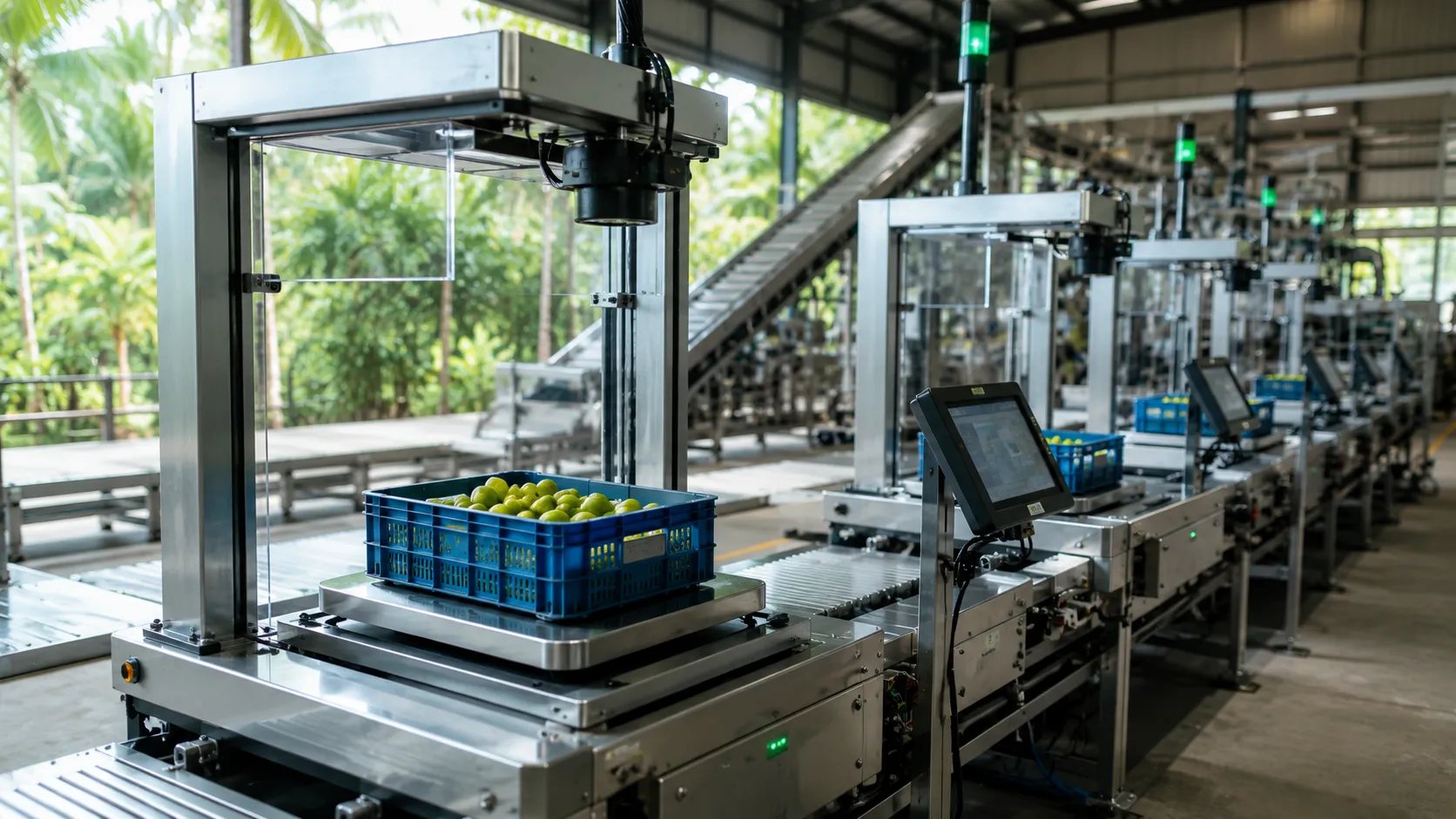
This is where the BUM Desa becomes the indispensable partner for foreign technology investors. As a formal, state-backed corporate entity operating at the village level, the BUM Desa acts as the trusted data validator—the oracle connecting the physical harvest to the digital chain. When Venture Capital funds deploy RegTech capital into these regions, they are not handing smartphones directly to millions of unbanked farmers; rather, they are capitalizing the BUM Desa with automated weighing scales, moisture sensors, and API-integrated inventory management software. This approach mirrors the rigorous data validation strategies necessary when integrating ESG metrics into institutional capital allocation.
The BUM Desa staff visually and electronically verifies the commodity upon intake. The automated hardware directly feeds the weight and quality metrics into the blockchain application, entirely removing human manual entry errors. Furthermore, the BUM Desa handles the instantaneous digital payout to the farmer’s mobile wallet. This closed-loop system binds the physical transfer of the crop, the digital verification of its origin, and the financial compensation into a single, immutable smart contract transaction.
Strategic Advisory for Venture Capital and RegTech Funds
For global technology investors seeking exposure to the digitization of emerging market agriculture, executing a deployment strategy requires moving beyond standard software-as-a-service (SaaS) models. Successfully scaling Blockchain Traceability demands a highly integrated approach to rural infrastructure:
- Capitalize Hardware-as-a-Service (HaaS): BUM Desa entities often lack the upfront CapEx to purchase high-end digital scales, RFID taggers, and biometric scanners. VC funds should structure investments that provide this hardware on a subscription or per-transaction fee basis, secured against the commercial off-take agreements of the village.
- Implement Interoperable Protocols: Ensure that the specific ledger technology deployed is protocol-agnostic and fully interoperable with the legacy Enterprise Resource Planning (ERP) systems used by major global conglomerates (e.g., SAP, Oracle). A standalone ledger that cannot communicate with a multinational’s existing software stack is functionally useless.
- Tokenize the Asset for Microfinance: Once the harvest is digitally verified and resting in the BUM Desa warehouse, it becomes a secure digital twin. This tokenized asset can immediately be used as highly secure collateral to unlock short-term liquidity from international microfinance platforms, solving the chronic working capital deficits of rural communities.
Conclusion
The deployment of Blockchain Traceability across localized BUM Desa networks represents the ultimate convergence of advanced cryptography, corporate ESG compliance, and rural economic empowerment. By systematically tokenizing the harvest, foreign investors and technology funds can permanently eliminate the historical opacity of emerging market supply chains. This integration provides European and US markets with the exact, mathematically verifiable ethical sourcing data they require, while simultaneously elevating the rural village enterprise from a basic commodity aggregator to a sophisticated, institutional-grade digital asset manager. Those who successfully finance and scale this RegTech infrastructure will fundamentally control the flow of compliant agricultural trade over the next decade.