
Executive Summary: The integrity of sovereign fiscal governance relies heavily on the seamless integration of revenue collection and disbursement systems. Recent findings from the Supreme Audit Agency (BPK) regarding the 2025 Central Government Financial Report (LKPP) have exposed significant operational frictions within the Directorate General of Customs and Excise (DJBC).
Related Insights


The audit revealed an outstanding uncollected receivables balance of Rp 33.16 trillion, alongside a highly paradoxical administrative flaw: the issuance of state refunds to corporate entities that simultaneously hold delinquent debt profiles. For institutional investors, sovereign debt analysts, and multilateral funding agencies, these findings underscore a critical “silo effect” within bureaucratic financial systems. This structural disconnect not only results in quantifiable revenue leakage but also highlights the urgent necessity for deploying Regulatory Technology (RegTech) and unified digital fiscal ledgers to safeguard the fiscal resilience of emerging markets.
The Macroeconomic Context of Fiscal Efficiency
In the contemporary global economic landscape, emerging markets face unprecedented pressures to optimize domestic revenue mobilization. As global interest rates fluctuate and access to cheap international debt diminishes, a nation’s ability to efficiently collect taxes, duties, and customs revenues becomes the primary determinant of its sovereign credit rating and its capacity to fund critical infrastructure. The Directorate General of Customs and Excise (DJBC) serves as the frontline gatekeeper of Indonesia’s international trade ecosystem, responsible for capturing value from massive import and export volumes.
However, robust economic activity must be matched by an equally robust administrative framework. When a state apparatus fails to actively pursue matured receivables, it artificially inflates the national deficit, forcing the government to issue more sovereign bonds to cover operational shortfalls. The recent BPK audit for the 2025 fiscal year illuminates this exact vulnerability.
The discovery of Rp 33.16 trillion in sub-optimally managed receivables is not merely an accounting error; it represents a substantial pool of domestic capital that is essentially trapped in bureaucratic gridlock. For foreign direct investors (FDI) observing the market, excessive administrative friction signals underlying inefficiencies that could pose long-term compliance and operational risks.
Related Insights


Anatomy of the Receivable Backlog: A Sectoral Breakdown
To accurately assess the structural risks, one must dissect the composition of the uncollected debt. According to the BPK’s comprehensive audit, a highly specific subset of this backlog involves 3,147 outstanding receivable documents totaling Rp 7.17 billion. These specific obligations have matured and have been in default status between the years 2016 and 2021, yet they have not been subjected to active collection enforcement by the respective operational units.
The prolonged stagnation of these accounts points to systemic bottlenecks in post-clearance audits and debt recovery protocols. The report categorizes these stagnant receivables into three primary operational channels:
- Rush Handling Applications (Rp 3.34 Billion): Rush handling is designed to expedite the release of highly sensitive or perishable goods (such as medical supplies, live animals, or critical manufacturing components) before final duties are settled. The failure to collect these duties post-release highlights a critical vulnerability in the risk-assessment models used to grant expedited clearance.
- Courier and Postal Import Clearances – PIBK (Rp 2.72 Billion): The explosion of cross-border e-commerce has overwhelmed traditional customs infrastructure. The accumulation of uncollected debt from courier service companies indicates that the current manual tracking systems are fundamentally inadequate for high-frequency, low-value import models.
- Customs and Excise Payment Determinations – SPPBMCP (Rp 1.10 Billion): These are formally determined liabilities for shipped goods that have simply been ignored or abandoned by the importers, revealing a lack of punitive enforcement mechanisms.
From an institutional perspective, the inability to close these aged accounts over a five-to-nine-year horizon suggests a severe deficiency in automated tracking and human resource allocation within the state’s recovery divisions. When debt recovery is reliant on manual intervention rather than automated system triggers, the probability of fiscal leakage increases exponentially.
The Reconciliation Gap: The Refund Paradox
While the volume of uncollected debt is concerning, the most alarming revelation within the BPK report is the structural paradox regarding state refunds. A fundamental tenet of corporate and sovereign accounting is the principle of offset or reconciliation—an entity should not disburse capital to a debtor who is currently in default to the very same institution.
The 2025 audit identified a severe breakdown of this principle. The BPK discovered that the state actively processed and transferred overpayments (refunds) to nine specific importing entities, totaling Rp 1.31 billion. Astonishingly, these exact same nine entities simultaneously held outstanding, unpaid liabilities totaling Rp 327.2 million dating back to the 2016-2020 period. The state was effectively refunding capital to delinquent taxpayers without executing any automated deductions to clear their historical debts.
The data sample provided by the audit serves as a stark case study in administrative silos:
- Entity ‘PT IBI’: Received a state refund of Rp 235.11 million, despite possessing an uncollected debt of Rp 55.42 million.
- Entity ‘PT GBU’: Received a refund of Rp 12.53 million, while the state ignored its outstanding liability of Rp 127.48 million.
- Entity ‘PT OMU’: Successfully claimed Rp 162.92 million in refunds while continuing to default on Rp 98.02 million in customs duties.
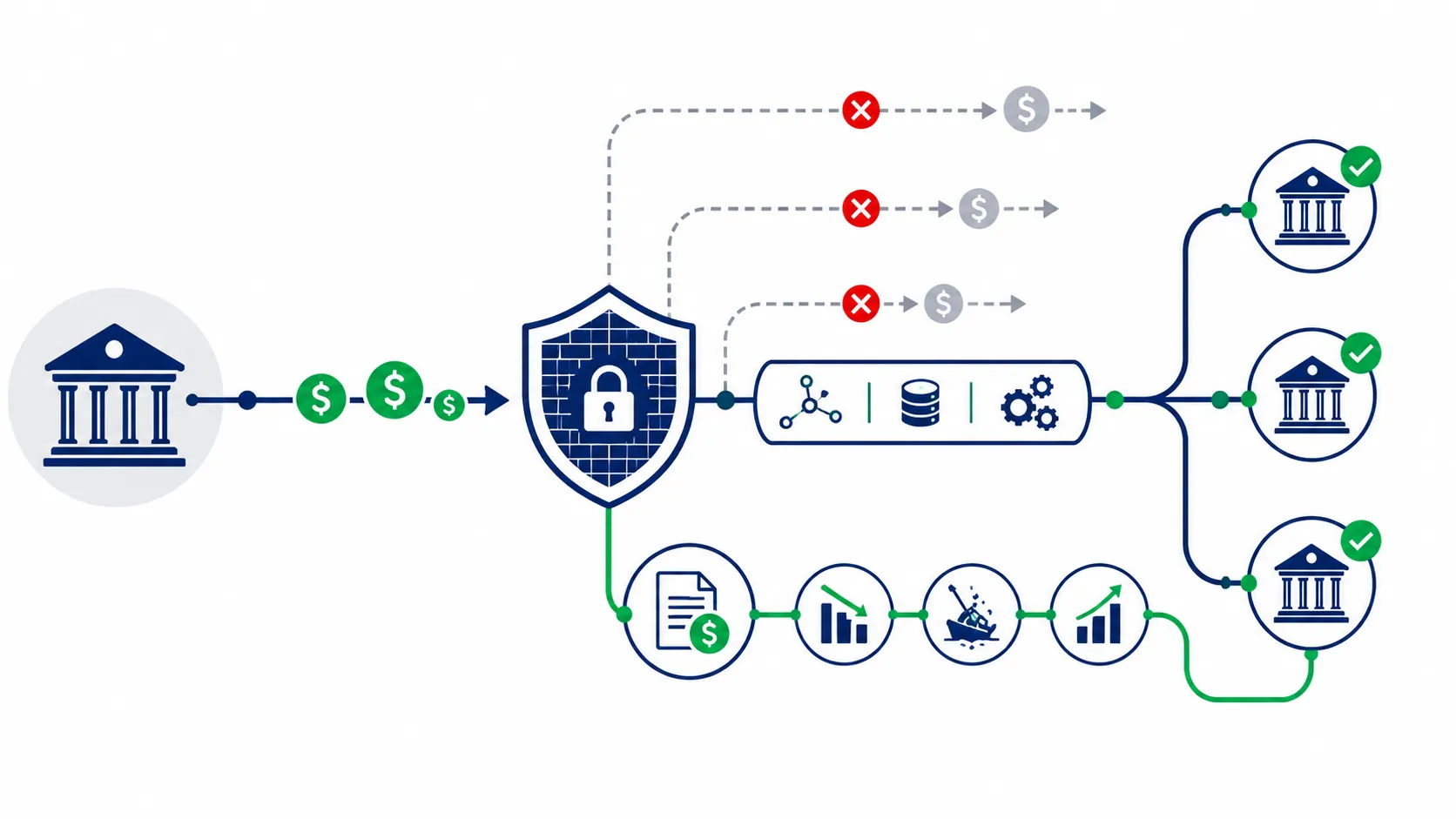
This anomaly indicates that the subsystem managing tax refunds operates in complete isolation from the subsystem tracking customs receivables. In a modernized digital economy, this lack of interoperability is a critical architectural failure. The refund authorization division clearly lacks real-time visibility into the corporate liability dashboard, allowing sophisticated corporate entities to exploit the blind spots between state departments.
Institutional Implications and Sovereign Risk
For multilateral organizations evaluating sovereign risk, such administrative blind spots are treated as leading indicators of broader institutional fragility. The inability to synchronize intra-governmental financial data severely undermines the credibility of the state’s fiscal modeling. If the government cannot prevent a direct outbound transfer to a known debtor, the market will naturally question the state’s capability to enforce far more complex financial regulations, such as environmental taxation, carbon credit tracking, or anti-money laundering (AML) protocols.
“The phenomenon of disbursing state refunds to delinquent entities is a textbook example of asymmetric bureaucratic data. It is not necessarily an indicator of malfeasance, but rather a profound technological gap. In an era dominated by instantaneous algorithmic trading and real-time banking APIs, the persistence of siloed state ledgers represents an unacceptable sovereign risk.”
Furthermore, this inefficiency forces compliant taxpayers and businesses to indirectly subsidize the administrative costs of delinquent entities. When a government cannot collect from specific actors, it often resorts to broadening the tax base or raising tariffs on compliant sectors to balance the budget, thereby punishing good corporate governance.
Strategic Policy Recommendations: The RegTech Imperative
To permanently resolve these structural vulnerabilities and elevate the state’s fiscal governance to international standards, a comprehensive digital transformation is required. The solution lies in the aggressive deployment of Regulatory Technology (RegTech). We recommend three core institutional reforms:
- Deployment of an Automated Liability Interception (ALI) Protocol: The Ministry of Finance must implement an API-driven cross-referencing system. Before any refund is authorized by the treasury, the system must autonomously query the national customs, tax, and non-tax state revenue (PNBP) databases. If the Corporate Identification Number (NPWP) flags a delinquent status, the system must execute an automatic offset, deducting the owed amount before releasing the remaining balance to the entity.
- Unified Fiscal Identity (UFI) Architecture: The current siloed nature of departmental databases must be eradicated. Adopting a unified digital ledger architecture—potentially utilizing private blockchain configurations for absolute immutability—would ensure that a corporate entity possesses a single, universally visible risk profile across all government ministries.
- Algorithmic Restriction of Rapid Clearance Privileges: Companies exhibiting chronic delinquency or appearing on the historical backlog ledger must be algorithmically locked out of “Rush Handling” and other expedited clearance facilities until their historical liabilities are cleared. Access to state facilitation must be strictly tied to real-time compliance metrics.
Conclusion
The findings embedded within the 2025 LKPP audit provide a critical diagnostic overview of the structural frictions inhibiting optimal sovereign revenue collection. The inability to collect trillions in matured debt, compounded by the administrative paradox of refunding capital to delinquent entities, highlights a profound need for systemic modernization. For Indonesia to fully capitalize on its macroeconomic potential and maintain its attractiveness to top-tier global institutional capital, its fiscal governance architecture must evolve beyond manual interventions. By integrating advanced RegTech solutions and breaking down internal data silos, the state can secure its revenue streams, enhance institutional integrity, and establish a highly transparent, equitable environment for all market participants.