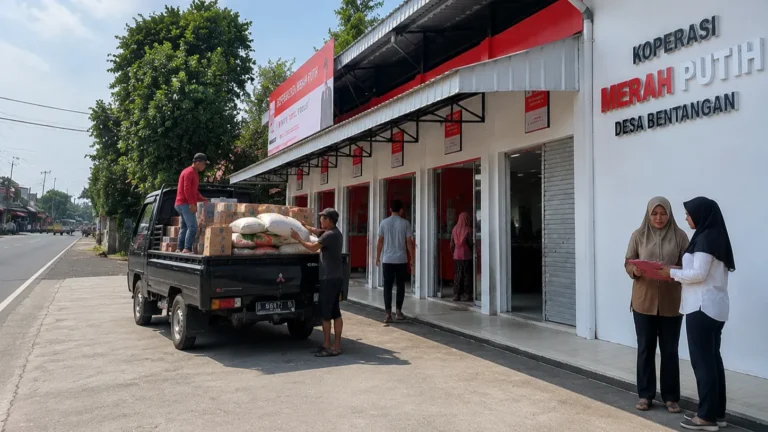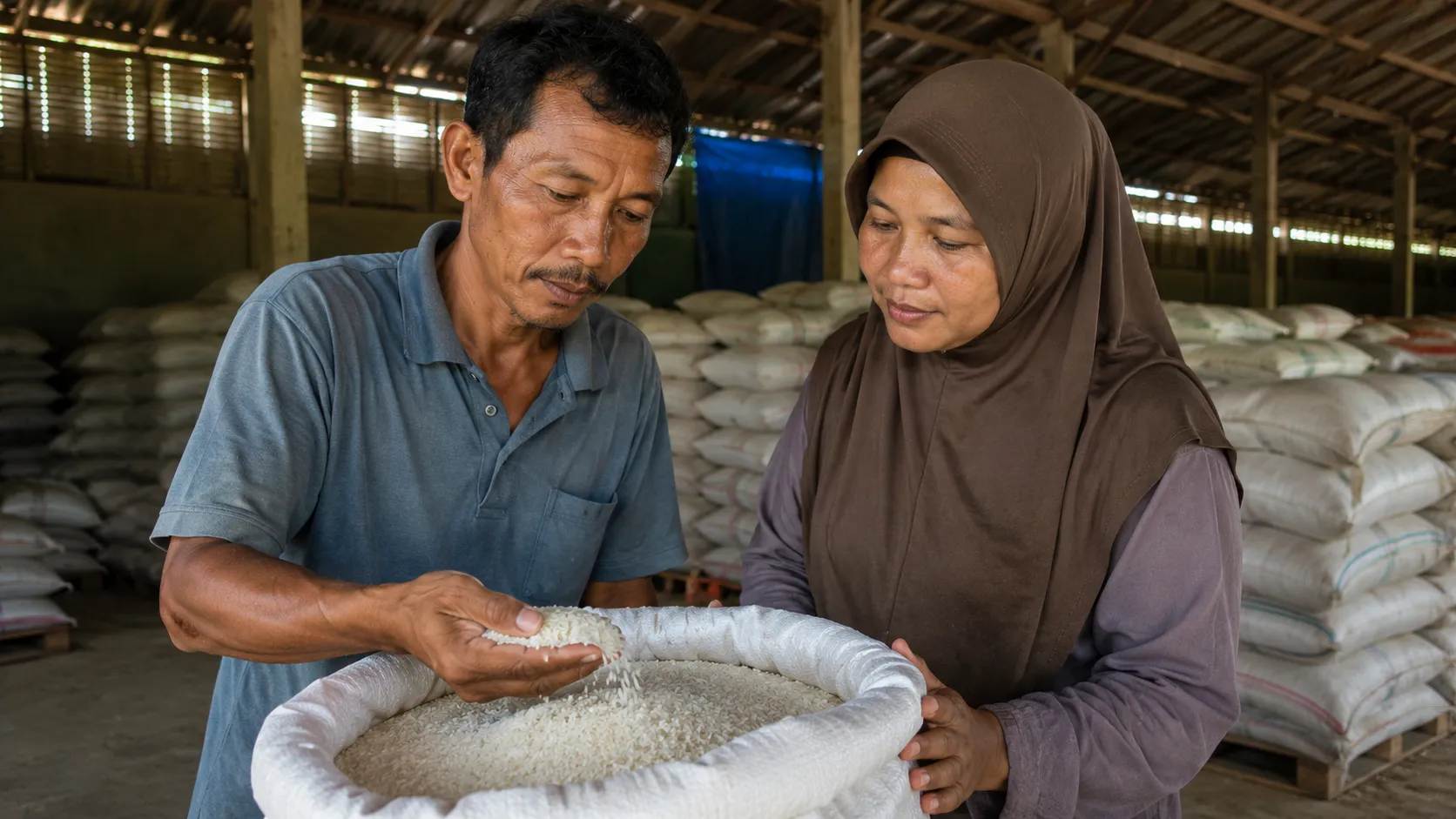
Global institutional allocators constantly monitor food security metrics in emerging markets, as agrarian stability remains the primary anchor for domestic inflation. Over the weekend, Southeast Asia’s largest economy signaled a massive structural win on this exact front. As detailed in a Saturday dispatch by local financial outlet Detik Finance, the state logistics agency (Perum Bulog) successfully absorbed 3.5 million tons of domestic rice equivalents by late July 2026. This aggressive Bulog rice procurement cycle has already fulfilled 87% of the government’s ambitious 4-million-ton national absorption target for the fiscal year.
For sovereign debt analysts and central bank observers, this is far more than a routine agricultural milestone. Food prices, heavily weighted by rice, dictate the trajectory of Indonesia’s headline Consumer Price Index (CPI). When state reserves run thin, localized shortages quickly trigger inflationary spikes, forcing Bank Indonesia into defensive monetary tightening. By securing 3.5 million tons of domestic harvest directly from regional farmers, Bulog has effectively built a massive macroeconomic firewall. This strategic reserve neutralizes the threat of imported inflation caused by volatile global supply chains, international export bans, or unpredictable climate anomalies.
Perum Bulog President Director Ahmad Rizal Ramdhani explicitly attributed the rapid absorption rate to tight operational synergy across a complex, multi-tiered supply chain. The logistics of moving millions of tons of physical commodities from remote agrarian pockets to centralized state storage facilities requires formidable coordination. Ramdhani noted that the success of the current Bulog rice procurement mandate relies heavily on ground-level synchronization between local farmers, agricultural extension officers (PPL), regional military and police liaisons (Babinsa and Bhabinkamtibmas), and provincial governments. This grassroots mobilization ensures that localized harvest gluts are rapidly processed and transported before market prices collapse at the farm gate.

Strategic Implications of the Bulog Rice Procurement Drive
Assessing the Bulog rice procurement metrics reveals a highly sophisticated approach to sovereign resource management. The current pace of domestic absorption strongly suggests the 4-million-ton threshold will be breached well ahead of the year-end deadline. Ramdhani expressed high conviction that this trajectory places Indonesia firmly on the path toward realizing absolute, sustainable food self-sufficiency within 2026. Attaining self-sufficiency reduces the nation’s reliance on foreign exchange reserves to import basic staples, directly supporting the long-term structural stability of the Indonesian Rupiah.
Related Insights


Institutional investors analyzing emerging market consumption patterns understand that agrarian income stability directly fuels retail economic velocity. When farmers receive guaranteed floor prices for their yields, rural household discretionary income expands. This cash injection rapidly circulates through the localized economy, driving demand for fast-moving consumer goods, light commercial vehicles, and micro-financial services. Bulog’s aggressive absorption effectively acts as a targeted fiscal stimulus, injecting massive liquidity into rural demographics without expanding the formal sovereign debt deficit. For deeper insight into how this liquidity flows through the grassroots economy, analysts often review frameworks governing sustainable supply chain finance for local producers.
Global agricultural analysts tracking cross-border grain flows through authoritative platforms like Reuters Commodities are taking careful note of Indonesia’s reduced footprint in the international spot markets. When a nation of nearly 300 million people successfully internalizes its primary staple consumption, the aggregate reduction in global import demand naturally exerts a cooling effect on international benchmark prices. This localized success story inherently influences broader Asian agricultural trade balances.
Expanding Bulog Rice Procurement Beyond Statutory Targets
Perhaps the most critical signal for domestic institutional stability came from Ramdhani’s forward guidance regarding post-target operations. The Bulog chief emphatically stated that crossing the 4-million-ton threshold will not trigger a halt to state buying activities. The agency remains fully committed to absorbing domestic harvests up to the absolute limits of its physical storage capacity and statutory mandate. “Our commitment is to consistently be there for the farmers. Even after the target is met, we will continue to absorb the domestic harvest to the maximum extent possible,” Ramdhani explained.
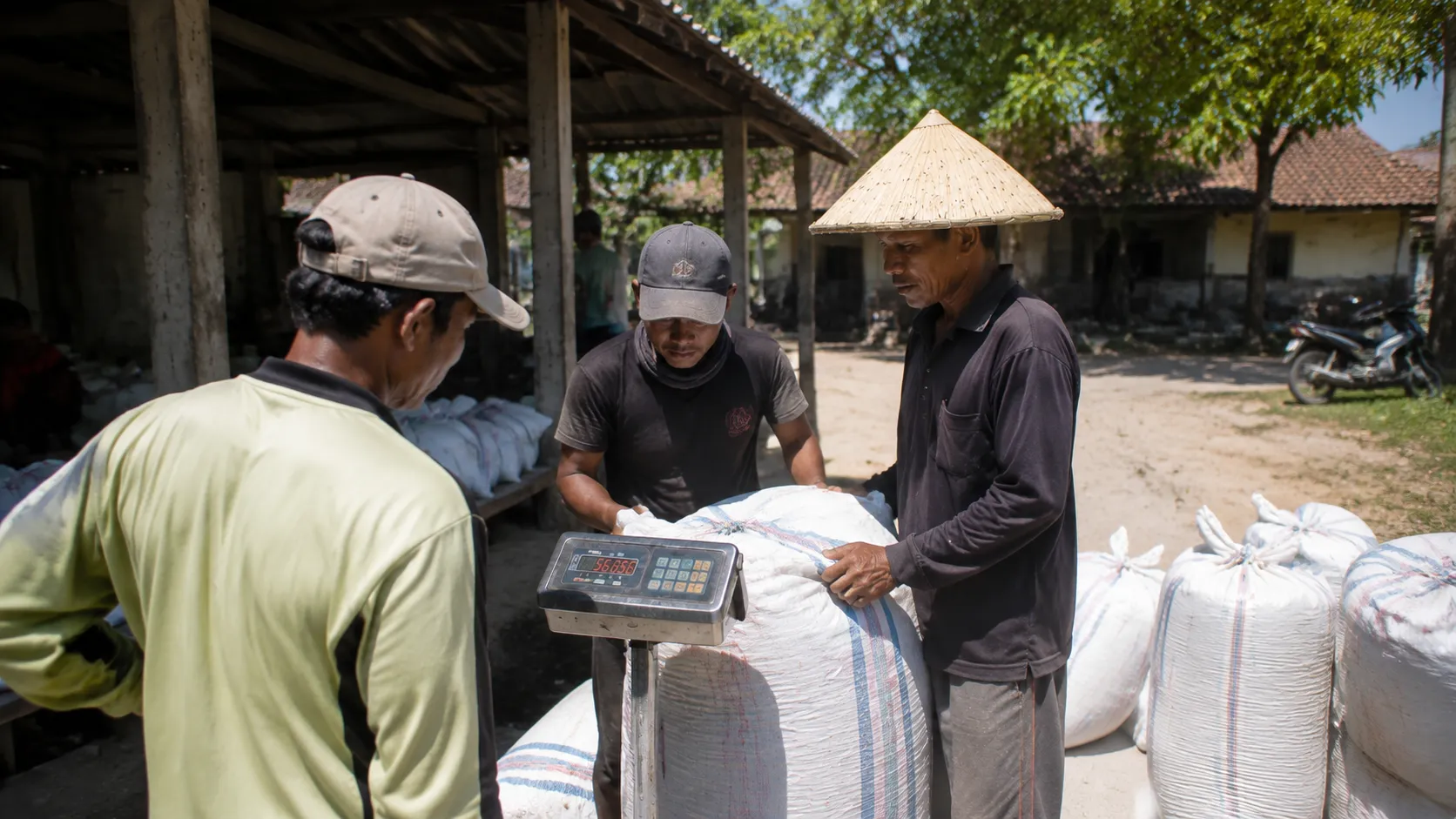
The fundamental economics driving this secondary phase of Bulog rice procurement revolve around defensive price stabilization. During peak harvest windows, a sudden oversupply of grain historically crashes farm-gate prices, devastating rural livelihoods and triggering localized defaults on micro-agricultural loans. By acting as the buyer of last resort with a bottomless balance sheet, Bulog effectively sets a hard floor under rural asset values. This guaranteed liquidity provides agricultural cooperatives with the financial predictability required to invest in mechanical upgrades and advanced fertilization techniques for subsequent planting seasons.
Simultaneously, accumulating excess stock beyond the 4-million-ton baseline dramatically expands the Government Rice Reserve (Cadangan Beras Pemerintah or CBP). A bloated CBP is the ultimate blunt-force instrument for market intervention. Should retail rice prices spike in urban centers during future dry seasons, Bulog can aggressively flood local wet markets with subsidized inventory, instantly neutralizing speculative hoarding by private aggregators.
Related Insights

Looking ahead, the long-term viability of this aggressive Bulog rice procurement strategy will depend heavily on the agency’s ability to maintain the physical integrity of millions of tons of organic inventory across a tropical archipelago. Upgrading cold-chain logistics and modernizing rural silo infrastructure will require substantial private and public capital deployment over the next decade. Yet, as the 2026 data clearly demonstrates, the foundational operational architecture is already functioning at peak capacity. By aligning state balance sheets with grassroots agrarian productivity, Indonesia is engineering a highly resilient macroeconomic buffer capable of absorbing whatever shocks the global supply chain might deliver next.