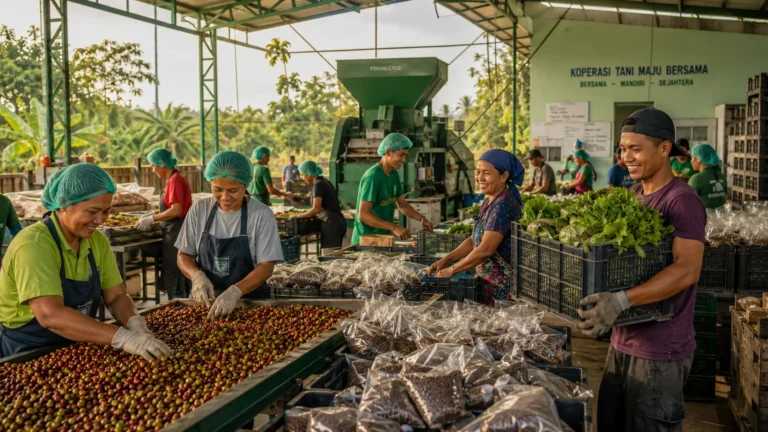

Digital micro-lending has matured into the single most critical financial innovation of the decade, driving unprecedented structural growth across rural micro-enterprises in emerging markets. For over a generation, the deployment of micro-credit was constrained by the physical and logistical limitations of brick-and-mortar financial institutions. While traditional microfinance succeeded in proving the fundamental creditworthiness of unbanked populations, its localized scale remained small, highly dependent on manual paperwork, and structurally vulnerable to regional shocks. The administrative cost of dispatching field officers to remote villages to collect physical cash repayments created high operational overhead, forcing institutions to keep interest rates stubbornly high. Today, however, the rapid proliferation of modern financial inclusion platforms has completely rewritten the landscape. By replacing slow, physical distribution networks with frictionless, real-time algorithmic underwriting, the global finance industry is successfully closing the historic credit gap for grassroots producers.
Related Insights


As we navigate through 2026, the convergence of mobile telecommunications, decentralized cloud infrastructure, and data analytics has enabled the massive expansion of next-generation fintech microfinance architectures. Institutional asset managers, global impact funds, and multinational consumer goods companies are aggressively backing these automated digital channels. The core economic value proposition is undeniable: by digitizing the entire lending lifecycle—from initial biometric onboarding to automated credit evaluation and digital wallet disbursement—lenders can scale their portfolios across millions of previously invisible borrowers simultaneously. This systemic transformation does not merely provide temporary survival capital; it delivers the precise, scalable liquidity that unlocks long-term commercial optimization for rural micro-enterprises, permanently formalizing the economic foundations of emerging markets.
Breaking the Logistical Deadlock: The Mobile Money Solution
To fully appreciate the commercial impact of modern digital micro-lending, one must first analyze the deep structural vulnerabilities that historically paralyzed legacy microfinance initiatives. Traditional lenders were severely bottlenecked by manual field distribution methods that made micro-lending commercially unviable at scale. The introduction of pervasive mobile money ecosystems has successfully solved these long-standing market frictions.
Specifically, mobile money technology has successfully broken down the three primary barriers that historically restricted traditional microfinance institutions:
- High Operational Overhead Costs: Legacy micro-lending required a massive network of physical branches and manual credit officers to travel to remote villages for debt collection. Mobile money networks completely eliminate this necessity by automating all repayment tracking via secure, low-cost digital wallet transactions.
- Absolute Documentation and Collateral Deficits: Traditional credit models mandate formal bank account statements, tax documentations, and fixed property deeds. Mobile money technology bypasses this void entirely by capturing the user’s daily transactional history, generating a rich alternative digital ledger that acts as behavioral collateral.
- Crippling Capital Disbursement Delays: Processing a manual loan application through traditional committee reviews frequently took weeks to complete. Mobile money infrastructure enables near-instantaneous underwriting, transferring capital directly to an entrepreneur’s device within minutes of approval to meet immediate market demands.
By resolving these foundational friction points, mobile financial rails have converted microcredit from a high-overhead, charity-dependent operation into a highly streamlined, automated, and commercially lucrative fixed-income asset class capable of drawing massive global liquidity pools.
Related Insights

The Analytics Engine: Algorithmic Underwriting in Fintech Microfinance
The true heart of modern digital micro-lending is the deployment of sophisticated machine learning algorithms that process non-traditional data arrays in real time. In the contemporary landscape of fintech microfinance, the absence of a conventional credit score is no longer a barrier to financial access. Instead, advanced financial inclusion platforms ingest a diverse spectrum of alternative data inputs to reconstruct a highly accurate, dynamic profile of a borrower’s repayment capacity.
Every single transaction processed through an entrepreneur’s digital wallet—ranging from daily airtime consumption and utility bill settlements to supplier payments and wholesale crop sales—contributes to a comprehensive mobile money footprint. The underlying artificial intelligence parses these transactional frequencies, network velocities, and behavioral consistencies simultaneously. For example, a village retail merchant who maintains a highly stable, recurring history of digital inventory purchasing from verified distributors is automatically recognized by the algorithm as a low-risk client. This automated analysis allows platforms to extend fair working capital loans instantly, bypassing manual bureaucracy and providing rural micro-enterprises with the constant liquidity needed to scale production workflows.
Circular Economies and Multilateral Financial Stability
The macroeconomic impact of scaling digital micro-lending extends far beyond individual business optimizations. When localized capital flows smoothly through automated digital networks, it actively accelerates the formation of highly resilient, self-contained circular economies within rural sectors. Immediate liquidity allows communities to invest directly in local waste-to-value systems, renewable energy mini-grids, and sustainable inputs, ensuring that capital continues to circulate productively within the geographic boundaries of the village.
This localized economic stabilization has captured the attention of premier global financial regulatory bodies, who recognize that grassroots economic formalization serves as a vital safeguard against macro-level volatility.
According to comprehensive research published in recent development briefs by the International Monetary Fund (IMF), the systematic digitalization of micro-lending portfolios acts as a profound macroeconomic shock absorber. This infrastructure successfully stabilizes circular economy structures in emerging regions by maintaining local retail velocity and supply chain continuity during periods of intense international market volatility.
“The systematic digitalization of micro-lending portfolios acts as a profound macroeconomic shock absorber, stabilizing circular economy structures in emerging regions by maintaining local retail velocity and supply chain continuity during periods of intense international market volatility.”
This institutional validation positions digital micro-lending as a premier asset class for conservative global fund managers. By providing concrete proof that micro-capital actively fortifies broader regional supply chains against external macroeconomic disruptions, transparent fintech microfinance platforms are successfully unlocking massive capital allocations from institutional ESG investment portfolios worldwide.
Cross-Platform Synergy within the Agritech Landscape
The long-term economic sustainability of rural micro-enterprises reaches its peak efficiency when digital micro-lending frameworks interface directly with the wider, data-driven rural financial ecosystem. The immediate working capital injected by financial inclusion platforms serves as the foundational liquidity layer that unlocks a diverse spectrum of advanced, community-wide wealth-building tools.
This cross-platform technical connectivity creates an incredibly resilient, self-reinforcing financial loop. For instance, the reliable digital transaction records generated by automated credit platforms directly accelerate regional mobile wallet adoption rates and expand commercial retail velocity. Furthermore, this absolute transactional transparency allows thin-file producers to satisfy the strict risk validation benchmarks of advanced de-risking rural credit initiatives managed by international banking institutions. By removing historical credit barriers, local cooperatives can safely protect their yields against extreme weather volatility via automated climate-indexed parametric insurance models, secure long-term capital through fixed-income portfolios raised via structured rural green bonds, optimize their raw material pipelines via corporate sustainable supply chain finance networks, and access advanced machinery through asset-backed financing configurations, ensuring the entire village network seamlessly qualifies for competitive resources distributed through global international green grants.
Building deep operational ties between distributed ledger architectures and mobile payment systems is the single most effective methodology to protect rural microcredit networks from systemic fraud, a framework rigorously tracked by the global financial dataset managed by the Consultative Group to Assist the Poor (CGAP). It guarantees that foreign investment capital circulates exclusively within productive, wealth-generating rural channels, completely isolated from administrative skimming or corporate institutional corruption at every single stage of the asset lifecycle.
Conclusion
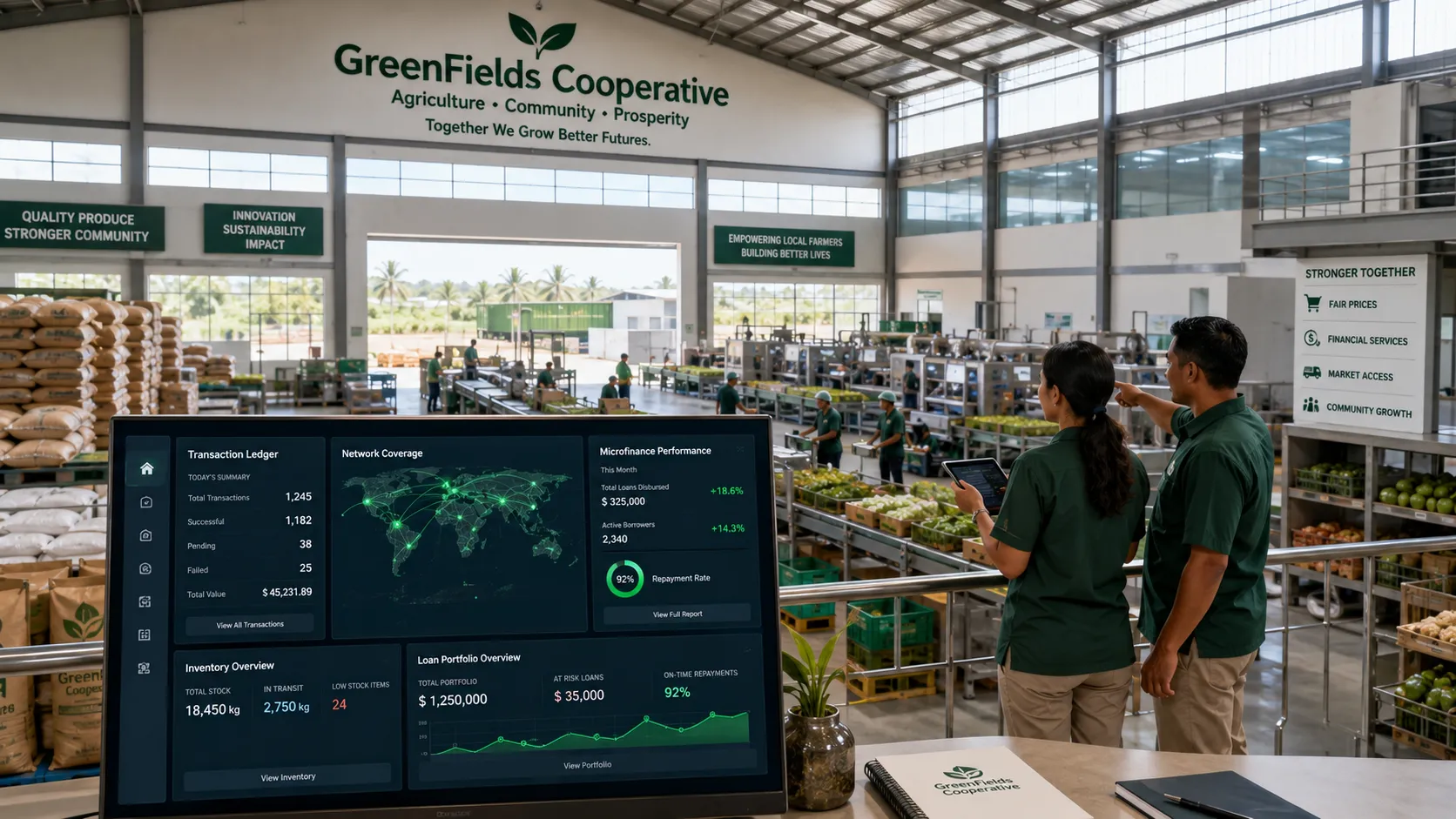
The evolution of digital micro-lending marks a permanent, structural paradigm shift in the execution of global development finance, turning the historic problem of rural economic isolation into a highly secure, data-verified commercial opportunity for global capital pools. By replacing old, exclusive, and document-heavy legacy credit assessment methods with automated algorithmic underwriting, real-time mobile money tracking, and comprehensive data integration, the global fintech movement has successfully built an unassailable highway toward universal financial inclusion.
The historical constraints of geographical isolation, lack of formal property documentation, and crippling administrative overhead are no longer absolute barriers to economic self-reliance. As decentralized cloud networks continue to mature, automated machine learning risk engines achieve absolute consensus data transparency, and corporate ESG mandate compliance intensifies across all international borders, the rural micro-enterprises that confidently integrate with these digital financial inclusion platforms will secure their position as the highly resilient, self-sustaining, and prosperous anchors of the modern global economy.