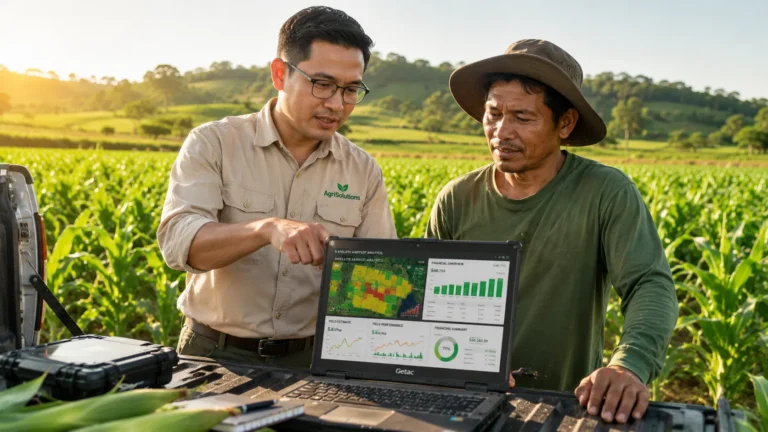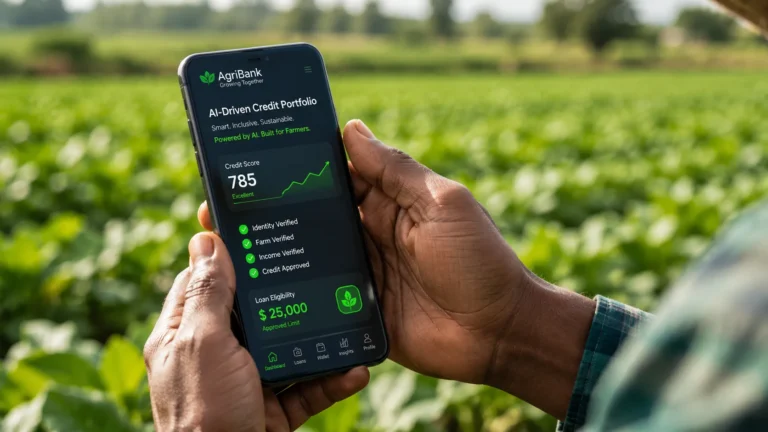
Access to reliable working capital remains the most formidable barrier for smallholder farmers operating within emerging markets. For generations, the relationship between rural agricultural producers and formal financial institutions has been defined by a fundamental disconnect in risk assessment. Traditional commercial banks rely on a rigid underwriting architecture that demands formal tax returns, audited business ledgers, and hard physical collateral—assets that the vast majority of grassroots farmers simply do not possess.
Related Insights


This systemic “thin-file” problem effectively redlined rural economies, categorizing highly capable producers as unbankable liabilities and starving entire agricultural value chains of the liquidity needed to scale. However, the financial landscape is undergoing a massive structural correction. By leveraging alternative data credit scoring, modern agritech platforms are successfully translating everyday rural digital behaviors into highly accurate, institutional-grade risk profiles.
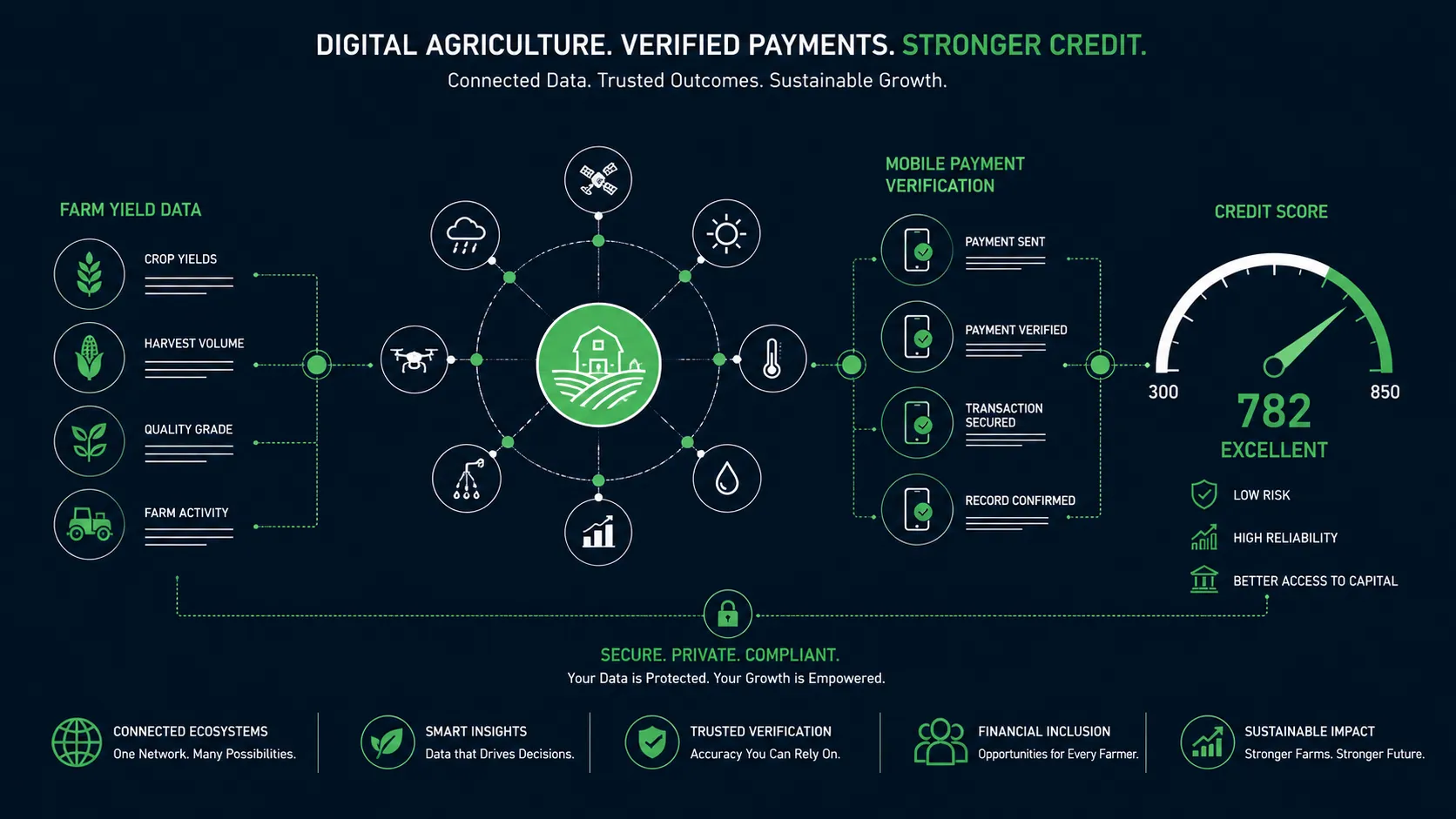
As we move through 2026, the proliferation of digital agriculture has created a massive, previously untapped trail of behavioral data. Every time a rural producer purchases seeds via a mobile wallet, logs a crop delivery at a local cooperative, or receives a digital payment from a wholesale buyer, they generate a verifiable data point.
Alternative data credit scoring engines aggregate these fragmented digital footprints, utilizing advanced machine learning algorithms to assess cash flow stability and operational competence in real time. This breakthrough methodology allows institutional lenders to safely inject much-needed liquidity directly into smallholder agricultural value chains, replacing historical bias with objective, data-driven financial inclusion.
The Mechanics of Non-Traditional Risk Profiling
To understand why tier-1 capital providers are rapidly adopting these new underwriting models, we must look at how alternative data completely bypasses the limitations of legacy banking. The goal is no longer to evaluate what a farmer owns in a static bank vault, but rather to analyze how consistently that farmer operates within their local economic ecosystem.
Related Insights


Modern credit algorithms synthesize a diverse array of non-traditional metrics to build a comprehensive borrower profile. The three most critical data streams utilized in this process include:
- Mobile Wallet Transaction Velocity: Instead of reviewing formal bank statements, algorithms analyze the frequency and consistency of a farmer’s daily mobile money transactions. Regular utility payments, consistent airtime top-ups, and stable digital cash inflows provide absolute proof of steady baseline liquidity.
- Supply-Chain Log Metrics: Digital ledgers maintained by agricultural cooperatives track exact harvest delivery weights and quality grades over multiple seasons. This historical production data acts as a powerful proxy for operational reliability, proving to lenders that the farmer consistently meets commercial market demands.
- Agri-Input Purchasing Patterns: The timing and volume of fertilizer or premium seed purchases reveal a farmer’s dedication to crop optimization. Producers who consistently invest in high-quality inputs ahead of the planting season demonstrate forward-looking financial planning, which drastically lowers their predictive default risk.
By transforming these daily operational habits into a structured financial identity, alternative data credit scoring bridges the gap between informal agrarian networks and highly regulated commercial banking sectors.
Unlocking Tier-1 Capital for Grassroots Producers
The macroeconomic impact of converting unstructured rural data into standardized credit scores is monumental. For decades, international impact funds and corporate agricultural buyers hesitated to deploy direct capital into rural networks because the cost of manually auditing thousands of individual micro-borrowers was financially catastrophic. Alternative data engines completely automate this due diligence phase.
When an underwriting algorithm successfully isolates a high-performing, low-risk farmer using behavioral data, it allows lending institutions to instantly pre-approve working capital loans with near-zero manual overhead. This systemic de-risking is exactly what enables commercial banks to confidently lower their interest premiums and expand their credit pipelines into previously isolated regions.
The broader impact of this technological shift is rigorously monitored by global financial authorities. According to extensive market research published by the International Finance Corporation (IFC), deploying alternative credit frameworks acts as the primary catalyst for rural economic formalization, allowing financial institutions to scale their agricultural portfolios safely while significantly driving down regional non-performing loan (NPL) rates.
“By capturing the digital exhaust of everyday agricultural transactions, alternative credit scoring models effectively neutralize the informational asymmetry that has historically paralyzed rural lending, unlocking billions in vital working capital for the world’s most vulnerable supply chains.”
This automated trust mechanism ultimately ensures that when a global agribusiness seeks to strengthen its supply chain, it can seamlessly inject liquidity directly into the hands of the primary producers who need it most, ensuring uninterrupted seasonal harvests.
Synergizing Data with the Agritech Financial Ecosystem
The true power of alternative data credit scoring is fully realized when it functions as the foundational layer of a broader, interconnected rural financial architecture. A verifiable digital credit identity is the skeleton key that unlocks a vast suite of advanced macroeconomic tools designed to permanently elevate smallholder communities.
This cross-platform synergy creates a highly resilient economic loop. For instance, once a farmer secures a baseline credit identity, they can easily access specialized asset-backed financing to lease high-efficiency agricultural drones and autonomous tractors. Furthermore, this pristine credit visibility makes localized cooperatives highly attractive candidates for structured P2P lending networks. By securing affordable, data-backed capital, these newly empowered producers can confidently shield their expanded operations against severe weather volatility by purchasing automated parametric weather-index insurance. Ultimately, this comprehensive financial integration ensures that entire rural districts are perfectly positioned to attract and deploy institutional capital raised via global rural green bonds, solidifying their long-term commercial viability.
Conclusion
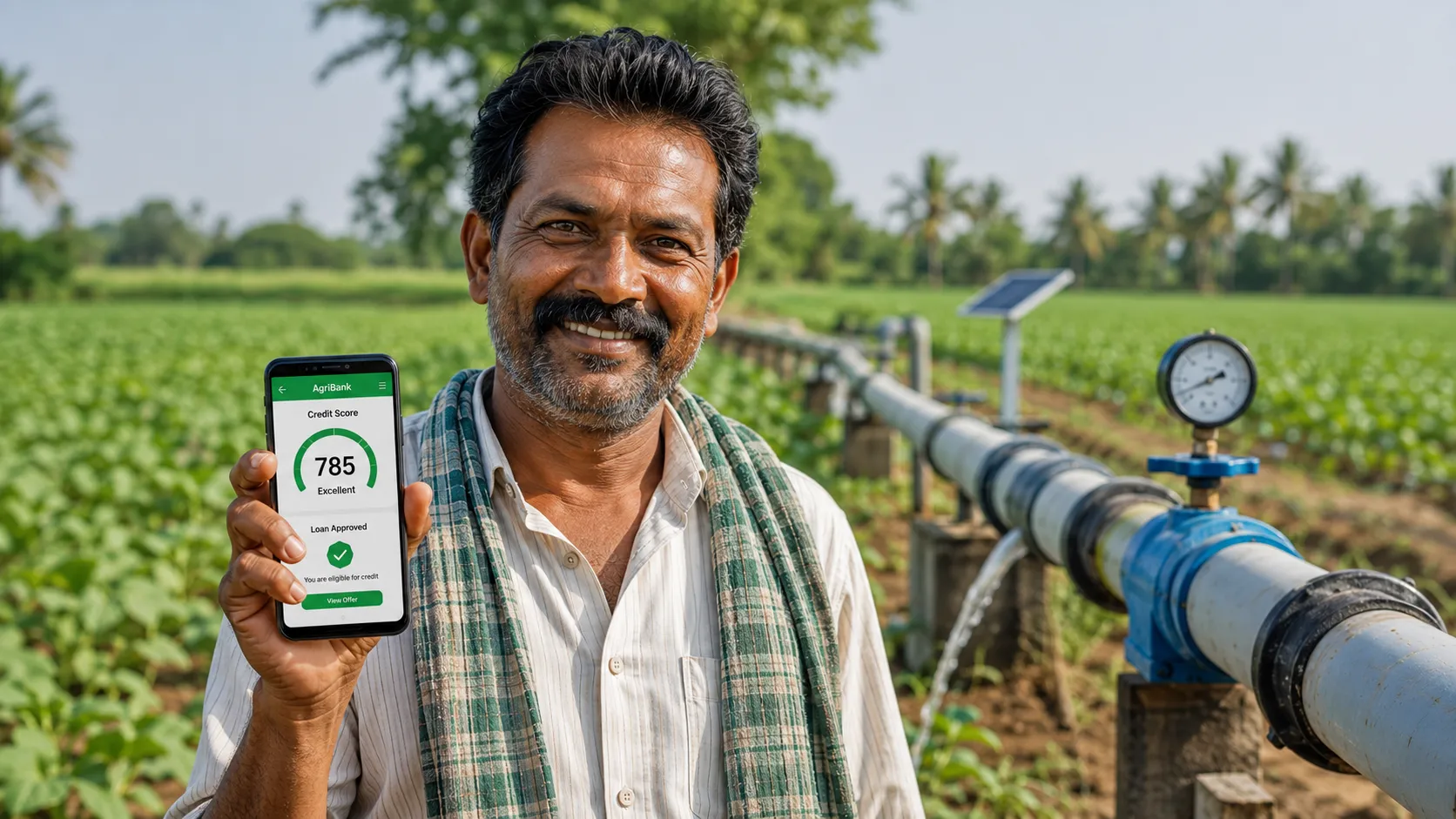
The widespread implementation of alternative data credit scoring represents a critical turning point in the modernization of global agricultural finance. By completely dismantling the archaic requirement for physical collateral and legacy banking documentation, fintech innovators have engineered a seamless, data-verified pipeline that connects unbanked rural farmers directly to global liquidity pools. The historical constraints of geographical isolation and formal financial invisibility no longer dictate the economic potential of a smallholder cooperative.
As mobile wallet penetration continues to deepen and supply-chain digitization becomes the industry standard, the agricultural networks that embrace these alternative underwriting frameworks will successfully secure the affordable, high-velocity capital required to thrive as the vital anchors of the global food supply chain.