

The stabilization of domestic food security requires an unyielding flow of working capital into the agricultural sector. However, primary agricultural production is inherently volatile, perpetually exposed to extreme weather anomalies, shifting global commodity prices, and volatile input costs. For traditional commercial banks, this level of unpredictable risk makes large-scale agricultural lending a highly unattractive proposition. Without institutional intervention, commercial lenders naturally retreat from rural markets, starving primary producers of the liquidity necessary to modernize their operations. To bridge this profound market failure, sovereign governments deploy strategic macroeconomic safety nets. Among the most successful and globally studied architectures is the sovereign loan guarantee framework engineered by the United States Department of Agriculture (USDA) through its Farm Service Agency (FSA). By utilizing the federal balance sheet to absorb the primary default risk, this institutional framework fundamentally rewrites the unit economics of agricultural lending.
Related Insights

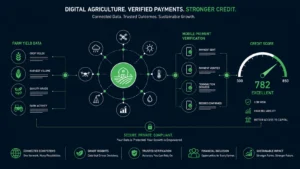
As international policymakers and global asset managers analyze the evolving landscape of development finance in 2026, the USDA FSA model is increasingly recognized as the definitive blueprint for sovereign risk mitigation. A sovereign loan guarantee does not function as a direct government handout or a permanent subsidy. Instead, it acts as a highly structured institutional co-investment. When a commercial bank underwrites a loan for an eligible agribusiness, the federal government legally guarantees to cover up to 95% of any potential principal loss in the event of a default. This risk-sharing mechanism radically alters the commercial bank’s capital allocation requirements, transforming a high-risk agrarian loan into a highly secure, federal-backed asset. This comprehensive institutional analysis evaluates how the FSA framework effectively lowers commercial interest rates, incentivizes private banking syndicates to expand rural liquidity, and provides a globally replicable model for de-risking the agricultural supply chain.
The Mechanics of Federal Risk-Sharing
To fully grasp the macroeconomic efficiency of the USDA FSA framework, one must evaluate how default risk dictates commercial banking behavior. Commercial lending institutions operate under strict regulatory capital requirements, mandated by central banking authorities like the Federal Reserve. When a bank issues a high-risk loan, it must hold a proportional amount of liquid capital in reserve to cover potential losses. This regulatory friction makes rural lending highly capital-intensive and inherently less profitable for the bank.
The introduction of a sovereign loan guarantee completely neutralizes this friction through a streamlined risk-sharing architecture:
- First-Loss Absorption: Under the FSA framework, the commercial bank retains the responsibility for servicing the loan and maintaining the client relationship. However, if the agricultural enterprise suffers a catastrophic failure, the USDA absorbs the vast majority of the financial hit. By capping the bank’s maximum loss exposure at just 5% to 10% of the principal, the federal government removes the existential threat of rural lending.
- Capital Relief for Lenders: Because the loan is backed by the sovereign credit of the United States government, regulators allow commercial banks to assign a much lower risk-weighting to the asset. This frees up the bank’s balance sheet, allowing them to rapidly recycle capital and issue a higher volume of loans across the rural sector without breaching regulatory thresholds.
- Secondary Market Liquidity: The federal guarantee makes the guaranteed portion of the loan highly liquid. Commercial banks can seamlessly bundle these guaranteed loans and sell them on the secondary institutional market, instantly replenishing their cash reserves to fund the next cycle of agricultural credit.
By structurally decoupling the localized farming risk from the commercial bank’s balance sheet, the sovereign guarantee transforms volatile agrarian debt into a pristine, institutional-grade fixed-income asset.
Related Insights


Lowering Capital Costs and Expanding the Borrower Base
The most immediate and tangible benefit of the FSA sovereign guarantee is its direct impact on the cost of capital for the end producer. Because the commercial lender is insulated from severe loss, they no longer need to charge predatory interest rate premiums to hedge their exposure. Consequently, agribusinesses can secure multi-million-dollar lines of credit at single-digit interest rates that closely mirror urban corporate lending benchmarks.
Furthermore, this risk mitigation allows commercial banks to drastically expand their total addressable market. Without a federal guarantee, banks systematically reject loan applications from beginning farmers, highly leveraged cooperatives, or operations recovering from recent natural disasters. The FSA framework effectively overrides these conservative automated rejections, incentivizing banks to aggressively deploy capital into demographics that are critical for long-term domestic food security but fall just outside conventional underwriting standards.
“Sovereign loan guarantee frameworks represent the most capital-efficient macroeconomic tool available for rural development. By utilizing public balance sheets to absorb localized agricultural risk, governments unlock massive reserves of private commercial liquidity, ensuring that vital farming networks remain capitalized even during periods of intense global market volatility.”
This institutional synergy ensures that public taxpayer funds are not depleted through direct lending, but rather leveraged to catalyze billions of dollars in private commercial investment.

Synergizing Sovereign Frameworks with the Global FinTech Ecosystem
The macroeconomic acceleration achieved by sovereign loan guarantees reaches its absolute peak commercial velocity when integrated with the broader, data-driven rural financial architecture. As global governments look to replicate the USDA model across emerging markets, they are increasingly demanding absolute digital transparency to protect their public treasuries from localized fraud.
This cross-platform technical connectivity creates an unassailable financial loop. For a rural cooperative to qualify for a commercially backed, state-guaranteed loan, they must demonstrate pristine operational tracking. This requirement accelerates the adoption of digitized core banking systems and advanced alternative data credit scoring models to prove supply-chain reliability. Once the guaranteed capital is deployed, agribusinesses can confidently utilize direct liquidity injection systems to secure heavy infrastructure through asset-backed financing.
To further protect the sovereign guarantee from climate-induced mass defaults, policymakers are increasingly pairing these credit frameworks with automated area-yield index insurance and satellite-verified parametric weather insurance. Ultimately, the robust auditing and institutional governance enforced by this sovereign-commercial partnership perfectly position these rural networks to attract massive global capital allocations via rural green bonds, cementing their long-term economic autonomy.
Conclusion
The institutional architecture of sovereign loan guarantees, as perfectly exemplified by the USDA FSA framework, marks a permanent, structural paradigm shift in the execution of global agricultural finance. By strategically utilizing the public balance sheet to absorb the primary risk of catastrophic default, governments can successfully dismantle the historic barriers that have kept commercial liquidity out of the rural sector.
The historical constraints of massive regulatory capital requirements, crippling interest rate premiums, and systemic institutional hesitation are no longer absolute barriers to agrarian modernization. As digital auditing technologies continue to mature and global capital markets demand higher volumes of ESG-compliant agricultural assets, the nations that confidently integrate these public-private risk-sharing models will secure their position as the highly resilient, self-sustaining anchors of the modern global food economy.