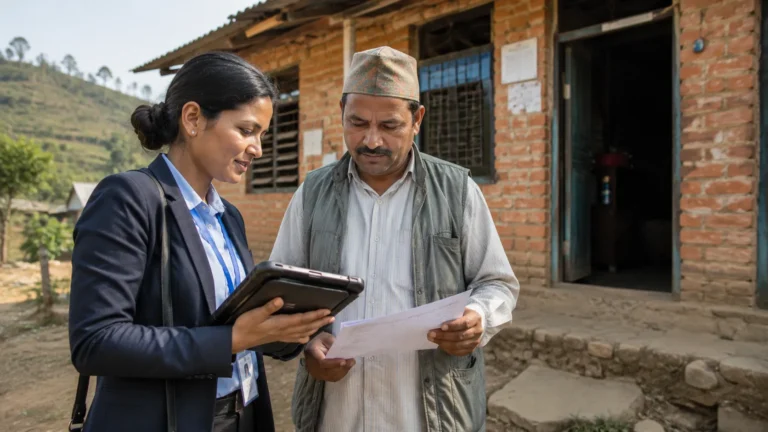

Executive Summary: In the rapidly evolving macroeconomic landscape of 2026, global institutional investors face a persistent paradox: the mandate to secure high-yield, ESG-compliant assets heavily conflicts with the imperative to defend capital against emerging market volatility. Historically, grassroots agricultural and rural infrastructure projects have been viewed as structurally uninvestable by foreign capital due to immense jurisdictional risk, fragmented land tenure, and an absolute lack of credit enhancement.
Related Insights


However, a profound legal and financial paradigm shift is actively occurring in Southeast Asia. At the absolute core of this transformation are sophisticated Blended Finance Frameworks designed to systematically engineer risk out of rural enterprise investments. By deliberately leveraging Indonesia’s statutory “Dana Desa” (Village Fund) as an institutional-grade first-loss capital guarantee, foreign allocators can seamlessly transform localized agrarian projects into highly secure, micro-sovereign-backed assets.
The strategic deployment of these structured Blended Finance Frameworks effectively bridges the immense gap between global private equity and grassroots economic potential. The Indonesian government annually allocates billions of dollars directly to tens of thousands of rural villages via the Dana Desa mandate. Until recently, this capital operated in a localized vacuum.
Today, advanced legal structuring allows this vast pool of state-backed liquidity to be legally syndicated with foreign institutional debt and equity. By actively partnering with a legally recognized BUM Desa (Badan Usaha Milik Desa / Village-Owned Enterprise), institutional investors can position the village’s statutory funds at the bottom of the capital stack, effectively absorbing the highest tranches of operational and default risk.
For sovereign wealth funds, corporate treasuries, and global infrastructure debt syndicates, this represents a generational breakthrough in risk mitigation. This executive advisory brief details the precise legal structuring and financial mechanics required to unlock micro-sovereign capital. We analyze how properly executed Blended Finance Frameworks provide unprecedented legal ring-fencing, ensuring that foreign direct investment (FDI) deployed into the rural economy is rigorously protected by the structural architecture of the state itself.
Related Insights


The Mechanics of First-Loss Capital in Blended Finance Frameworks
To fully understand the institutional appeal of this strategy, one must dissect the anatomy of the capital stack. In traditional emerging market project finance, the senior lender or foreign equity sponsor assumes an unacceptable level of grassroots operational risk. However, by deeply integrating the Dana Desa into modern Blended Finance Frameworks, the risk profile of the entire asset is mathematically inverted. The Dana Desa acts as a statutory, state-backed equity cushion—a specialized tranche of first-loss capital.
In practice, when a foreign institutional investor seeks to fund a massive rural infrastructure project—such as a localized solar micro-grid or a high-tech agricultural processing facility to support the biofuel supply chain—the village injects its Dana Desa allocation as the junior equity tier. If the project experiences an unforeseen operational deficit or a sudden macroeconomic shock, this village-level capital absorbs the initial financial losses before the foreign institution’s senior debt is ever impaired. This structural subordination provides an incredibly powerful “halo effect” of security, akin to the credit enhancements typically provided by multilateral institutions like the World Bank.
Furthermore, because the first-loss capital is directly derived from the sovereign treasury, the local community and the regional government possess a massive, vested political interest in the commercial success of the enterprise. This localized alignment of incentives drastically minimizes the risk of contract repudiation, localized labor strikes, or bureaucratic sabotage, creating a secure operational environment that mirrors the stability of institutional infrastructure debt allocation in developed jurisdictions.

Legal Structuring: BUM Desa as the Corporate Counterparty
A critical component of legally sound Blended Finance Frameworks is the establishment of a robust, highly enforceable corporate counterparty. Foreign capital cannot legally syndicate directly with an amorphous rural village. Enter the BUM Desa (Badan Usaha Milik Desa). Under recent sweeping reforms in Indonesian corporate law (including the Omnibus Law on Job Creation), a BUM Desa is officially recognized as a distinct, independent legal entity. This legal distinction is paramount; it explicitly ring-fences liability, ensuring that the enterprise operates strictly under the governance of national corporate law rather than convoluted regional customs.
When executing a cross-border investment, foreign institutional capital typically establishes a Special Purpose Vehicle (SPV) structured as a localized Joint Venture (PT PMA) with the BUM Desa. The BUM Desa contributes its state-allocated Dana Desa as equity, securing local land rights, permitting, and community labor. The foreign investor contributes senior debt, advanced technological intellectual property, and global market access. This highly formalized legal structure ensures that the foreign investor’s capital is fully protected by international arbitration clauses and bilateral investment treaties, effectively neutralizing traditional jurisdictional fears.
This rigorous corporate governance structure also allows for the seamless deployment of RegTech and automated compliance software. Institutional investors can impose strict, board-level financial controls, mandating transparent, audited reporting of all joint venture expenditures.
Because the BUM Desa is legally bound by the joint venture agreement, any misuse of funds is treated as a severe corporate breach, providing the foreign investor with immediate, legally enforceable remedies to seize underlying physical assets or unilaterally restructure the project’s management.
Mitigating Jurisdictional Risk in Agricultural Corridors
The true macroeconomic value of these Blended Finance Frameworks lies in their unparalleled ability to unlock liquidity in historically opaque agricultural and resource corridors. Traditional corporate finance models fail in rural emerging markets because the fundamental collateral—often agrarian land—lacks clear, securitizable title. By positioning a legally recognized BUM Desa as the domestic anchor, foreign investors completely bypass the quagmire of rural land tenure disputes.
When evaluating Blended Finance Frameworks, global credit committees heavily scrutinize the predictability of the underlying cash flows. Because the BUM Desa operates with the explicit political backing of the state, it can secure long-term, ironclad off-take agreements with massive domestic state-owned enterprises (SOEs) or global supply chains.
This ensures that the rural enterprise generates stable, inflation-indexed revenues. This approach is highly analogous to the rigorous strategies utilized for liquidity optimization in supply chain finance, where predictable off-take contracts serve as the definitive collateral for institutional credit facilities.
Furthermore, deploying capital through this structured methodology perfectly satisfies the stringent mandates of modern ESG (Environmental, Social, and Governance) investing. The Organization for Economic Co-operation and Development (OECD) guidelines on sustainable development explicitly highlight the necessity of mobilizing commercial capital for developing communities.
By legally structuring a joint venture that empowers the rural population while delivering strict, risk-adjusted yields to the foreign investor, institutions can achieve a verifiable “double-bottom-line” without compromising fiduciary security. This is the absolute gold standard for integrating ESG metrics into institutional capital allocation.

Strategic Advisory for Institutional Capital Deployment
Executing scalable Blended Finance Frameworks requires a multidisciplinary, highly rigorous underwriting approach. Generalist legal counsel and standard commercial due diligence are insufficient when structuring micro-sovereign partnerships. To absolutely guarantee the legal security of deployed capital, institutional investors must demand the following parameters prior to capital injection:
- Verification of Legal Incorporation: Investors must conduct exhaustive audits to ensure the partner BUM Desa is officially registered with the Ministry of Law and Human Rights. A BUM Desa that operates solely under a localized village decree lacks the necessary corporate veil to legally protect foreign joint-venture capital.
- Ring-Fencing Statutory Funds: The joint venture agreements must explicitly mandate that the Dana Desa capital injected into the project is irretrievably legally committed as first-loss equity. This prevents future village administrations from attempting to recall the statutory capital during political transitions.
- Implementation of Digital Escrow: All foreign capital should be deployed into highly secure, digitally monitored escrow accounts governed by international banking standards. Disbursements must be strictly tied to verifiable, on-the-ground operational milestones, preventing capital leakage into the broader rural political ecosystem.
Conclusion
The aggressive, strategic adoption of institutional Blended Finance Frameworks represents a definitive turning point in global emerging market investment. By legally transforming the Indonesian Dana Desa from a static rural subsidy into a dynamic, institutional-grade first-loss capital guarantee, foreign allocators can confidently deploy billions of dollars into high-yield agrarian and energy infrastructure projects.
This sophisticated legal structuring permanently solves the historical paradox of rural investment: it definitively secures foreign capital behind the protective shield of micro-sovereign equity. For corporate treasuries, private equity sponsors, and global infrastructure funds, mastering the legal and financial architecture of these Blended Finance Frameworks will unquestionably define the next decade of secure, high-yield capital deployment in Southeast Asia.