Rural infrastructure funding has emerged as the definitive cornerstone for transforming marginalized village economies, providing the vital financial machinery required to build low-carbon, climate-resilient regional connectivity grids. For decades, the architectural design of international development finance followed a rigid, purely macro-economic blueprint. Multilateral development banks historically prioritized massive urban mega-projects, leaving remote agricultural zones to subsist on highly fragmented local budgets and irregular public subsidies.
Related Insights

This investment gap created severe economic isolation for hundreds of millions of smallholders, cutting them off from fair commercial markets and leaving their basic roads, water systems, and electricity grids highly vulnerable to extreme environmental shocks. However, the operational launch of the World Bank’s modernized Sustainable Development Framework has completely rewritten the rulebook. By integrating strict environmental accountability with long-term social equity, this global framework has unlocked unprecedented access to large-scale rural infrastructure funding for communities prepared to execute green transformations.
As we advance through the fiscal year 2026, navigating the complex institutional channels to secure competitive rural infrastructure funding requires a highly sophisticated understanding of modern multilateral lending criteria. The World Bank Group has fundamentally moved away from traditional, non-environmental development assistance structures. Today, every single project seeking concessionary loans, non-repayable grants, or technical assistance must pass through an incredibly rigorous climate co-benefits screening process.
For project developers, non-governmental organizations (NGOs), and municipal authorities operating in emerging economies, this systemic shift demands a profound evolution in project design. If an infrastructure proposal cannot empirically demonstrate its contribution to carbon mitigation, local community resilience, or transparent institutional governance, it will face immediate technical disqualification. Conversely, those who successfully align their local engineering concepts with global sustainable parameters can tap into historic capital reserves designed to build future-proof rural systems.
The Strategic Pivot: How the World Bank Redefines Global Development Assistance
To successfully capture institutional allocations, project planners must first analyze the sweeping institutional reforms that define the current World Bank Sustainable Development Framework. Under its current operational mandate, the bank treats climate change not as an isolated environmental sub-category, but as an existential threat that underpaces all economic progress. Consequently, the eligibility matrix for accessing rural infrastructure funding is no longer a matter of simply proving basic engineering feasibility or simple local utility.
Related Insights


The updated framework utilizes a highly structured methodology to track the exact percentage of its lending portfolio that delivers direct climate co-benefits. This means that traditional civil engineering projects must be entirely re-imagined. For example, a proposal to construct a standard rural road network will struggle to secure funding if it relies on carbon-heavy logistics and conventional materials.
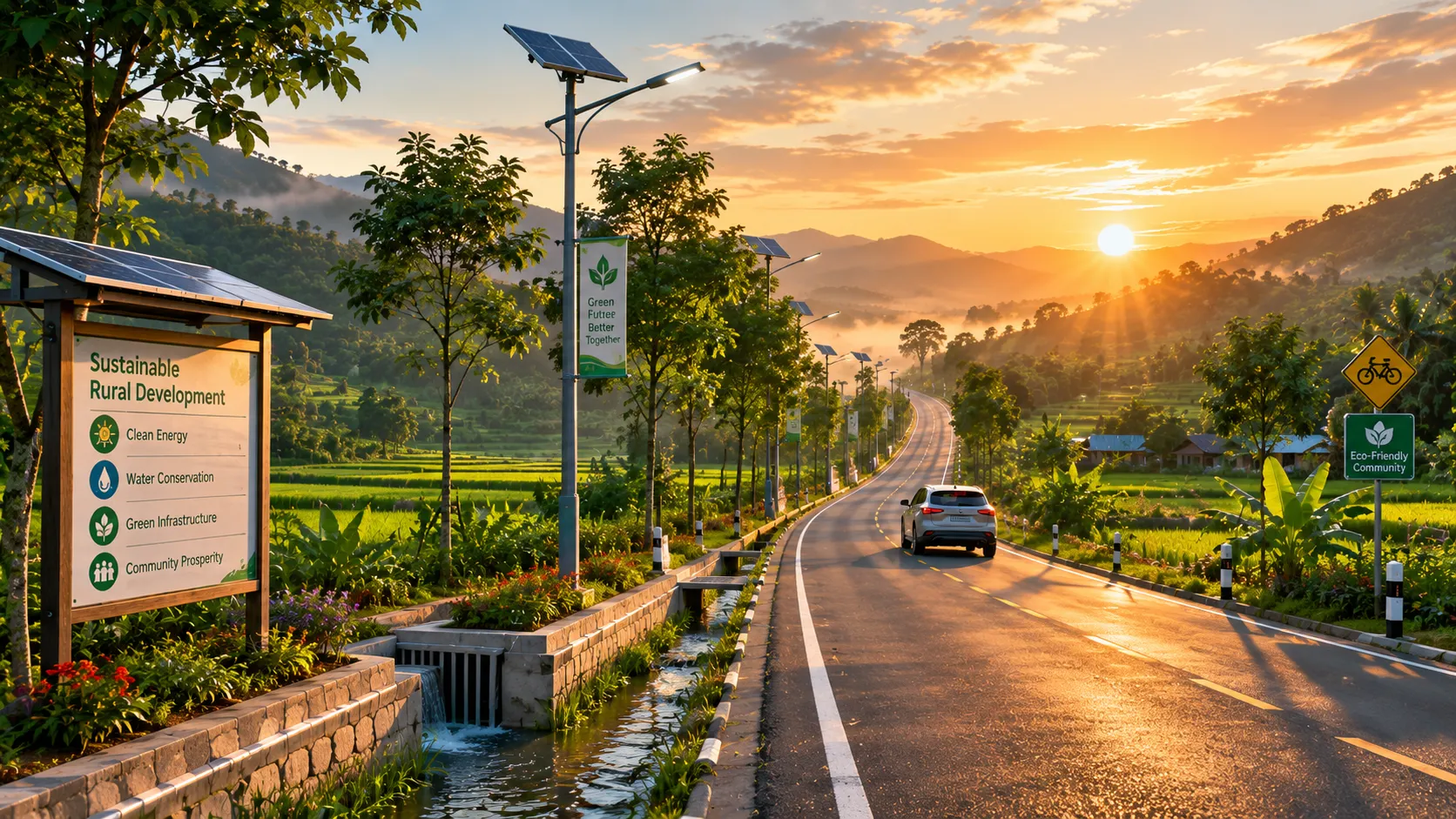
However, if the exact same proposal incorporates permeable low-carbon pavement, automated solar-powered drainage management, and hyper-local agroforestry buffers to prevent soil erosion during heavy flash floods, it instantly transforms into a high-priority green asset. By explicitly linking infrastructure delivery to global carbon reduction and ecological stabilization targets, the bank ensures that international capital actively funds broad-based resilience rather than legacy, fossil-fuel-dependent connectivity paradigms.
Core Pillars of the Sustainable Development Framework for Clean Rural Connectivity
The successful acquisition of modern development capital hinges upon an enterprise’s ability to cleanly align its field operations with the three core pillars of the bank’s operational criteria. These pillars act as the strict technical filtering mechanisms used by international review committees to evaluate every single application for rural infrastructure funding:
- The Environmental and Social Framework (ESF): The ESF comprises ten distinct Environmental and Social Standards (ESS) that govern everything from biodiversity conservation and sustainable resource management to labor conditions and cultural heritage protection. A project must prove it will cause zero net displacement of local populations and actively restore surrounding ecosystems.
- Climate Change Co-Benefits Harmonization: Every dollar disbursed must be mathematically audited to determine its exact contribution to either climate change mitigation (reducing greenhouse gas emissions) or climate change adaptation (enhancing systemic resilience against environmental volatility).
- Decentralized Procurement and Governance Transparency: The framework mandates the absolute elimination of institutional corruption through the deployment of auditable digital procurement platforms, open-book local accounting, and clear, accessible community grievance redress mechanisms.
When a rural infrastructure project successfully addresses all three pillars simultaneously, it transitions from a high-risk localized engineering gamble into an institutional-grade investment asset, significantly maximizing its competitive edge in the global grant selection pipeline.
“As global climate imperatives intensify, the World Bank Group has reached a historic milestone by delivering a record $50.8 billion in development finance with direct climate co-benefits, legally anchoring 48% of its entire global lending portfolio to low-carbon, future-proof rural infrastructure funding and green transition initiatives.”
This monumental financial commitment proves that the international funding pipeline is wide open for green initiatives. The multi-billion-dollar scale of this allocation means that the primary bottleneck to rural development is no longer a lack of global capital, but rather a lack of high-quality, technically compliant project proposals originating from the field.
Step-by-Step Pathway to Accessing Institutional Green Grants
Securing long-term rural infrastructure funding through the World Bank Group requires navigating a meticulous, multi-tiered institutional pipeline. Unlike commercial loans, these public international funds are distributed through highly formalized country-owned strategies, requiring deep coordination between local project developers, national ministries of finance, and regional World Bank task teams. Below is the essential step-by-step technical process required to move an infrastructure concept from drawing board to successful capitalization:
-
1. Strategic Alignment with the Country Partnership Framework (CPF)
The World Bank does not fund isolated projects in a vacuum. Every initiative must explicitly align with the active Country Partnership Framework (CPF) negotiated between the bank and the host national government. Project developers must rigorously audit the CPF document to identify specific, pre-approved national development indicators—such as rural clean energy expansion or agricultural watershed management—and format their proposal to directly advance those exact sovereign targets. -
2. Securing Pre-Feasibility Financing via Project Preparation Facilities (PPFs)
Conducting advanced environmental impact assessments, geotechnical surveys, and socioeconomic mapping is incredibly expensive. To overcome this early-stage capital hurdle, developers should submit initial project concept notes to donor-funded partnerships hosted by the bank, such as the Global Infrastructure Facility (GIF) or the Public-Private Infrastructure Advisory Facility (PPIAF). These specialized entities provide non-repayable technical assistance grants specifically designed to build bankable, high-integrity project architectures. -
3. Passing the Stringent World Bank Quality Enhancement Review (QER)
Once the comprehensive full project proposal is drafted, it undergoes a rigorous, multidisciplinary evaluation by an independent panel of international experts during the Quality Enhancement Review phase. The QER panel intensely audits the financial internal rate of return (IRR), checks the structural resilience of the engineering designs against 100-year climate projections, and verifies that all procurement protocols comply with the bank’s strict anti-fraud guidelines. -
4. Formal Board Approval and Legal Effectiveness Safeguards
Following successful technical clearing, the project is formally submitted to the World Bank Board of Executive Directors for final authorization. Upon board approval, legal financing agreements are signed with the host nation’s Ministry of Finance. To achieve operational effectiveness and trigger the initial disbursement of capital, the local project management unit must finalize all domestic regulatory approvals and establish a fully verified digital financial tracking system.

Overcoming Strict Technical Screening: Compliance, MRV, and Governance
The primary reason excellent rural development initiatives fail to secure institutional approval is the complete absence of a scientifically valid Monitoring, Reporting, and Verification (MRV) architecture. International review panels evaluating proposals for rural infrastructure funding will immediately discard applications that rely on vague, emotional, or purely qualitative descriptions of impact. Lenders demand empirical data pipelines that prove every single dollar disbursed translates into measurable environmental and social improvements.
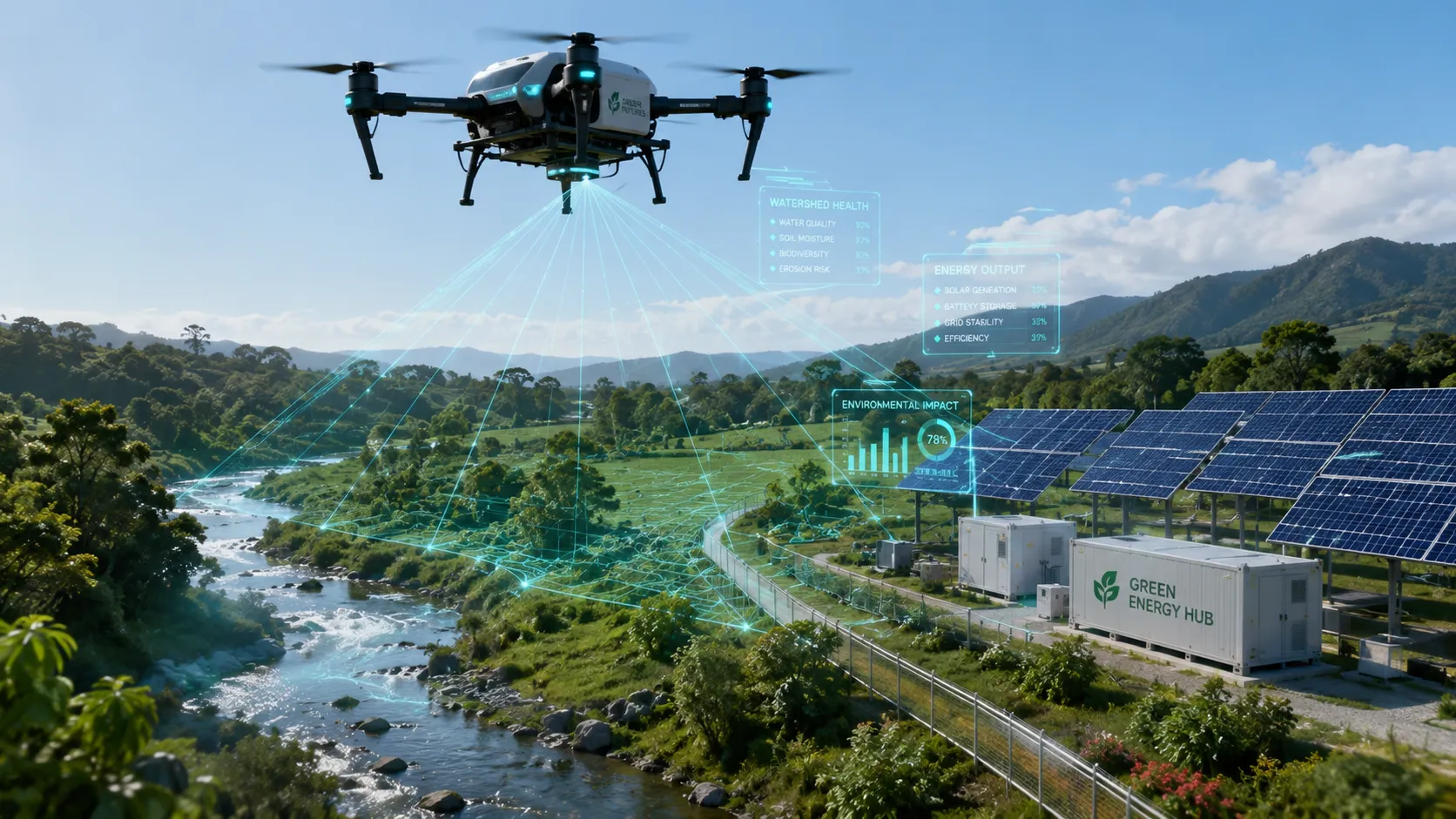
To pass this technical screening, project planners must integrate advanced digital technologies directly into their operational blueprints. Utilizing high-resolution satellite remote sensing to verify forest preservation, deploying automated Internet of Things (IoT) sensors to monitor clean water distribution volumes in real time, and tracking project expenses via open-source digital ledgers are no longer optional luxuries; they are fundamental administrative requirements.
Aligning your local tracking methodologies with the rigorous standards established by trusted international climate metrics—such as the data validation frameworks maintained by the United Nations Environment Programme (UNEP)—signals to institutional donors that your organization operates with absolute scientific and administrative integrity.
Synergizing Infrastructure Grants with Localized Financial Safety Nets
The transformative macroeconomic power of large-scale international development funding is vastly multiplied when it is strategically linked to existing, grassroots financial ecosystems. A green bridge, an off-grid solar grid, or a regional clean water facility does not operate in economic isolation; it serves as the physical backbone that unlocks deep, community-wide financial optimization. Savvy project developers maximize their funding eligibility by explicitly showing the bank how their large-scale engineering assets will directly support and de-risk local micro-economies.
This cross-platform integration creates a highly resilient, self-sustaining economic loop. For instance, the reliable energy provided by a grant-funded solar grid allows local rural merchants to adopt proximity payment terminals, rapidly driving up localized mobile wallet adoption rates and expanding commercial retail velocity. Furthermore, this digital formalization generates an invaluable transactional history that allows smallholders to seamlessly qualify for advanced digital financial inclusion strategies that minimize lending risks across the region.
By linking macro-level infrastructure stability directly to automated risk frameworks, tech-enabled communities can easily buffer themselves against climate shocks via next-generation parametric crop insurance models and secure additional capital through decentralized peer-to-peer microfinance networks, ensuring the entire village economy thrives long after the international grant cycle concludes.
Conclusion
The World Bank’s Sustainable Development Framework represents a permanent, structural evolution in the execution of global development finance, turning the historic challenge of climate change into a massive funding opportunity for proactive communities. By shifting the international lending paradigm from traditional, carbon-heavy infrastructure to highly resilient, low-carbon, and data-verified connectivity grids, multilateral development banks have established a reliable pathway toward shared, global prosperity. The barriers of geographic isolation, institutional mistrust, and informational gaps are being decisively dismantled by the strategic deployment of green capital.
As technical proposal methodologies become more standardized, digital tracking platforms achieve absolute transparency, and corporate ESG mandates tighten worldwide, the nations, municipalities, and local organizations that act decisively to design future-proof, sustainable infrastructure will secure their place as the primary beneficiaries of the modern global green economy.