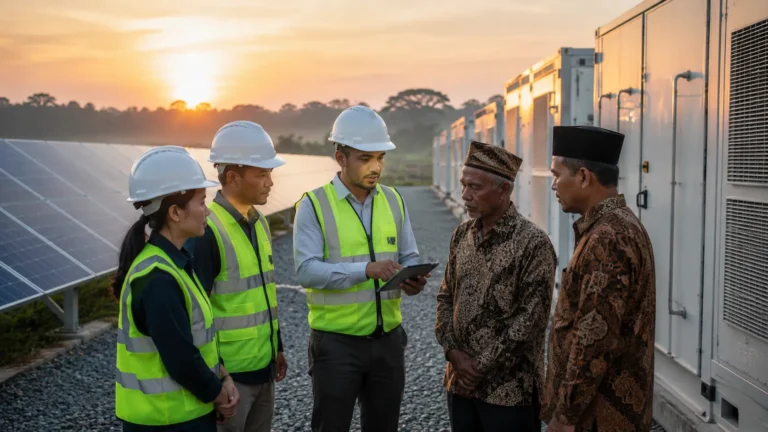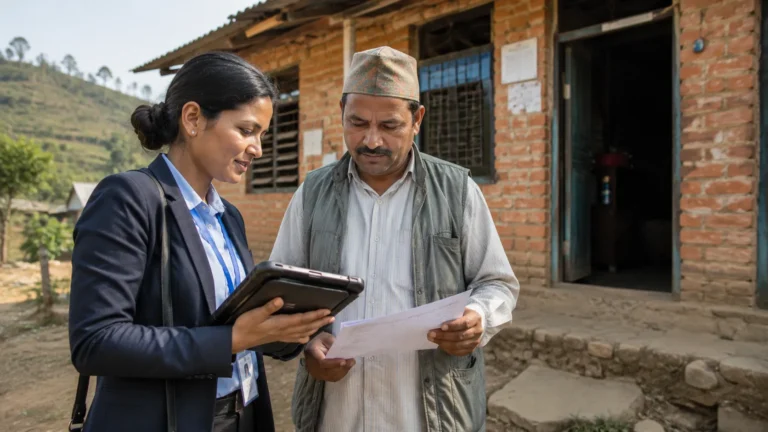
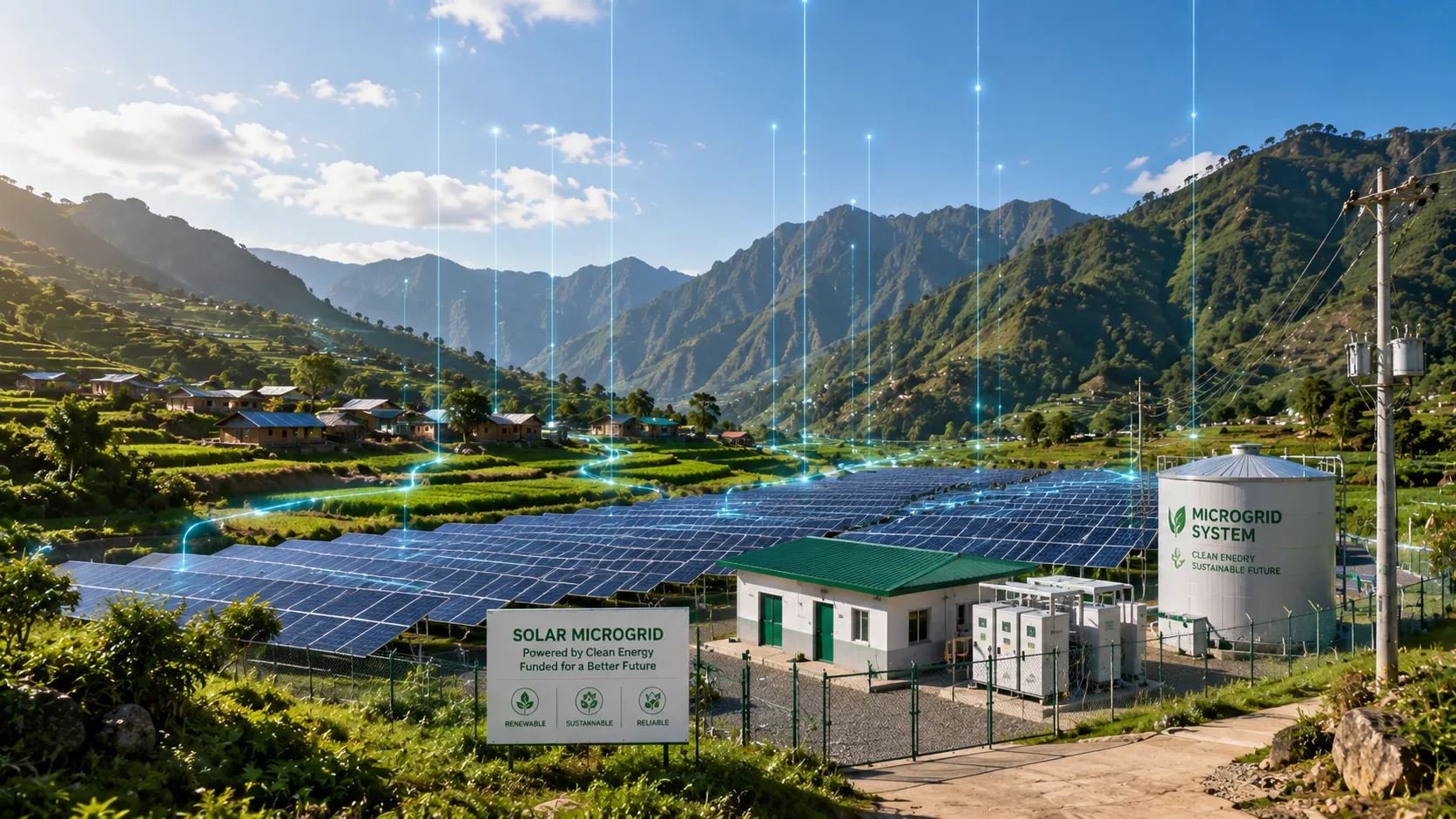
Rural green bonds have emerged as a revolutionary institutional debt instrument, fundamentally altering how remote village communities capture global capital to fund clean, decentralized energy infrastructure. For decades, the structural electrification of isolated agrarian zones stood as one of the most persistent gridlocks in international development.
Related Insights


Conventional utility corporations and commercial banks routinely bypassed rural regions due to high initial capital expenditure requirements, thin consumer margins, and the extreme logistical friction of extending centralized power lines across complex, remote topologies. This systemic underinvestment left hundreds of millions of people in localized dark zones, dependent on expensive, highly polluting fossil fuels like diesel generators and kerosene.
However, the modern financial landscape is experiencing a massive transformation. By pooling community-scale renewable energy projects into highly structured, institutional-grade fixed-income portfolios, rural green bonds are bridging the historic funding gap between international capital markets and grassroots environmental opportunities.
As we navigate through 2026, the international asset management community is undergoing a profound structural shift toward tangible, data-verified impact assets. Forward-thinking sovereign wealth funds, elite investment brokers, and clean energy conglomerates are actively redirecting capital away from legacy fossil fuel portfolios toward fixed-income structures that guarantee verifiable carbon reductions. In this rapidly changing macroeconomic environment, traditional development loans are proving insufficient to meet the sheer scale of the global net-zero transition.
Issuing rural green bonds allows municipal authorities, agritech enterprises, and green developers to securitize decentralized infrastructure projects, converting fragmented village installations into highly liquid, low-risk investment vehicles. This article delivers an exhaustive analysis of this modern debt ecosystem, illustrating how innovative underwriting, technological verification, and institutional syndication are successfully de-risking remote renewable energy deployments globally.
Related Insights


The Structural Gridlock: Why Traditional Capital Avoided Village Infrastructure
To fully appreciate the macroeconomic value of utilizing rural green bonds, one must first analyze the market failures that historically prevented formal credit from penetrating off-grid rural spaces. Commercial financial systems are natively designed to underwrite large-scale, highly centralized urban assets with highly predictable multi-decade corporate balance sheets. When traditional project finance models are forced onto remote rural contexts, the financial architecture collapses due to multiple institutional frictions.
- Extreme Fragmentation Friction: A single off-grid solar microgrid or local biomass gasification plant typically requires an investment of only $50,000 to $200,000. For tier-one global investment firms, underwriting individual projects of this minuscule size is logistically impossible due to high legal and technical due diligence costs.
- The Collateral Void: Remote community cooperatives rarely possess institutional-grade corporate balance sheets, recognized sovereign guarantees, or traditional physical collateral that standard international commercial bank syndicates require to secure credit lines.
- Long-Term Yield Ambiguity: Because rural consumers frequently operate within volatile, seasonal cash economies, calculating precise long-term utility collection rates and asset internal rates of return (IRR) using urban consumer financial metrics is highly inaccurate.
This compounding credit gridlock left rural populations structurally trapped. Without baseline electrical power, localized processing facilities could not scale, micro-enterprises could not adopt modern digital tools, and regional productivity remained suppressed. Breaking this cycle required a complete re-engineering of the financial aggregation model, setting the stage for the rapid ascension of rural green bonds as a premier tool for international development syndication.
The Financial Architecture of Rural Green Bond Securitization
The core innovation driving the success of modern rural green bonds is the process of structural securitization and capital aggregation. Rather than attempting to market individual village energy installations to separate investors, specialized green underwriters utilize Special Purpose Vehicles (SPVs) to pool hundreds of distinct, geolocated microfinance energy projects into a single, comprehensive bond issuance. This aggregation creates a diversified financial asset with a total volume large enough—typically ranging from $50 million to $250 million—to attract tier-one institutional capital pools.
These structured debt portfolios are explicitly mapped out in complete compliance with the International Capital Market Association (ICMA) Green Bond Principles. This rigid international framework guarantees that 100% of the capital derived from the sale of rural green bonds is legally locked into pre-approved, environmentally verified asset categories. Lenders and asset managers purchase these bonds because they offer a highly attractive dual-return matrix: reliable, fixed-interest coupon yields backed by physical infrastructure assets, combined with pristine, verifiable Environmental, Social, and Governance (ESG) performance metrics that satisfy strict corporate sustainability mandates transparently.
Technological Monitored Verification: The Role of Digital MRV
Institutional investment firms will not risk capital on green infrastructure if they suspect the underlying ecological data is unverified or vulnerable to greenwashing. The mainstream adoption of rural green bonds has only been made possible by the integration of cutting-edge Digital Measurement, Reporting, and Verification (dMRV) platforms that monitor project execution continuously.
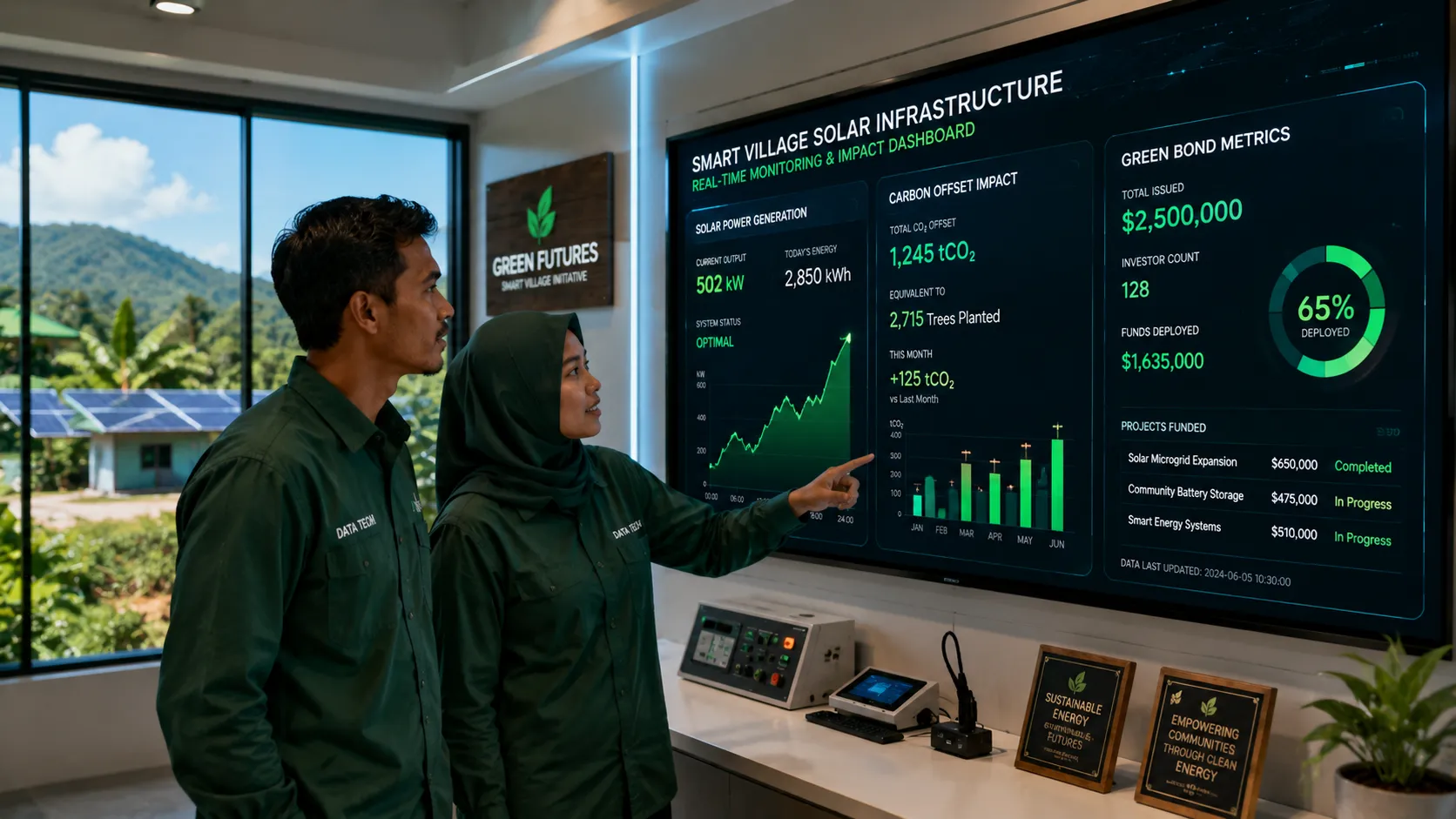
Modern green debt portfolios deploy advanced Internet of Things (IoT) sensors directly into every solar inverter, micro-hydro turbine, and biomass gasifier funded by the bond issuance. These smart sensors record energy generation, battery storage efficiency, and local power consumption metrics in real time. The collected data is broadcasted continuously via satellite telecom networks onto secure, public digital ledgers. This transparent data pipeline allows global investment brokers and environmental auditors to log into a single digital dashboard and verify the exact amount of carbon dioxide avoided by their capital down to the kilowatt-hour. By eliminating administrative opacity and proving the operational permanence of the asset, dMRV systems radically de-risk the entire bond portfolio, driving down interest yields and keeping capital highly affordable for the host communities.
Macroeconomic Multipliers: Supercharging the Smart Village Economy
The economic impact of deploying capital derived from rural green bonds extends far beyond the simple provision of clean illumination. The introduction of baseline, reliable, and affordable electrical power functions as a profound macroeconomic catalyst, transforming stagnant subsistence agrarian zones into highly productive, diversified modern economies.
- Industrialization of Agricultural Processing: Access to continuous electricity allows local cooperatives to install automated cold-storage facilities, grain mills, and modern processing equipment, allowing communities to retain immense value that was previously lost to post-harvest spoilage.
- Frictionless Local Retail Velocity: Reliable power grids allow local merchants to operate late into the evening and deploy digital payment terminals safely, driving a significant expansion in localized transaction volumes.
- Reversal of Regional Brain Drain: The technical requirement to manage, maintain, and optimize smart microgrids creates high-paying local tech and engineering positions, encouraging educated rural youth to remain within their communities to drive long-term regional development.
This widespread economic expansion ensures that the local utility payments collected from consumers remain highly stable, providing a robust, highly reliable cash-flow base that seamlessly funds the long-term coupon repayments due to international bondholders.
Synergizing Green Debt with the Broader Rural Finance Landscape
The successful scaling of modern clean energy portfolios requires the existence of a multi-layered, deeply integrated digital financial ecosystem at the grassroots level. Large-scale international debt assets cannot function efficiently if the local population lacks the tools to pay for the generated utilities transparently. Therefore, progressive green developers ensure that bond-funded infrastructure works in perfect harmony with existing digital financial networks.
This cross-platform connectivity creates a powerful, self-sustaining financial loop. For instance, the deployment of smart off-grid utilities directly accelerates regional mobile wallet adoption rates by allowing consumers to settle their utility bills via pay-as-you-go (PAYG) digital transfers. Furthermore, this continuous digital interaction generates a rich transactional ledger that allows smallholders to satisfy the strict risk criteria of advanced de-risking rural credit initiatives managed by commercial banks. By removing credit barriers, local entrepreneurs can easily secure expansion capital through global peer-to-peer microfinance networks, stabilize operations via automated climate-indexed parametric insurance models, and position their community enterprises to cleanly qualify for non-repayable resources distributed through competitive corporate international green grants.
According to extensive sustainable financing reports published by the Climate Bonds Initiative (CBI), structural integration between international debt vehicles and local fintech platforms is the single most effective methodology to minimize default risks in emerging economies. It provides institutional underwriters with absolute certainty that every single cent of utility revenue is captured, tracked, and routed efficiently without encountering local institutional corruption or administrative leakage.

Conclusion
The global rise of rural green bonds marks a permanent, structural evolution in how the international financial system funds global sustainable development. By replacing fragmented, high-risk localized funding methods with aggregated, data-verified, and institutional-grade fixed-income portfolios, the green debt movement has built an unassailable bridge toward universal clean energy access. The historic barriers of high capital expenditure, geographical isolation, and informational asymmetry are no longer absolute roadblocks to global progress. As digital tracking technologies continue to mature, automated dMRV platforms achieve absolute transparency, and corporate ESG mandate compliance tightens globally, the rural networks that confidently execute these structured green debt solutions will secure their position as the highly resilient, self-sustaining, and prosperous anchors of the modern global economy.