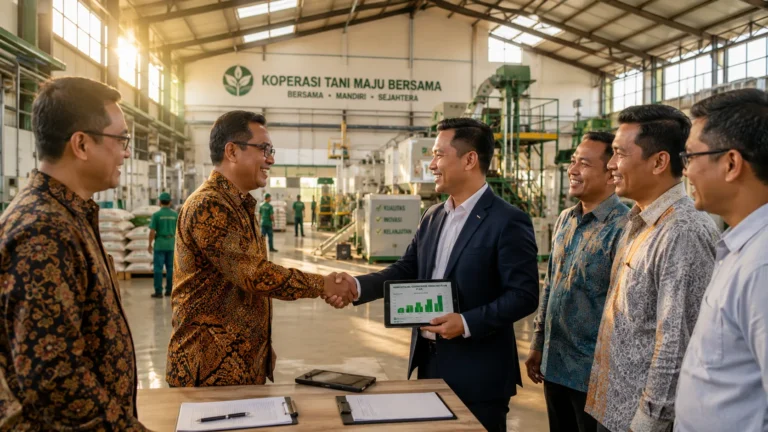
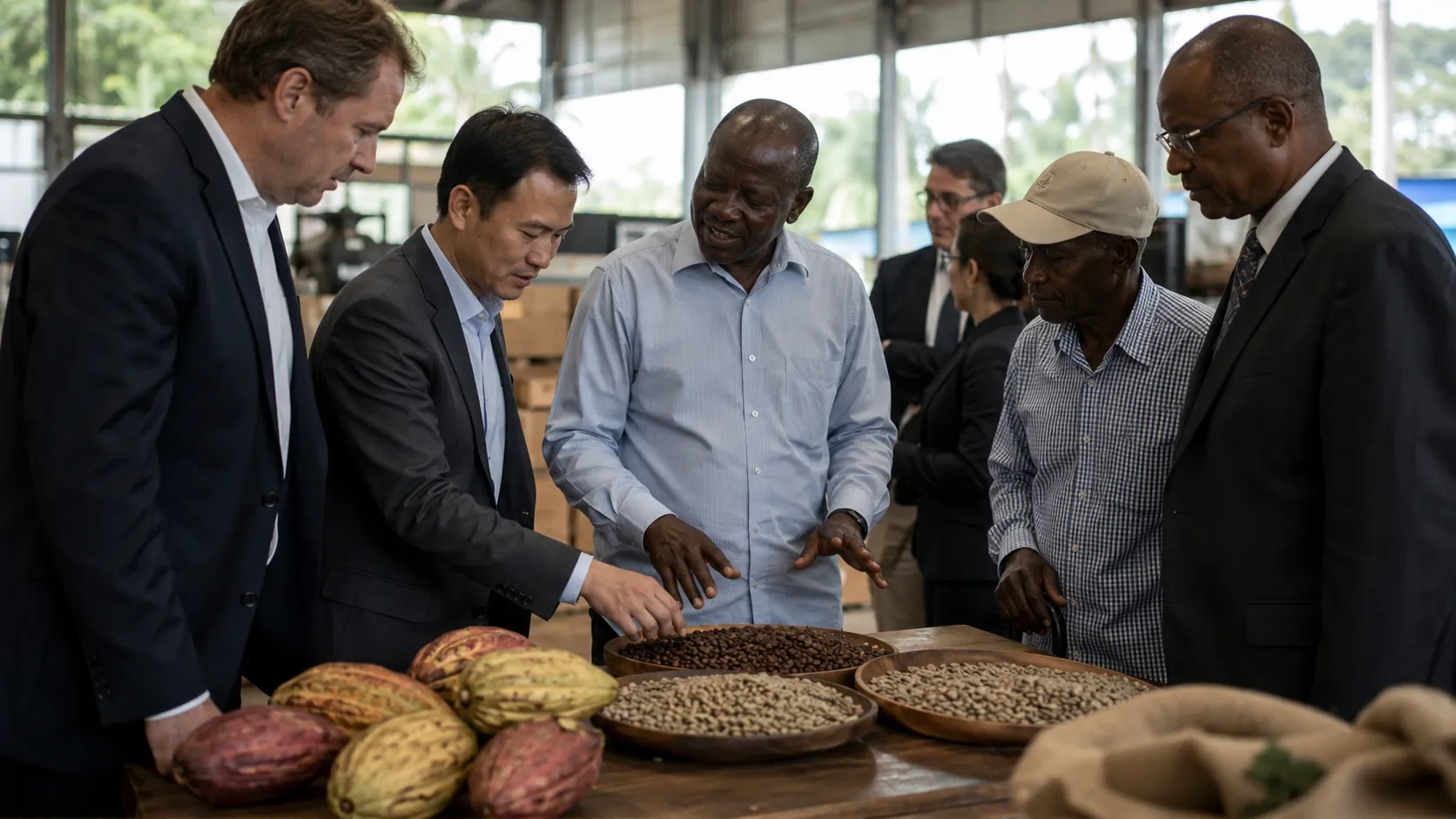
Executive Summary: In the hyper-competitive global consumer goods and manufacturing sectors, the stability of raw material procurement dictates corporate survival. Multinational corporations (MNCs) dealing in high-volume commodities—ranging from specialty coffee and sustainably sourced cocoa to localized small-scale industrial minerals—perennially face a formidable structural obstacle known as the “fragmented farmer” dilemma. Sourcing directly from millions of isolated smallholders introduces acute risks: volatile post-harvest quality, unreliable delivery volumes, complex traceability deficits, and severe exposure to opaque intermediary networks. However, a profound structural evolution is transforming rural procurement across emerging markets. By institutionalizing the Rural Aggregator Model through state-backed Badan Usaha Milik Desa (BUM Desa), global agribusinesses and manufacturing giants can finally establish single, legally binding consolidation points at the village level, completely revolutionizing cross-border supply chain resilience.
Related Insights


For chief procurement officers, supply chain vice presidents, and international trade directors, understanding the mechanics of the Rural Aggregator Model is essential for navigating the complex trade and ESG regulations of 2026. Traditional supply chains relied on multi-tiered layers of local middlemen, which artificially inflated commodity prices while stripping visibility from the ultimate corporate buyer. The BUM Desa framework fundamentally disintermediates this archaic structure. Operating as a legally recognized, corporate village enterprise, the BUM Desa acts as the official master consolidator for localized agrarian and mineral output. This integration aligns closely with advanced principles of sovereign capital allocation for infrastructure, ensuring that grassroots production connects seamlessly with institutional logistics.
This executive briefing provides a deep-dive analysis into how multinational corporations are leveraging the Rural Aggregator Model to secure absolute volume predictability and uncompromised post-harvest quality standardization. We examine the legal structures that empower village-level enterprises to contract directly with international off-takers, eliminating historical counterparty risks and establishing transparent, ethically verified supply corridors that satisfy the strictest international compliance standards.
Resolving the Fragmented Farmer Dilemma
The fundamental operational failure of legacy commodity sourcing lies in the extreme fragmentation of smallholder production. When an MNC attempts to procure coffee or cocoa from fifty thousand individual farmers across remote rural districts, the transaction costs, logistical friction, and quality control variances are astronomically high. Individual farmers lack the financial capital, storage facilities, and drying technology required to maintain uniform export-grade standards, leaving multinational buyers vulnerable to severe supply contractions and reputational risks associated with unverified labor practices.
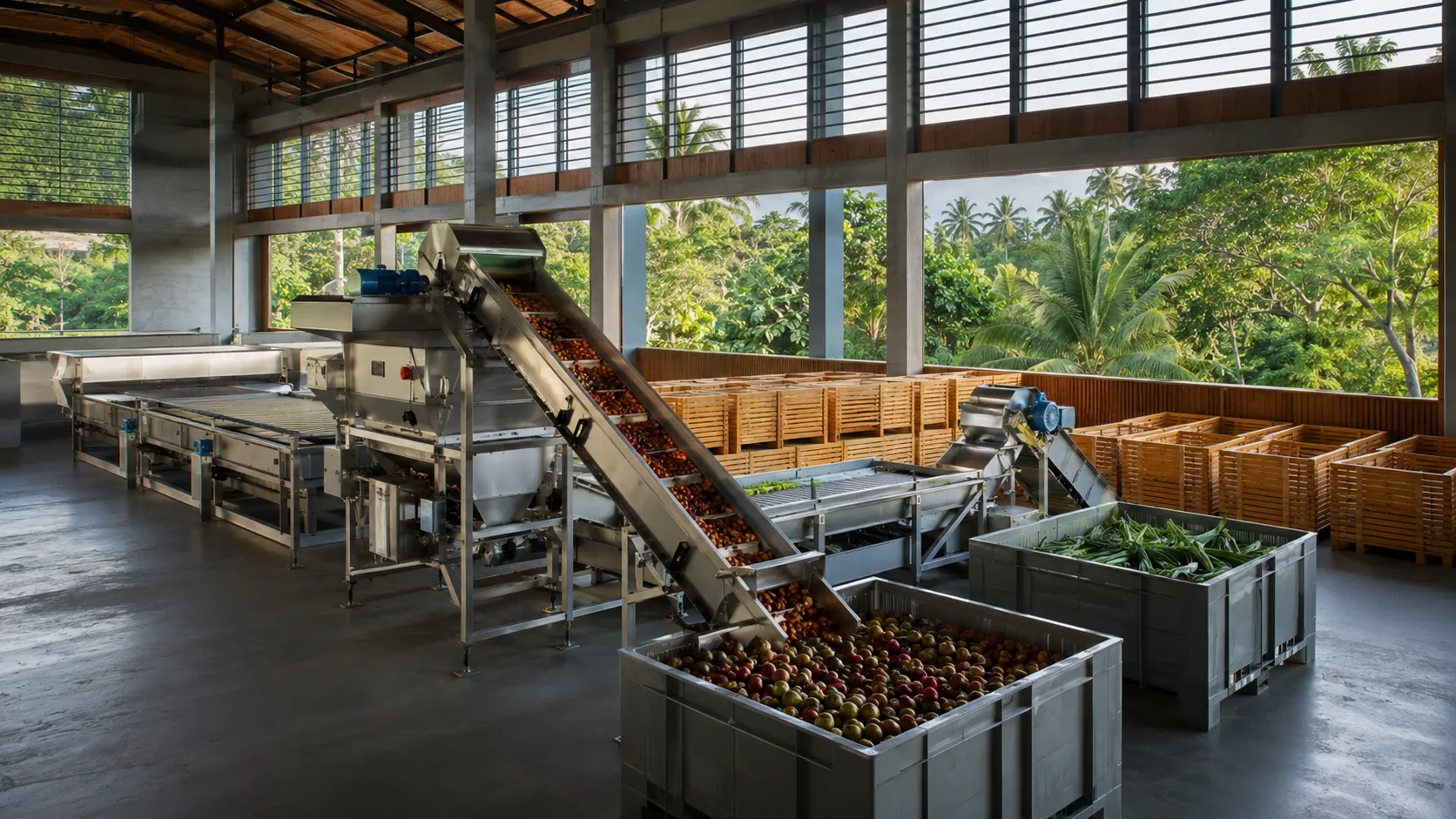
The Rural Aggregator Model solves this systemic crisis by centralizing collection, grading, and processing at the village hub. Through statutory capitalization—often augmented by structured financing models like blended finance frameworks for rural enterprises—the BUM Desa constructs centralized post-harvest collection centers equipped with modern moisture meters, mechanical sorting units, and secure storage silos. Farmers no longer sell disparate, sub-standard crops to roaming middlemen; instead, they deliver raw produce directly to the village BUM Desa, where crops are weighed, tested, and graded according to international export specifications.
Related Insights


This localized consolidation creates a powerful multiplier effect for regional productivity. By aggregating local output into industrial-scale batches, the BUM Desa achieves the critical mass required to negotiate directly with global shipping conglomerates and processing MNCs. This economic shift mirrors the strategies implemented in liquidity optimization in supply chain finance, ensuring that working capital flows efficiently from international buyers down to the rural farm-gate without losing value across predatory intermediary tiers.
Standardizing Quality and Enforcing Compliance
Global consumer expectations and stringent regulatory frameworks—such as the European Union Deforestation Regulation (EUDR)—demand absolute traceability from farm to factory. MNCs can no longer afford plausible deniability regarding the environmental or social impact of their raw material inputs. Operating the Rural Aggregator Model provides an institutional framework that enforces strict quality standardization and comprehensive digital auditing across the entire procurement footprint.
Because the BUM Desa operates as a formalized corporate entity under national law, it possesses the legal capacity to implement rigorous compliance protocols. When local producers register their farms with the BUM Desa, geo-spatial polygon mapping and digital identification tags are assigned to every plot of land. This data integration allows multinational off-takers to track commodities down to the exact hectare of origin. According to agricultural trade guidelines published by the Food and Agriculture Organization (FAO), verifiable smallholder integration is the single most effective mechanism for eliminating illegal deforestation and rural poverty simultaneously.
Furthermore, standardizing post-harvest quality at the BUM Desa level drastically reduces rejection rates at international ports of entry. Automated grading machines eliminate human error and subjective pricing, ensuring that farmers receive fair, market-reflective compensation while MNCs receive pristine, contamination-free raw materials. This operational transparency directly supports MNC efforts in integrating ESG metrics into institutional capital allocation, reassuring institutional shareholders and sustainability rating agencies.

Strategic Advisory: Implementing the Aggregator Framework
For multinational procurement divisions and supply chain architects looking to deploy the Rural Aggregator Model within their operational domains, success requires a methodical, partnership-driven execution strategy. We advise corporate boards to prioritize the following three operational pillars:
- Establish Direct Legal Frameworks: Bypass traditional multi-tiered broker networks by drafting direct, master purchase agreements with legally incorporated BUM Desa entities. Ensure contracts include clear penalty clauses for delivery default alongside premium pricing incentives for superior quality grades.
- Invest in Local Technical Capacity: Capitalize the village hubs with necessary processing hardware and digital inventory management systems. Empowering local operators with RegTech and automated compliance software guarantees seamless integration with corporate ERP systems.
- Align with Regional Sovereign Priorities: Structure procurement initiatives to complement national agricultural development goals, securing crucial administrative backing and infrastructure support from regional ministries.
Conclusion
The reliance on fragmented smallholder supply chains is an archaic liability that modern multinational corporations can no longer afford to sustain. By embracing the Rural Aggregator Model through formalized BUM Desa partnerships, global agribusinesses and manufacturers can systematically eliminate intermediary friction, guarantee export-grade quality standardization, and secure absolute volume certainty. This structural alignment between global corporate demand and empowered rural enterprises represents the ultimate paradigm shift in international trade, establishing a resilient, highly profitable foundation for sustainable global commerce.