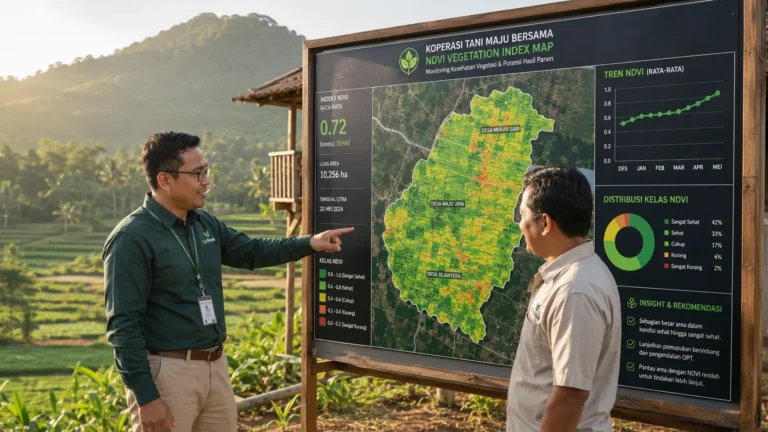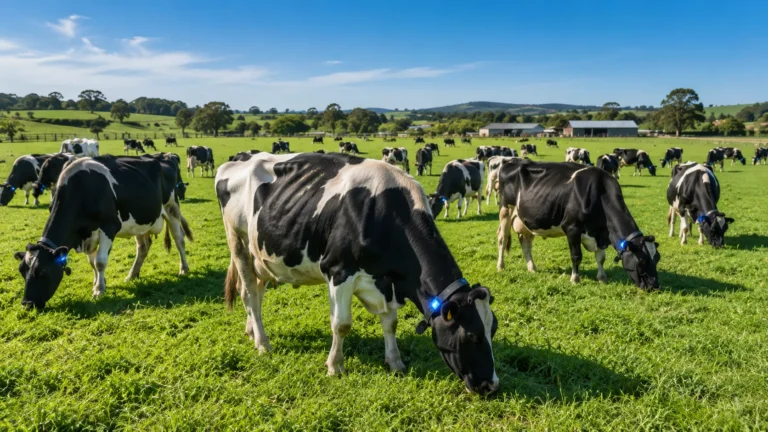

Yield protection has shifted from a traditional risk-mitigation tool into a core financial strategy for agricultural enterprises navigating the absolute unpredictability of climate volatility. Globally, the agricultural sector faces an unprecedented operational crisis driven by severe, erratic weather patterns. Prolonged regional droughts, unseasonal torrential downpours, flash floods, and sudden shifts in frost timelines are no longer rare, generational anomalies; they have become systemic annual risks.
Related Insights


For agribusinesses, institutional institutional investors, and smallholder farming collectives, these environmental disruptions translate directly into severe financial instability. Relying purely on historical weather trends to project crop outputs is a multi-million-dollar gamble that modern operators can no longer afford to take. To remain solvent and commercially competitive, the global food production ecosystem must transition toward data-driven systems where yield protection functions as a strategic investment capable of delivering a clear, quantifiable ROI.
As we navigate through 2026, calculating the exact ROI of modern agricultural risk management has become the primary prerequisite for securing corporate credit lines and scaling commercial farm operations. Institutional lenders and venture capital funds no longer look at agriculture as an uninsurable asset class.
By integrating advanced remote sensing, hyper-local parametric triggers, and sophisticated digital underwriting, modern risk management frameworks allow operators to cleanly protect their bottom lines against catastrophic weather events. This article provides a comprehensive, deep-dive cost-benefit analysis of modern risk portfolios, demonstrating exactly how proactive yield protection stabilizes cash flows, unlocks access to premium credit markets, and guarantees institutional survival amid a rapidly changing global climate.
The True Cost of Climate Volatility on Agribusiness Portfolios
To accurately assess the financial return of modern agricultural risk management, one must first quantify the devastating financial impact of operating entirely unprotected. When an extreme weather event strikes an uninsured commercial farming operation, the economic damage extends far beyond the immediate loss of the physical harvest. The financial shocks propagate through multiple layers of the business structure, creating long-term operational liabilities.
Related Insights
- Sunk Capital Erasure: A failed harvest means the complete destruction of all upfront capital invested in high-yield seeds, specialized fertilizers, mechanical labor, fuel, and precision irrigation management during the planting phase.
- Credit Rating Degradation: Consecutive seasons of climate-induced crop failures leave agribusinesses unable to service existing debt obligations, triggering default penalties, slashing their corporate credit score, and inflating future borrowing costs.
- Supply Chain Failure Penalties: Modern commercial farms operate under strict, pre-negotiated forward contracts with international food processors and retailers. Failing to deliver the promised tonnage results in severe financial penalties and the permanent loss of lucrative corporate distribution channels.
This compounding financial damage proves that ignoring risk mitigation does not save money; rather, it introduces unchecked existential risk. Proactive yield protection acts as an essential macroeconomic shield, ensuring that localized environmental crises do not transform into corporate bankruptcies.
Demystifying Yield Protection: The Mechanics of Modern Insurance
Modern yield protection has evolved significantly beyond the slow, paperwork-heavy multi-peril crop insurance (MPCI) models of the past. Legacy insurance frameworks required manual field adjusters to physically inspect crop damage, a highly subjective process that often took months to process claims and distribute payouts. In stark contrast, modern InsurTech infrastructure utilizes automated index-based and parametric protection models to eliminate operational friction.
These next-generation protection frameworks rely on continuous, objective data streams generated by low-earth orbit satellite arrays and automated Internet of Things (IoT) field sensors. Instead of evaluating individual plant health manually, the policy is tied directly to verified environmental indexes, such as deviation from historical rainfall averages, regional soil moisture percentages, or sustained extreme temperature thresholds. When these objective parameters are officially breached, the system recognizes the threat to crop development and triggers a rapid financial payout autonomously. This advanced data infrastructure guarantees that commercial operators receive critical liquidity precisely when they need it most to stabilize their corporate cash flow.
Cost-Benefit Analysis: Premium Investment vs. Crop Failure Payouts
Corporate CFOs and agricultural asset managers frequently evaluate risk management strategies through a strict cost-benefit lens. To maximize the long-term ROI of agricultural operations, one must weigh the predictable, annual expenditure of insurance premiums against the massive financial recovery captured during a catastrophic crop failure event. Below is a structured analysis detailing how premium costs compare to digital payouts in modern agricultural frameworks:
- Predictable OpEx vs. Catastrophic Capital Loss: Allocating roughly 4% to 8% of total seasonal operational expenditure (OpEx) toward guaranteed yield protection premiums completely eliminates the risk of losing 100% of upfront agricultural capital during a severe climate event.
- Sub-48-Hour Liquidity Infusion: During a verified climate shock, parametric insurance models bypass weeks of bureaucratic delay, transferring up to 80% of the total insured crop value directly to the operator’s digital wallet within 48 hours of the trigger breach.
- Collateral Maximization for Working Capital: Carrying a verified yield protection policy allows agribusinesses to utilize their insurance contracts as high-value financial collateral, enabling them to secure low-interest commercial credit lines that frequently exceed the premium cost by a ratio of 5:1.
- Input Cost Subsidization via Risk Bundling: By integrating risk management directly into supply chains, modern farm cooperatives can purchase bundled seed-and-insurance products, effectively dropping the net cost of risk coverage to less than 2% of total production expenses.
- Total Debt Mitigation During Multi-Year Shocks: In the event of back-to-back climate disasters, the cumulative payouts from modern risk frameworks completely cover outstanding input debts, preventing the accumulation of high-interest compound liabilities that cause long-term insolvency.
This comparative framework clearly demonstrates that yield protection premiums should never be categorized as a sunk corporate expense; instead, they function as an active, high-yield financial hedge that stabilizes corporate balance sheets against macroeconomic and environmental shocks.
Quantifying the Corporate ROI of Advanced Risk Management
How exactly does an agribusiness calculate the precise financial ROI of its risk management portfolio? The mathematical equation extends far beyond simply subtracting premium costs from insurance payouts. The true financial return is realized through the strategic economic advantages that an insured operation commands over unprotected competitors.
First, holding a verified yield protection contract dramatically lowers the cost of corporate capital. Commercial banking institutions view insured agricultural operations as highly stable, low-risk clients, allowing them to qualify for premium interest rates that are often 300 to 500 basis points lower than those offered to uninsured farms. Second, guaranteed financial security empowers asset managers to confidently invest in high-yield, premium input technologies—such as automated machinery, advanced biotechnology seeds, and precision drone monitoring—without worrying about climate disruptions erasing their capital. This continuous optimization of production infrastructure accelerates multi-year output expansion, driving a compound financial ROI that consistently outpaces the annual cost of risk management premiums.
Integrating Yield Protection with Broader Rural Financial Systems
The implementation of advanced risk frameworks does not occur in an economic vacuum; rather, it serves as the critical anchor that stabilizes the entire digital financial ecosystem of a modern agricultural hub. When a commercial farming collective secures its seasonal outputs against climate disruptions, it automatically enhances its eligibility for a diverse spectrum of sophisticated financial tools.
For instance, verified risk mitigation strategies cleanly de-risk local credit profiles, allowing cooperatives to seamlessly interface with modern digital financial inclusion strategies that unlock competitive banking resources. Furthermore, by maintaining flawless, algorithmically auditable operational records, tech-enabled agricultural enterprises can effortlessly attract large-scale international funding distributed through competitive peer-to-peer microfinance networks. This multi-layered digital synergy guarantees that communities can confidently transition away from volatile, legacy farming models, positioning themselves to secure substantial, long-term capital from institutional investors looking to deploy resources via global international green grants.

The Imperative for Scalable InsurTech Innovation
To ensure that advanced risk management portfolios remain commercially viable across diverse global geographies, the international financial technology sector must prioritize the continuous scaling of InsurTech innovation. According to comprehensive market research reports published by the International Food Policy Research Institute (IFPRI), data transparency is the single most critical factor driving corporate compliance and investor trust in emerging agricultural markets. Lenders require absolute clarity regarding data pipelines to eliminate fraud and accurately price seasonal volatility.
By continually refining predictive machine learning models, scaling satellite tracking grids, and enforcing rigid data privacy protocols, modern risk management platforms can continue to lower administrative overhead costs. This ongoing technological evolution ensures that premium structures remain highly affordable for both large-scale commercial agribusinesses and smallholder farming cooperatives alike. To read a comprehensive breakdown of the cutting-edge tech architectures currently driving this revolution, check out our deep dive into the top crop insurance innovations protecting global food producers today.

Conclusion
Assessing the ROI of modern agricultural risk management leads to an undeniable economic conclusion: yield protection is no longer an optional operating luxury; it is a fundamental financial requirement for commercial survival in an era of intense climate volatility. The legacy approach of treating crop insurance as a defensive, post-disaster expense has been permanently replaced by a proactive, data-driven methodology that actively drives corporate profitability. By substituting manual, subjective damage assessments with real-time satellite remote sensing and automated parametric triggers, the InsurTech sector has successfully constructed a highly stable financial framework for the global food supply chain. As these technologies continue to expand their datasets, refine their credit scoring algorithms, and integrate with transparent data systems, they will continue to empower agribusinesses to invest boldly, scale operations efficiently, and face the environmental challenges of the future with absolute financial confidence.