Executive Summary: In the rapidly maturing global ESG landscape of 2026, Fast-Moving Consumer Goods (FMCG) conglomerates, institutional food manufacturers, and specialized ESG asset managers face an undeniable regulatory and reputational reckoning. For over a decade, corporate decarbonization strategies relied heavily on third-party voluntary carbon offsets—purchasing cheap, geographically disconnected credits to mathematically neutralize enterprise emissions.
However, heightened regulatory scrutiny under frameworks like the European Union’s Corporate Sustainability Reporting Directive (CSRD) and the tightening enforcement of the Greenhouse Gas Protocol have exposed traditional offsetting as structurally inadequate. Today, institutional capital is aggressively pivoting toward Scope 3 Carbon Insetting: the deliberate financing and implementation of nature-based carbon sequestration and emissions reduction projects directly within a corporation’s own supply chain. This strategic shift is particularly transformative across global coffee and cacao procurement networks, where smallholder agricultural practices account for the overwhelming majority of a corporate buyer’s carbon footprint.
The macroeconomic and operational necessity of prioritizing Scope 3 Carbon Insetting in agricultural commodities is rooted in supply chain exposure. In the specialty coffee and cocoa sectors, over 80% of total enterprise emissions typically fall under Scope 3, Category 1 (Purchased Goods and Services). These emissions are driven by deforestation, soil degradation, synthetic fertilizer application, and inefficient post-harvest processing across millions of fragmented, smallholder plots in tropical emerging markets.
Attempting to offset these emissions by purchasing external carbon credits does nothing to mitigate the physical climate vulnerability of the raw material supply chain. When droughts, erratic rainfall, and rising temperatures devastate smallholder yields, an external offset credit provides zero operational resilience to the corporate off-taker.
Related Insights


By contrasting offsetting with Scope 3 Carbon Insetting, chief procurement officers and ESG fund managers transform decarbonization from an external compliance cost into an internal, value-generating capital expenditure. When an FMCG giant deploys capital directly into its origin cooperatives to finance regenerative agroforestry, shade-tree planting, and organic biochar application, it achieves a powerful dual objective: generating high-integrity, scientifically verified greenhouse gas (GHG) reductions that satisfy regulatory accounting standards while permanently de-risking the biophysical productivity of its foundational agricultural suppliers. This executive advisory report delivers a comprehensive structural analysis of how institutional agribusinesses are designing, financing, and governing insetting frameworks across global coffee and cacao networks.
The Structural Mechanics of Insetting vs. Offsetting in Agribusiness
To construct a legally defensible and auditable decarbonization strategy, corporate treasurers and sustainability directors must understand the strict technical divergence between carbon offsetting and carbon insetting. An offset is an external transaction: a company emits carbon in one industrial sector and compensates by purchasing emission reduction credits generated by an entirely unrelated project—such as a wind farm or a reforestation initiative in a different hemisphere. Because these projects operate outside the buyer’s corporate value chain, they offer no direct operational control, no supply chain resilience, and are increasingly vulnerable to greenwashing litigation and non-permanence buffer deductions.
Conversely, Scope 3 Carbon Insetting is an internal, vertically integrated intervention. As defined by international carbon accounting standards set by the Greenhouse Gas Protocol (GHGP) and the Science Based Targets initiative (SBTi), insetting interventions must occur within the company’s direct procurement footprint or localized sourcing sheds.
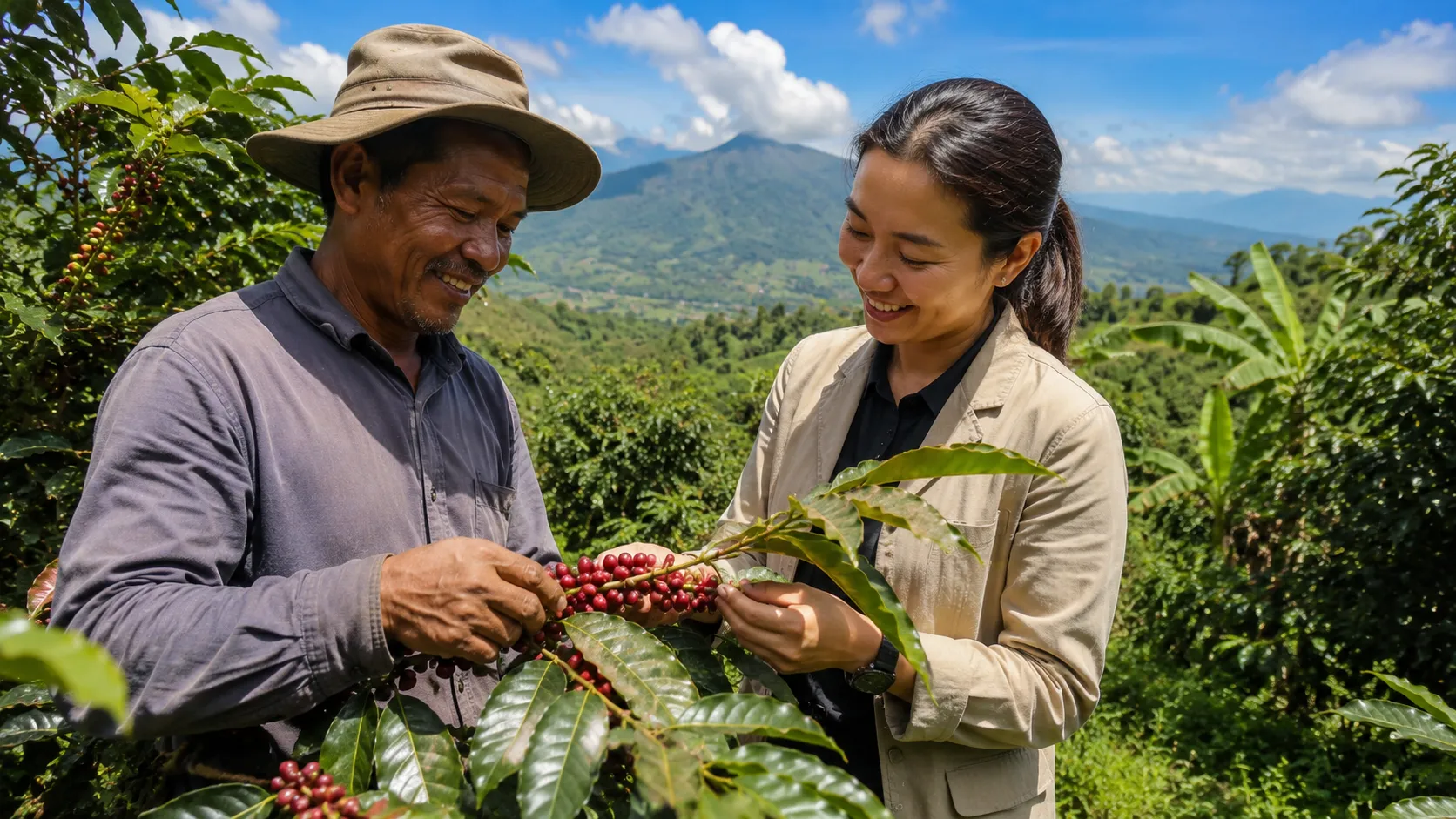
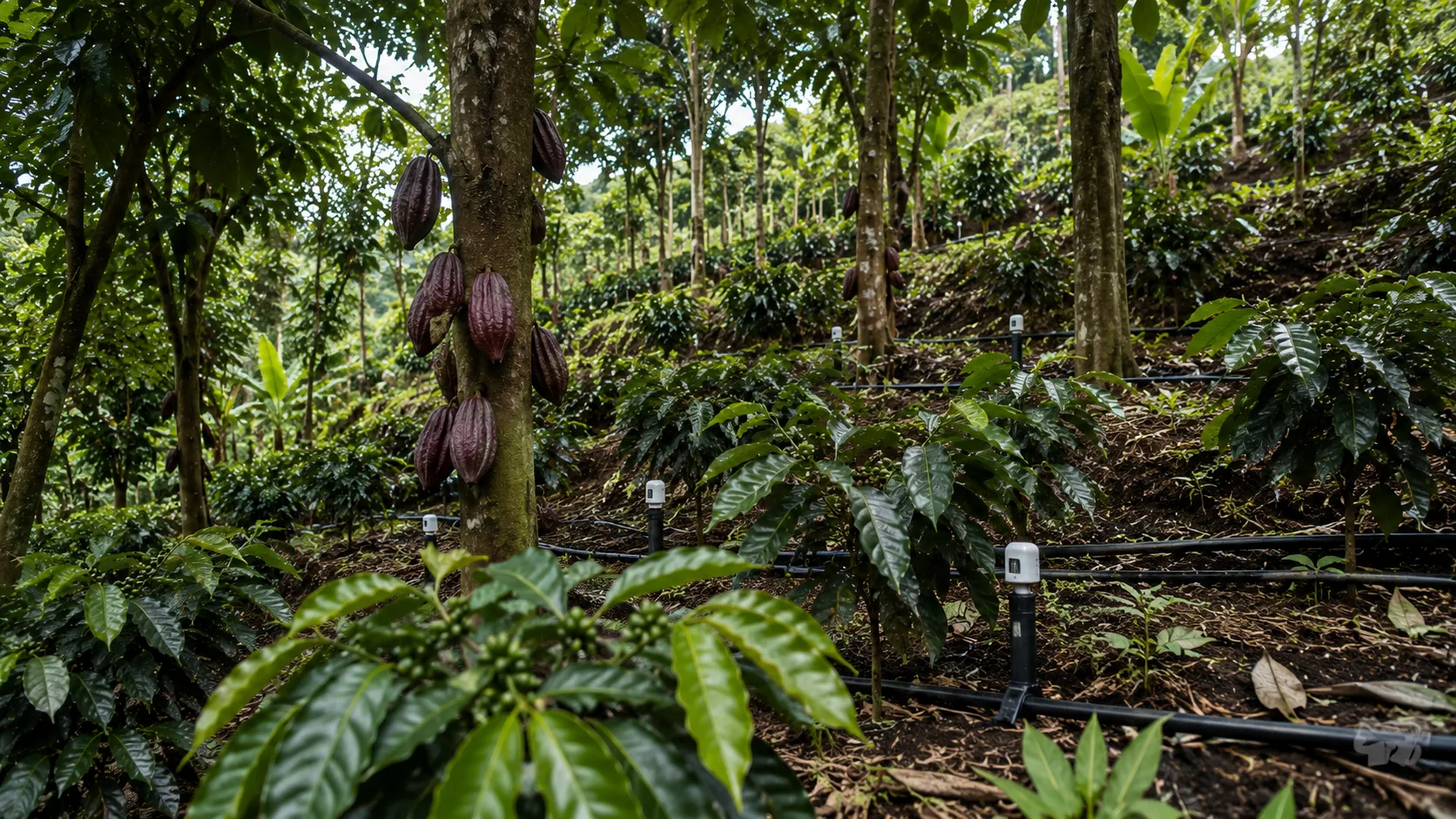
In coffee and cacao supply chains, an insetting project involves structuring financial and agronomic mechanisms that empower smallholder farmers to transition from conventional, monoculture farming to regenerative agroforestry systems. By intercropping shade trees—such as nitrogen-fixing legumes, native forest species, or fruit-bearing trees—among coffee bushes and cacao groves, farmers create a localized biophysical carbon sink that sequesters atmospheric carbon directly within the agronomic soil and woody biomass where the commodity is harvested.
This localized biophysical intervention delivers profound agronomic co-benefits that external offsets cannot replicate. Shade trees regulate ambient microclimates, shielding sensitive coffee and cacao plants from extreme heat spikes and reducing evapotranspiration during prolonged droughts. Furthermore, leaf litter from diversified canopy covers enriches soil organic matter, significantly increasing water retention and eliminating the need for synthetic nitrogen fertilizers—a primary driver of nitrous oxide ($N_2O$) emissions in agriculture.
Related Insights


By embedding these regenerative practices into the procurement corridor, corporations secure long-term yield stability and protect their brand equity against rigorous compliance audits. This integration mirrors the structural underwriting protocols required when integrating ESG metrics into long-term capital allocation.
Microfinance, Micro-Grants, and De-Risking Smallholder Transitions
While the thermodynamic and agronomic arguments for regenerative agroforestry are absolute, the primary barrier to executing scalable Scope 3 Carbon Insetting is financial. Smallholder coffee and cacao farmers across emerging markets operate on razor-thin economic margins, frequently enduring systemic liquidity deficits between seasonal harvests.
Transitioning a degraded monoculture farm into a diversified agroforestry system requires substantial upfront Capital Expenditure (CapEx)—including purchasing shade-tree seedlings, installing localized organic composting infrastructure, and deploying labor for structural pruning—accompanied by a temporary yield dip during the initial two- to three-year establishment phase.
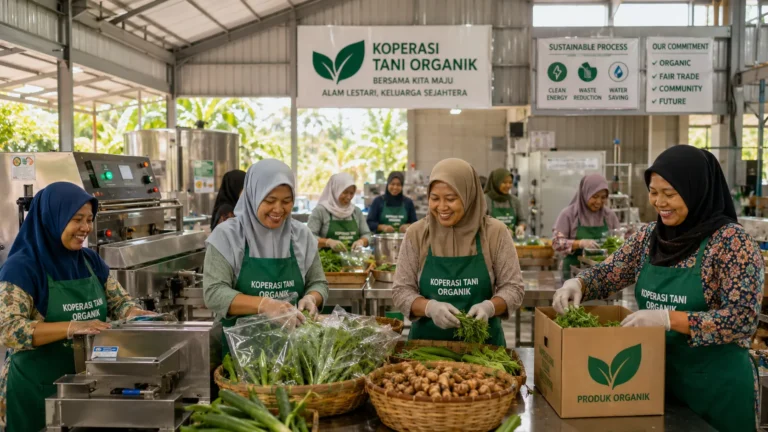
Individual smallholders cannot independently absorb this financial friction. If multinational off-takers simply demand regenerative certification without providing direct financial underwriting, farmer participation stalls, and supply chain decarbonization targets fail completely. To solve this liquidity impasse, sophisticated agribusinesses and ESG asset managers are deploying structured financial architectures that combine direct corporate micro-grants with specialized rural microfinance. Rather than treating sustainability expenditures as philanthropic donations, corporations channel capital through localized cooperatives or village-owned enterprises (such as BUM Desa) to establish dedicated insetting transition funds.
Under these blended financial frameworks, smallholders receive upfront, non-repayable micro-grants to cover the initial hardware and seedling CapEx required for shade-tree establishment. To support ongoing operational expenditures and working capital needs, these grants are paired with zero-interest or low-cost yield-linked credit facilities.
Related Insights


When farmers successfully implement verified regenerative practices, their loan repayments are algorithmically subsidized or forgiven using the monetized value of the carbon sequestered on their land. This structural synergy leverages established models of digital micro-lending for rural micro-enterprises, effectively de-risking the agricultural transition while ensuring that rural producers receive fair, direct financial compensation for their ecological labor.
Furthermore, channeling climate finance through formalized rural aggregation nodes prevents capital leakage and ensures collective governance. By partnering with established regional cooperatives, corporate off-takers can execute master insetting agreements that cover thousands of consolidated hectares.
This aggregation achieves the economies of scale necessary to negotiate bulk procurement of organic inputs and deploy professional agronomic extension services, closely aligning with the operational resilience strategies detailed in our analysis of navigating liquidity risks in rural microfinance.

Digital Traceability, Polygon Mapping, and Rigorous MRV Protocols
The ultimate institutional test for any Scope 3 Carbon Insetting program is auditability. In an era dominated by stringent anti-greenwashing legislation—such as the European Union’s Empowering Consumers for the Green Transition Directive—corporations must prove that every metric ton of carbon claimed as an internal reduction is real, additional, permanent, and exclusively assigned to a specific commodity shipment.
You cannot inset what you cannot mathematically verify. Consequently, deploying high-integrity Measurement, Reporting, and Verification (MRV) technology is a non-negotiable underwriting requirement for institutional climate finance.
Related Insights

Modern MRV architectures in coffee and cacao supply chains rely on a multi-layered convergence of satellite geospatial telemetry, Internet of Things (IoT) soil sensors, and distributed ledger technology. The verification process begins with comprehensive farm-gate polygon mapping. Project developers capture precise GPS coordinates outlining the exact perimeter of each participating smallholder’s plot. This spatial data is fed into cloud-based analytical engines that continuously cross-reference high-resolution, multi-spectral satellite imagery to monitor canopy density, biomass growth, and land-use changes over time, ensuring absolute compliance with international zero-deforestation mandates.
To quantify soil organic carbon (SOC) and above-ground biomass sequestration without incurring prohibitive physical sampling costs, advanced programs deploy AI-driven algorithmic models calibrated by localized IoT soil telemetry. Once the carbon sequestration metrics are scientifically validated by third-party auditors (such as those utilizing established methodologies from World Resources Institute or Verra), the carbon reduction data is cryptographically anchored to a blockchain ledger alongside the physical commodity’s electronic bill of lading. This end-to-end digital provenance ensures that when a shipment of coffee or cacao arrives at a European processing plant, the corporate buyer receives an immutable digital token proving the exact Scope 3 greenhouse gas reduction generated by that specific harvest, perfectly executing the mechanics of blockchain traceability in rural supply chains.
This rigorous data architecture also permanently resolves the critical legal challenge of double-counting. By institutionalizing digital ledgers through centralized rural aggregators, corporations ensure that carbon sequestration credits generated within a specific smallholder supply shed are strictly retired against the off-taker’s corporate carbon ledger and never inadvertently sold into external voluntary carbon markets. This absolute legal transparency protects the enterprise from severe statutory penalties and reinforces corporate positioning within multinational aggregator supply chain frameworks.
Strategic Advisory for FMCG Boards and Institutional ESG Allocators
As global capital markets and regulatory authorities standardize Scope 3 accounting protocols throughout 2026, Fast-Moving Consumer Goods corporations, international agribusinesses, and institutional ESG fund managers must transition from passive commodity procurement to active supply chain co-investment. We advise executive leadership and credit committees to enforce three mandatory strategic pillars when structuring agricultural insetting initiatives:
- Anchor Long-Term Off-Take Contracts with Insetting Premiums: Corporate procurement divisions must abandon short-term, spot-market trading relationships in favor of multi-year, legally binding off-take agreements. These contracts must explicitly embed structural “insetting premiums”—guaranteed price floor bonuses paid directly to smallholder cooperatives that achieve verified soil carbon and agroforestry milestones, providing the financial security required for farmers to commit to multi-decade ecological stewardship.
- Establish Blended Finance Syndicates with Multilateral Institutions: Corporate treasuries should actively structure blended finance syndicates by partnering with Development Finance Institutions (DFIs) such as the International Finance Corporation (IFC) or regional green funds. Public catalytic capital can absorb first-loss agronomic risks and fund upfront MRV hardware deployment, allowing private corporate capital to scale high-velocity regenerative transitions across millions of fragmented acres without distorting balance sheet leverage.
- Implement Automated Digital Escrows for Farmer Compensation: Ensure that all climate finance and carbon reduction reward payments bypass archaic, opaque intermediary broker networks. Mandate the integration of automated smart contracts and digital mobile wallets that trigger instant micro-disbursements directly to individual smallholder bank accounts the moment satellite telemetry and field sensors verify compliance with regenerative agroforestry standards, fulfilling the highest benchmarks of automated RegTech compliance mandates.
By executing these strategic directives, institutional actors can successfully navigate the complexities of agrarian land tenure and environmental compliance. Adhering to robust risk mitigation frameworks regarding carbon compliance and land tenure security ensures that the physical land generating corporate carbon credits is legally unencumbered, shielding the corporate parent from subsequent jurisdictional disputes and securing the long-term integrity of the insetting portfolio.
Related Insights

Conclusion
The institutional adoption of Scope 3 Carbon Insetting within global coffee and cacao supply chains marks a definitive maturation in corporate environmental governance. By moving away from speculative, external carbon offsets and directing targeted climate finance, micro-grants, and digital MRV infrastructure directly into their primary agronomic sourcing sheds, multinational agribusinesses can systematically eliminate supply chain emissions at the root. This vertically integrated approach transforms smallholder farmers from passive commodity suppliers into empowered, institutional-grade carbon asset stewards.
As regulatory mandates tighten and biological supply chain vulnerabilities intensify throughout 2026, those organizations that successfully institutionalize verifiable, high-integrity Scope 3 insetting frameworks will capture unassailable brand equity, secure long-term raw material resilience, and command premium valuations in the global marketplace.