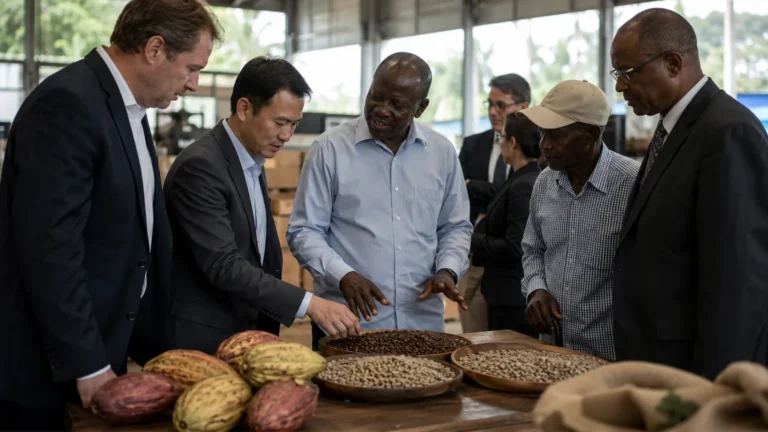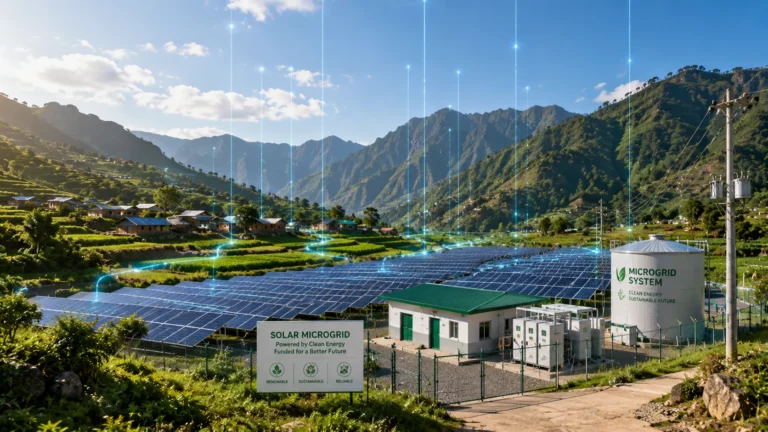

Direct liquidity injection systems are fundamentally restructuring the financial architecture of global agriculture, permanently altering how working capital reaches the world’s most productive rural networks. For decades, institutional capital struggled to reach grassroots agricultural producers efficiently. The traditional distribution model forced international development funds and top-tier commercial banks to route their capital through layers of commercial retail intermediaries—regional banks, local microfinance institutions, and localized loan brokers. Each intermediary in this chain absorbed a margin of the capital to cover their own operational overhead and risk premiums.
Related Insights
By the time the funding finally reached a first-tier agricultural cooperative, the cumulative interest rates had skyrocketed, severely suppressing the cooperative’s ability to retain profits. Today, advanced financial engineering is dismantling this highly inefficient pipeline. By structuring dedicated syndicate funding facilities, global capital providers can inject massive tranches of liquidity directly into verified cooperatives, dramatically lowering the cost of capital and maximizing farm-gate value retention.
As we advance through the fiscal year 2026, the deployment of direct syndicate facilities represents the gold standard in agricultural finance. This operational model shifts the dynamic from localized retail debt to institutional wholesale funding. Instead of a cooperative taking out dozens of small, high-interest micro-loans from a regional broker, a syndicate of international lenders pools their resources to extend a single, massive, low-interest credit facility directly to the cooperative’s corporate entity. This approach requires robust digital governance and strict operational transparency, but the macroeconomic payoff is unprecedented. By completely removing the intermediary friction, direct liquidity injections empower rural cooperatives to capture the full economic value of their harvests, reinvest in large-scale mechanization, and permanently elevate their position within the global supply chain.
The High Cost of Intermediary Friction
To understand the profound commercial impact of direct liquidity injection systems, economic planners must first isolate the financial damage caused by legacy distribution networks. In a traditional agricultural lending model, a global commercial bank provides wholesale capital to a regional bank at a baseline interest rate of 4%. The regional bank then lends it to a rural microfinance broker at 9%. The broker, factoring in manual administrative costs and field collection logistics, extends the final loan to the cooperative at an aggressive 18% to 24%.
This compounding margin stacking creates an artificial credit ceiling for capable rural enterprises. Even if a first-tier cooperative operates with pristine efficiency and zero default history, they are penalized by the structural inefficiencies of the intermediaries standing between them and the primary capital source. Furthermore, retail intermediaries frequently limit loan sizes based on their own narrow balance sheets, depriving large-scale cooperatives of the multi-million-dollar capital expenditures required to build modern processing plants, commercial silos, or cold-storage fleets.
Related Insights


Structuring Syndicate Facilities for Direct Injection
To bypass these bottlenecks, global financial institutions are aggressively deploying structured syndicate facilities. A syndicate facility is formed when a group of lenders—which can include private equity firms, multilateral development banks, and institutional commercial lenders—collaborate to fund a single, large-scale credit line for a top-tier agricultural borrower.
This direct injection model completely rewrites the unit economics of rural finance. Because the syndicate is dealing directly with a highly organized, first-tier cooperative, they can structure the debt based on wholesale corporate metrics rather than retail microcredit risk profiles. The cooperative secures long-term working capital at single-digit interest rates, freeing up massive reserves of cash flow that were previously lost to debt servicing.
Premier financial organizations, including the International Finance Corporation (IFC), have meticulously tracked the macroeconomic outcomes of these direct funding models. Their research confirms that bypassing retail intermediaries is essential for scaling rural agribusinesses into globally competitive enterprises.
“The deployment of structured syndicate facilities directly to first-tier agricultural cooperatives effectively eliminates intermediary margin stacking. This direct liquidity injection significantly drives down the weighted average cost of capital, allowing rural enterprises to maximize farm-gate value retention and achieve structural financial autonomy.”
By securing direct institutional backing, these cooperatives transform from localized raw material suppliers into highly capitalized, vertically integrated agribusinesses capable of negotiating commercial terms on a global stage.

Synergizing Direct Liquidity with the FinTech Ecosystem
The macroeconomic acceleration achieved by direct liquidity injection systems reaches its maximum commercial velocity when seamlessly integrated with the broader, data-driven rural financial architecture. A multi-million-dollar syndicate facility requires absolute operational transparency and flawless capital routing, which is achieved by leveraging advanced digital infrastructure.
This cross-platform technical connectivity creates an unassailable, highly transparent financial ecosystem. When a syndicate injects capital into a cooperative, the funds are instantly routed through digital ledgers, accelerating mobile wallet adoption rates among individual cooperative members and ensuring zero capital leakage. To qualify for these massive wholesale credit lines, cooperatives utilize advanced alternative data credit scoring engines that prove their historical supply-chain efficiency and organizational health to the syndicate members.
Once capitalized, the cooperative can rapidly deploy the funds to secure heavy machinery and precision technology through structured asset-backed financing configurations. They can protect their expanded seasonal yields against severe climate shocks by purchasing automated parametric weather-index insurance, tracked and verified by global authorities such as the Food and Agriculture Organization (FAO). Ultimately, the pristine auditing standards enforced by the syndicate facility perfectly position the cooperative to independently issue fixed-income assets, allowing them to capture subsequent funding through the booming market of rural green bonds.
Conclusion
The strategic deployment of direct liquidity injection systems marks a permanent, structural evolution in the execution of international development finance. By utilizing structured syndicate facilities to bypass inefficient commercial retail intermediaries, the global financial sector has successfully engineered a frictionless capital pipeline directly into the heart of the world’s most productive rural cooperatives. The historical constraints of massive margin stacking, suppressed loan ceilings, and localized credit friction are no longer absolute barriers to rural industrialization.
As decentralized data tracking ensures absolute payment transparency, and institutional capital continues to seek high-impact, direct-yield investments, the first-tier agricultural cooperatives that integrate with these wholesale funding structures will secure their position as the highly resilient, fully capitalized anchors of the modern global food economy.