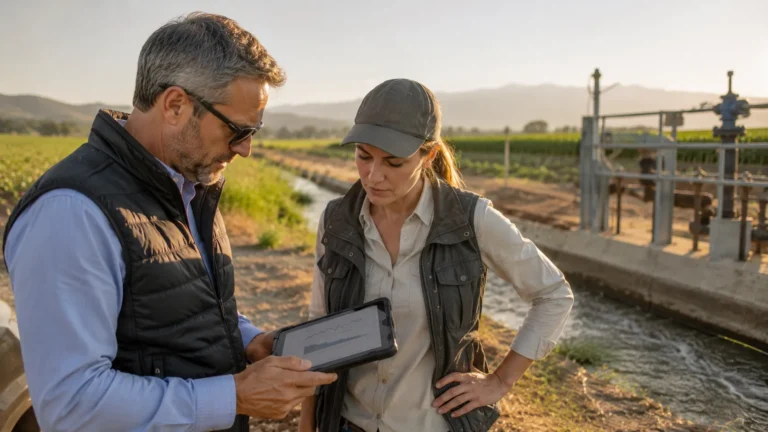
Executive Summary: As global capital markets confront the escalating physical impacts of climate change in 2026, chronic water scarcity has emerged as the primary systemic risk threatening agricultural productivity and emerging market sovereign stability. While historical investments in physical infrastructure—such as reservoirs, aqueducts, and localized canals—remain indispensable, they are structurally insufficient to manage prolonged hydrological deficits without dynamic allocation mechanisms.
Today, a profound economic evolution is transforming how water is governed, valued, and distributed across arid agrarian corridors: the institutionalization of formal water markets. By prioritizing Institutional Water Rights Trading, sovereign wealth funds, agribusiness conglomerates, and specialized natural capital asset managers are systematically converting a contested, tragedy-of-the-commons resource into a legally defined, liquid, and tradable financial asset class.
The macroeconomic rationale for accelerating Institutional Water Rights Trading is anchored in market-based allocation efficiency and drought risk hedging. In traditional agrarian economies, water allocation is governed by rigid, archaic riparian doctrines or static administrative quotas that do not reflect real-time hydrological scarcity. When droughts strike, low-value, water-intensive staple crops frequently consume massive volumetric shares of dwindling river basins, while high-value horticultural, dairy, and agro-industrial enterprises face catastrophic rationing and crop failure.
Institutional water markets resolve this economic distortion by unbundling water usufruct rights from physical land tenure. This decoupling allows agricultural producers, municipal water authorities, and industrial off-takers to buy, sell, and lease volumetric water allocations through regulated spot and forward markets, letting pricing signals direct scarce water toward its highest-value economic use.
Related Insights


For institutional asset managers, participating in Institutional Water Rights Trading provides an unprecedented mechanism for hedging agrarian portfolio risks while generating uncorrelated, inflation-protected cash flows. By holding diversified portfolios of permanent or seasonal water entitlements, investors act as vital liquidity providers in regional water basins. During wet years, excess allocations can be leased cheaply to smallholder cooperatives to support baseline agricultural expansion; during severe drought cycles, the appreciating capital value of water rights offsets agricultural yield losses across broader agribusiness portfolios.
This executive advisory briefing delivers an exhaustive macro-financial evaluation of emerging market water trading. We dissect the economic mechanics of scarcity pricing, evaluate how Real-World Asset (RWA) tokenization enables on-chain settlement, and outline the strategic blended finance frameworks required to scale sustainable water markets across drought-prone agrarian economies.
The Economics of Scarcity Pricing and Usufruct Decoupling
To understand the immense capital attraction of Institutional Water Rights Trading, institutional investment committees must first analyze the macroeconomic mechanics of scarcity pricing. Water has historically operated as an underpriced or unpriced economic input in developing economies, leading to systematic over-extraction, aquifer depletion, and severe agricultural misallocation. When water is treated as a free administrative good, there is zero financial incentive for agricultural producers to invest in capital-intensive, water-saving infrastructure. Establishing a formalized market for water rights introduces price elasticity into regional hydrology, compelling agribusiness operators to optimize their volumetric efficiency.
The foundational legal step in establishing an institutional water market is the statutory decoupling of land tenure from water usufruct rights—the legal authority to divert and consume a specific volume of water from a shared basin or aquifer. Once unbundled, these rights are quantified into standardized volumetric units (e.g., acre-feet or megaliters) and registered within a centralized hydrological registry. Agricultural producers who invest in high-efficiency infrastructure—such as those detailed in our analysis of financing smart irrigation systems in arid zones—generate a structural water surplus.
Through Institutional Water Rights Trading, these farmers can monetize their conserved water by leasing their surplus allocations on the open market to neighboring agricultural enterprises or municipal water utilities experiencing acute deficits.
Related Insights


This market-driven transfer mechanism completely transforms the agrarian risk profile during severe drought cycles. Rather than facing total financial ruin when irrigation quotas are administratively slashed, farmers holding legally recognized water entitlements possess a dual-revenue buffer. If farming becomes economically unviable due to extreme heat or labor shortfalls, the producer can temporarily suspend cultivation and lease their water rights to higher-value commercial off-takers, generating immediate liquidity that sustains farm solvency until hydrological conditions normalize. This financial flexibility is paramount for stabilizing rural economies against macroeconomic shocks and inflation.
Tokenization and On-Chain Settlement of Hydrological Assets
While the economic theory of water trading is robust, the operational execution in emerging markets has historically been impeded by severe informational opacity, high bureaucratic transaction costs, and slow settlement velocity. Traditional water rights transfers often require months of administrative reviews, manual paper filings, and complex hydrological assessments to verify that a trade will not adversely impact downstream third parties. This latency renders legacy water markets ineffective for managing sudden, intraday or mid-season drought emergencies. The modern institutional solution is the integration of distributed ledger technology (DLT) and Real-World Asset (RWA) tokenization.
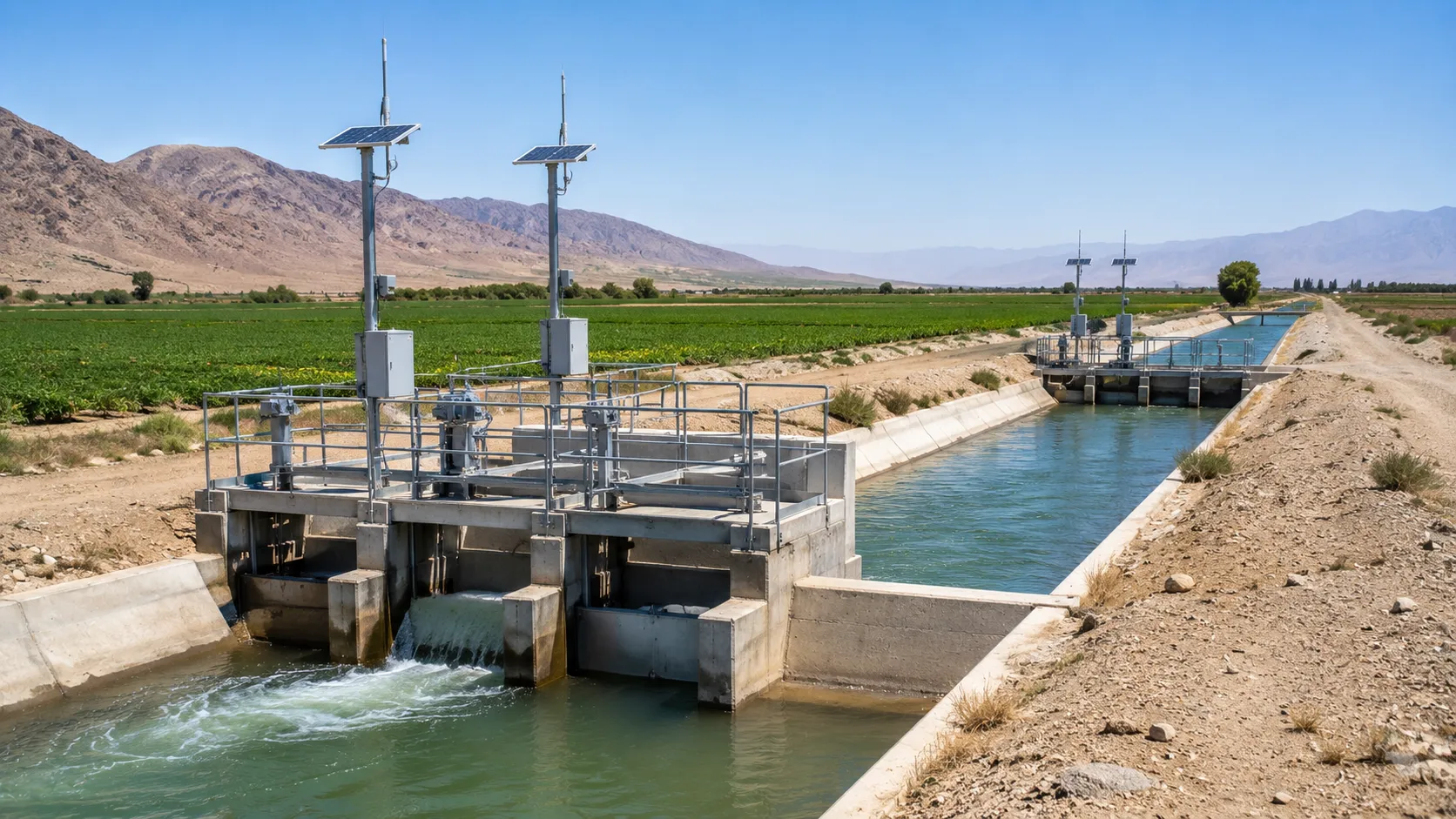
By migrating hydrological registries onto high-throughput, permissioned blockchain networks, asset managers can execute instant, atomic settlements of water rights. In an on-chain water market, statutory usufruct entitlements are minted as programmable security tokens or non-fungible tokens (NFTs) representing exact volumetric allocations. These digital tokens are natively integrated with automated Internet of Things (IoT) smart water meters and satellite telemetry installed directly at agricultural diversion gates and canal turnouts.
When an agribusiness purchases a seasonal water lease via an on-chain smart contract, the distributed ledger algorithmically validates the buyer’s balance, transfers the digital token, and transmits an automated cryptographic command to the physical IoT sluice gate, releasing the exact purchased volume of water into the buyer’s irrigation channel.
This seamless convergence of physical hydrological infrastructure and digital asset settlement eliminates counterparty default risk and drastically reduces administrative friction. Furthermore, tokenized water trading architectures integrate directly with established frameworks for tokenizing farmland and agricultural commodities.
Related Insights

By embedding water rights metadata natively within tokenized agricultural land deeds, institutional allocators can accurately model the real-time drought resilience and intrinsic valuation of rural real estate portfolios. As documented by global water governance frameworks published by the World Bank, transparent, data-driven water accounting is the single most critical prerequisite for preventing resource depletion and attracting institutional capital into developing water sectors.

Blended Finance and Parametric Drought Hedging
Scaling high-integrity water trading networks across developing agrarian corridors requires substantial initial Capital Expenditure (CapEx) to modernize physical conveyance canals, install basin-wide IoT telemetry, and capitalize the central market clearinghouse. To de-risk these upfront investments for private institutional equity, financial structuring teams deploy advanced blended finance architectures paired with parametric risk mitigation instruments.
In a structured institutional water fund, multilateral development banks and public sovereign entities—such as regional environmental ministries or the Green Climate Fund—inject first-loss concessional equity and provide regulatory underwriting guarantees. This catalytic public capital funds the modernization of rural irrigation canals and the deployment of automated metering infrastructure across local farming communities. Once the physical network is upgraded and hydrological baselines are validated by independent auditors, senior private institutional debt and equity syndicates enter the capital stack to finance commercial market operations and provide liquidity to the water trading exchange. This capital stacking strategy directly reflects the underwriting methodologies established in blended finance frameworks for rural micro-sovereign capital.
To further protect agricultural producers and institutional allocators against catastrophic, multi-year megadroughts that deplete entire river basins, Institutional Water Rights Trading is increasingly paired with parametric weather insurance. When smart contract algorithms detect that basin storage levels or seasonal rainfall metrics have breached a critical statistical threshold, automated parametric insurance policies execute immediate cash payouts directly to water rights holders.
This structural integration with parametric weather index insurance for climate anomalies ensures that even if physical water deliveries are entirely suspended due to extreme drought, agricultural producers receive guaranteed financial compensation, preserving enterprise solvency across the agrarian supply chain.
Related Insights


Strategic Advisory for Sovereign Funds and Agribusiness Allocators
As Institutional Water Rights Trading accelerates across drought-prone agricultural corridors globally in 2026, institutional asset managers, sovereign wealth funds, and agribusiness directors must enforce rigorous underwriting disciplines. To prevent resource monopolization, avoid regulatory backlash, and secure sustainable, long-term returns, we advise investment committees to mandate the following three operational pillars prior to capital deployment:
- Execute Basin-Level Regulatory Due Diligence: Legal counsel must confirm that the target jurisdiction possesses clear, statutory water tenure laws that explicitly legalize the temporary and permanent transfer of usufruct water rights separate from land ownership. Avoid investing in basins governed by ambiguous customary water rights or inconsistent municipal allocation decrees, ensuring strict adherence to risk mitigation protocols regarding land tenure security and environmental compliance.
- Mandate Automated IoT Telemetry and Sluice Gate Control: Refuse to participate in water markets that rely on manual, unverified volumetric reporting. Institutional allocators must insist that all traded water rights are physically verified by cellular or satellite-linked IoT flow meters and automated, tamper-proof sluice gates. This technological infrastructure guarantees that water extraction precisely matches traded allocations, eliminating water theft and fulfilling the highest benchmarks of automated RegTech compliance mandates.
- Anchor Community Benefit-Sharing via BUM Desa Cooperatives: To protect institutional capital against political accusations of “water grabbing,” structure water trading platforms in close partnership with local village-owned enterprises (BUM Desa) or regional farmer cooperatives. Allocate a dedicated percentage of trading exchange fees and surplus lease revenues directly into localized community development and clean drinking water funds. This equitable governance structure aligns institutional yield generation with grassroots socioeconomic stability, reflecting the operational resilience of the rural aggregator model for multinational supply chains.
By rigorously enforcing these strategic directives, institutional investors can successfully navigate the complexities of agrarian hydrology. As global environmental bodies, including the Food and Agriculture Organization (FAO), advocate for transparent, equitable water governance to secure future food systems, early institutional movers who have established high-integrity, technologically integrated water trading platforms will control the most critical, defensible resource assets in the global economy.
Conclusion
The institutionalization of formal water markets and the strategic expansion of Institutional Water Rights Trading represent a definitive maturation in global natural capital finance. By transitioning away from rigid, administrative water quotas and embracing market-based scarcity pricing, RWA tokenization, and blended finance structuring, global asset managers can systematically de-risk agrarian economies against chronic climate volatility. This financial architecture transforms water from a source of geopolitical conflict and agricultural vulnerability into a highly liquid, transparent, and investable asset class.
As hydrological deficits intensify throughout 2026, those institutional allocators who master the economic, legal, and technological mechanics of water rights trading will capture superior, inflation-protected yields while safeguarding the foundational agricultural supply chains of the developing world.