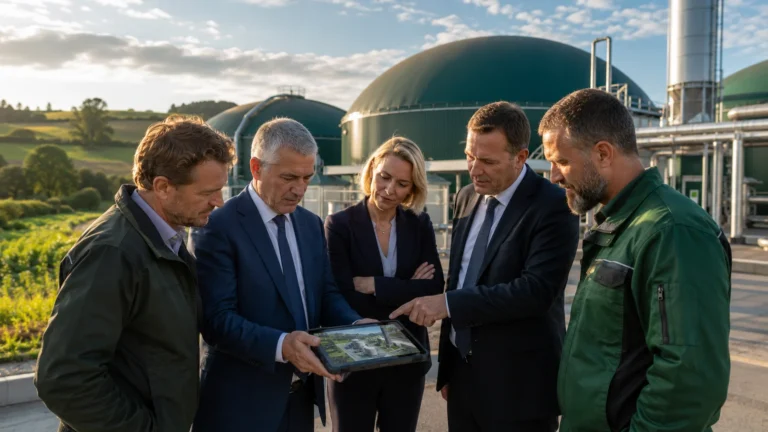
Executive Summary: The global agricultural sector has historically suffered from a profound structural paradox: while farmland and primary agricultural commodities represent trillions of dollars in real-world intrinsic value, they remain among the most illiquid, fragmented, and operationally opaque asset classes in the global financial system. For decades, institutional asset managers, sovereign wealth funds, and private equity syndicates faced insurmountable barriers when attempting to deploy capital at scale into rural agrarian infrastructure. High minimum ticket sizes, convoluted local land registries, archaic paper-based trade documentation, and the near-total absence of liquid secondary markets have persistently suppressed the velocity of agricultural capital.
However, a sweeping macroeconomic and technological convergence is redefining this landscape. By institutionalizing Real-World Asset (RWA) tokenization, global financial institutions are systematically converting illiquid physical farmland and harvested agricultural inventory into fractionalized, programmable, and instantaneously tradable on-chain security tokens.
This structural evolution moves far beyond the experimental blockchain pilots of the early 2020s. In 2026, the deployment of tokenized agricultural RWAs represents a cornerstone of institutional portfolio diversification. In an economic environment characterized by persistent inflationary undercurrents and geopolitical friction, institutional allocators are actively rotating capital away from volatile unsecured equities and toward inflation-hedging, yield-generating physical assets.
Tokenization provides the exact financial architecture necessary to execute this rotation without sacrificing liquidity. By minting legally compliant security tokens that represent fractional ownership in productive agricultural real estate or certified commodity storage receipts, asset managers can achieve real-time settlement velocity, automated dividend distributions, and seamless cross-border capital mobility.
Related Insights

For chief investment officers, commodity trading houses, and agribusiness treasuries, mastering the mechanics of RWA tokenization is no longer optional—it is a competitive mandate for capital preservation and yield optimization. This strategic advisory briefing delivers an exhaustive analysis of how institutional capital is deploying on-chain frameworks to monetize agricultural real estate and revolutionize commodity trade finance.
We examine the legal structures required to bridge off-chain property rights with on-chain cryptographic ledgers, evaluating how this paradigm shift permanently elevates precision agriculture into an institutional asset class.
Fractionalizing the Land: The Architecture of Tokenized Farmland
The foundational barrier to direct institutional investment in farmland has traditionally been the sheer capital expenditure required to acquire commercial-scale acreage, combined with the extreme difficulty of divesting that acreage during market downturns. Tokenizing farmland resolves this liquidity deficit by applying the legal principles of structured securitization to distributed ledger technology.
In a standard institutional RWA deployment, the physical real estate is transferred into a bankruptcy-remote Special Purpose Vehicle (SPV) or a specialized Real Estate Investment Trust (REIT). This legal entity holds the unencumbered title to the land, while the equity shares of the SPV are minted as permissioned security tokens on a high-throughput blockchain network.
This cryptographic fractionalization completely transforms the economic profile of agricultural real estate. Instead of requiring a multi-million-dollar commitment to acquire a single farming estate, institutional investors—and qualified smaller syndicates—can acquire tokenized tranches representing exact percentages of the underlying asset. These security tokens are engineered with embedded compliance smart contracts (utilizing standards such as ERC-3643 or institutional permissioned protocols).
Related Insights

This ensures that secondary market transfers only occur between KYC/AML-verified institutional wallets, completely satisfying international securities regulations while maintaining continuous, 24/7 liquidity on regulated digital asset exchanges.
Furthermore, the operational cash flows generated by the farmland—whether derived from agricultural lease payments made by operating cooperatives or direct revenue-share agreements from seasonal harvests—are algorithmically distributed to token holders. Smart contracts execute automated, real-time yield disbursements in stablecoins or central bank digital currencies (CBDCs) directly to the investor’s institutional custody account. This eliminates the bureaucratic delays, escrow fees, and cross-border banking friction historically associated with agricultural property dividends, creating a frictionless mechanism for capturing long-term land appreciation alongside reliable operating yields.
Transforming Commodity Trade Finance and Inventory Monetization
While farmland tokenization addresses long-term real estate liquidity, the application of RWA tokenization to harvested agricultural commodities is simultaneously revolutionizing short-term trade finance. The global trade finance sector suffers from a chronic structural deficit exceeding $1.5 trillion, disproportionately impacting cross-border agricultural supply chains.
Mid-size commodity producers and regional aggregators are frequently forced to wait up to 90 days for international letters of credit to clear, locking up critical working capital while physical inventory sits idle in transit or storage.
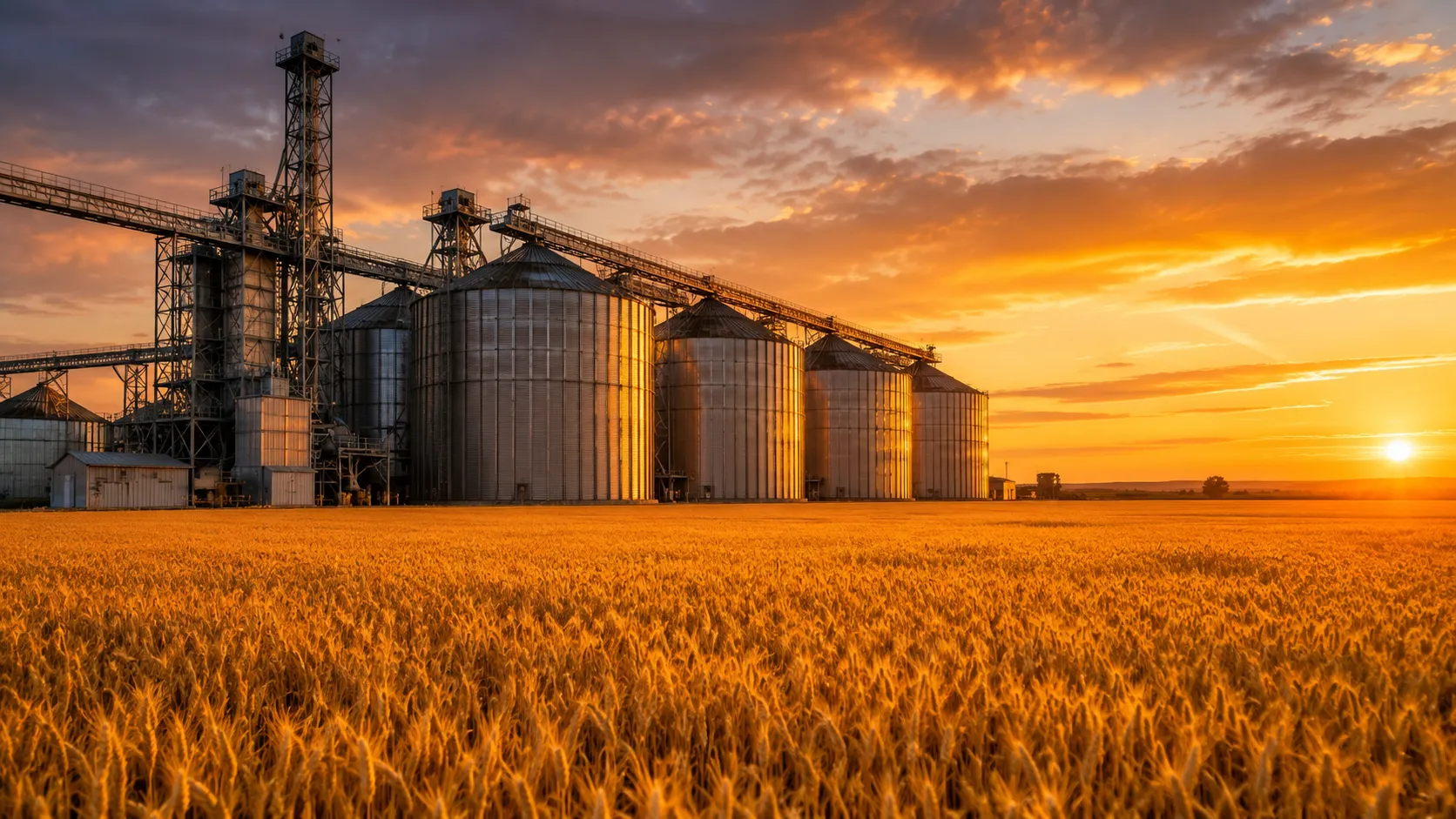
Institutional RWA frameworks eliminate this bottleneck by tokenizing physical agricultural inventory stored in certified, third-party bonded warehouses. When a commodity producer delivers a bulk shipment of grain, soybeans, or high-grade coffee to an audited storage facility, an Electronic Bill of Lading (eBL) or a certified electronic warehouse receipt is generated.
Related Insights
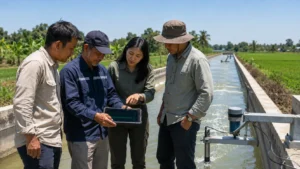

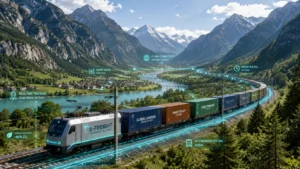
Through RWA tokenization protocols, this verified digital receipt is minted into an on-chain asset—either as a non-fungible token (NFT) representing a specific, audited lot, or as fungible tokens representing standardized units of volume and quality. This process is highly synergistic with established frameworks for blockchain traceability in rural supply chains, where provenance data is natively anchored to the tokenized commodity.
Once minted, these tokenized commodities serve as immediate, mathematically secure collateral. Agribusinesses can pledge their tokenized inventory into institutional private credit pools or decentralized finance (DeFi) lending vaults to access instant working capital loans at competitive, money-market interest rates. Because the underlying physical asset is independently audited, legally ring-fenced in a bonded warehouse, and continuously tracked via IoT telemetry, the risk of counterparty default or collateral double-pledging is virtually eliminated.
This architectural leap provides the definitive infrastructure required for achieving complete liquidity optimization in supply chain finance across international trade corridors.

Yield Engineering and Automated Parametric Risk Mitigation
For sophisticated global asset managers, the primary attraction of agricultural RWA tokenization lies in the ability to engineer multi-layered, risk-adjusted yield strategies. Traditional agricultural investment forced allocators to choose between low-yield, passive land ownership or high-risk, active operational lending. Tokenization allows for the creation of structured, composite financial products that unbundle and rebalance these specific risk-return profiles within a single institutional portfolio.
Through smart contract architecture, institutional structuring teams can slice tokenized agricultural cash flows into distinct tranches. Senior debt tranches can offer fixed, conservative yields secured against the liquidation value of the underlying land title and insured crop inventories. Junior equity tranches can capture the variable, high-upside alpha generated by commodity price surges and agronomic yield outperformance.
Related Insights
This level of dynamic structuring is critical for funds engaging in yield-linked credit facilities and dynamic debt modeling, allowing allocators to precisely match their liability durations with tailored, inflation-hedged agricultural cash flows.
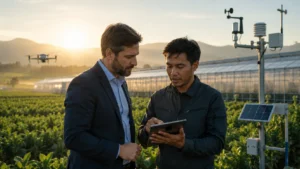
Crucially, tokenized RWA frameworks integrate seamlessly with automated risk mitigation mechanisms. By connecting on-chain tokens to decentralized oracle networks, institutional credit facilities receive real-time telemetry from IoT soil sensors, localized weather stations, and global commodity spot exchanges. If severe drought conditions or sudden market shifts degrade the projected value of a collateralized crop, the smart contract automatically adjusts loan-to-value (LTV) ratios, initiates margin calls, or executes parametric insurance payouts without human intervention. According to technical frameworks published by the Bank for International Settlements (BIS), integrating real-time data oracles into tokenized asset infrastructure is essential for mitigating systemic counterparty risk and ensuring institutional settlement stability.
Institutional Due Diligence and Regulatory Convergence
Despite the immense financial upside, deploying capital into tokenized agricultural RWAs demands a rigorous, multi-disciplinary due diligence protocol that transcends traditional software evaluation. An on-chain token is ultimately only as secure as its physical, off-road legal foundation. Institutional investment committees must scrutinize three critical operational pillars before allocating capital:
- Jurisdictional Title Enforceability: Legal counsel must verify that the local jurisdiction explicitly recognizes the transfer of physical property rights via cryptographic tokens. Operating within progressive regulatory frameworks—such as the European Union’s Markets in Crypto-Assets (MiCA) regulation or the UK’s Electronic Trade Documents Act—is vital to ensure that on-chain foreclosure and asset seizure are legally binding in physical courts.
- Custodial and Auditing Integrity: For tokenized agricultural commodities, the integrity of the bonded warehouse operator is paramount. Allocators must mandate continuous, third-party agronomic and inventory audits conducted by global inspection firms (e.g., SGS or Bureau Veritas), ensuring that the digital token precisely mirrors physical silo volumes at all times.
- Smart Contract Security and Governance: All protocol logic governing token issuance, dividend distribution, and collateral liquidation must undergo exhaustive, independent cybersecurity audits. Institutional capital must be deployed strictly through permissioned, institutional-grade DeFi vaults that enforce multi-signature governance and absolute segregation of client funds.
When these due diligence parameters are rigorously met, tokenized RWAs provide an unprecedented mechanism for satisfying stringent ESG mandates. By embedding verified sustainability data directly into the token metadata—such as carbon sequestration metrics or organic cultivation certifications—asset managers can prove environmental compliance to regulators and shareholders with absolute cryptographic certainty. This seamless convergence of compliance and liquidity is setting a new global standard for integrating ESG metrics into institutional capital allocation. As highlighted by agricultural economic analyses from the Food and Agriculture Organization (FAO), modernizing rural capital access through transparent financial technology is the single most critical vector for stabilizing global food security in the twenty-first century.
Conclusion
The institutional adoption of Real-World Asset (RWA) tokenization within the agricultural sector marks the definitive end of the historic divide between illiquid physical infrastructure and high-velocity digital finance. By tokenizing farmland and primary agricultural commodities, global asset managers are systematically unlocking trillions of dollars in trapped value, creating highly liquid, inflation-hedged, and programmable financial instruments. As the regulatory architecture surrounding digital assets reaches full global convergence in 2026, the ability to structure, deploy, and trade agricultural RWAs will distinguish elite institutional allocators from legacy market participants. Those who master the legal, agronomic, and cryptographic mechanics of agricultural tokenization today will command an unassailable advantage in securing the foundational yield generators of the global economy.