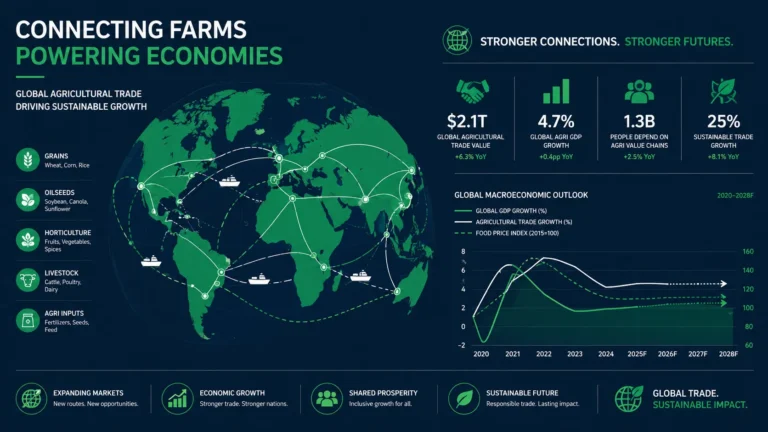
Executive Summary: The international monetary architecture governing cross-border trade finance is experiencing its most profound structural disruption since the establishment of the Bretton Woods system. For decades, global commodity trade—ranging from agricultural shipments and industrial metals to energy exports—has been fundamentally anchored to the US Dollar and dependent on the multi-tiered correspondent banking network (SWIFT). While historically resilient, this legacy infrastructure is increasingly characterized by severe operational friction, high transaction costs, extended T+2 to T+5 settlement latency, and elevated counterparty credit risk.
As we navigate the complex macroeconomic realities of 2026, a paradigm shift is actively underway: the institutional deployment of Wholesale CBDCs (Central Bank Digital Currencies) and multi-CBDC platforms. Leading this structural revolution is Project mBridge—a flagship initiative developed by the Bank for International Settlements (BIS) Innovation Hub in collaboration with central banks across Asia and the Middle East—which is systematically rewriting the rules of global commodity trade settlement.
Unlike retail digital currencies designed for consumer transactions, Wholesale CBDCs are permissioned, institutional-grade settlement instruments restricted to central banks, commercial banks, and primary financial institutions. By establishing a shared, multi-jurisdictional distributed ledger network, platforms like Project mBridge enable peer-to-peer, instant atomic settlement of cross-border transactions in central bank money.
This technological architecture entirely bypasses the traditional hierarchy of correspondent banks, stripping out layers of intermediary fees and transforming multi-day clearing cycles into instantaneous real-time execution. For global agribusinesses, commodity trading houses, and emerging market exporters, the ability to settle multi-million-dollar invoices in seconds without routing through offshore clearing centers represents a monumental leap in capital efficiency.
Related Insights


The macroeconomic implications of this transition extend far beyond mere operational speed. By facilitating direct payment versus payment (PvP) settlement across foreign currencies, Wholesale CBDCs actively mitigate foreign exchange settlement risk—the structural vulnerability that occurs when one party delivers a currency without the guarantee of receiving the counter-currency. Furthermore, this innovation directly supports sovereign agendas aimed at de-dollarization and regional currency autonomy.
This executive briefing delivers a comprehensive macro-financial evaluation of the emerging wholesale digital currency landscape. We dissect the technical mechanics of Project mBridge, evaluate how atomic settlement de-risks agricultural trade finance, and outline the strategic treasury frameworks required for multinational corporations to thrive in an era of direct cross-border monetary exchange.
The Mechanics of Project mBridge: Eliminating Correspondent Banking Friction
To understand the revolutionary nature of Project mBridge and Wholesale CBDCs, one must first examine the inherent inefficiencies of traditional correspondent banking. When an emerging market agribusiness in Southeast Asia exports a shipment of sustainably sourced palm oil or specialty coffee to an importer in the Middle East or Europe, the financial settlement rarely occurs directly between the two domestic banks.
Instead, the transaction must navigate a convoluted labyrinth of intermediary banks, international clearing houses, and foreign exchange brokers. Each intermediary tier injects operational friction, compliance overhead, and liquidity trapping, frequently resulting in transaction fees exceeding 2% to 3% of the total shipment value and delays spanning several business days.
Project mBridge dismantles this legacy hierarchy by deploying a bespoke, high-performance distributed ledger technology (DLT) platform—the mBridge Ledger—specifically engineered to support real-time, peer-to-peer cross-border payments and foreign exchange transactions using central bank money. When commercial banks join the mBridge platform, their respective central banks issue domestic Wholesale CBDCs directly onto the shared ledger, backed one-to-one by institutional reserves.
Related Insights

When a commodity trade is executed, the importer’s bank instantly transfers digital currency directly to the exporter’s bank on the platform. The settlement is atomic, meaning the transfer of funds and the foreign exchange conversion occur simultaneously and irrevocably.
This direct commercial bank-to-commercial bank connectivity on a shared sovereign infrastructure completely removes the credit and operational risks traditionally associated with correspondent banking. According to comprehensive research published by the Bank for International Settlements (BIS), multi-CBDC arrangements like Project mBridge can reduce cross-border transfer costs by up to 50% while accelerating settlement speeds from days to mere seconds. For multinational corporations managing massive daily treasury flows, this real-time settlement velocity liberates billions of dollars in trapped working capital that would otherwise remain immobilized in transit across global clearing networks.

De-Risking Agricultural Trade Finance and Working Capital
The agricultural trade finance sector has historically been plagued by a global funding gap exceeding $1.5 trillion, disproportionately penalizing small and medium-sized exporters in emerging markets. Traditional trade finance instruments—such as Letters of Credit (LCs) and documentary collections—are notoriously paper-intensive, prone to fraud, and reliant on manual verification by multiple banking entities. When combined with legacy payment friction, agricultural exporters frequently face severe working capital deficits between the moment they harvest physical crops and the moment international funds finally clear their domestic bank accounts.
The integration of Wholesale CBDCs into commodity trade finance provides the definitive infrastructure required to close this liquidity gap. Because platforms like Project mBridge operate on programmable smart contract architectures, financial settlement can be directly linked to physical supply chain events. When an exporter delivers a shipment of raw agricultural commodities to a bonded warehouse or shipping port, an electronic Bill of Lading (eBL) or a digital warehouse receipt is generated. By connecting this digital shipping documentation with programmable Wholesale CBDCs, payment can be algorithmically triggered the exact second physical delivery is verified by IoT sensors or customs authorities.
This automated, conditional settlement eliminates counterparty default risk entirely. Importers are guaranteed that funds are only released upon verified shipment of goods, while exporters are guaranteed instant liquidity the moment their contractual obligations are met. This architectural convergence is highly synergistic with established frameworks for tokenizing farmland and agricultural commodities, where on-chain inventory receipts can be pledged as collateral and settled instantaneously using sovereign digital currency.
Related Insights


By removing the credit friction and latency of traditional banking, Wholesale CBDCs are establishing the foundation for unprecedented liquidity optimization in supply chain finance across emerging market trade corridors.

Geopolitical De-Risking and Local Currency Settlement
Beyond operational efficiency and working capital optimization, the rapid expansion of Wholesale CBDCs is driven by a profound macroeconomic imperative: geopolitical de-risking and foreign exchange diversification. In an increasingly polarized global economy, reliance on a single dominant settlement currency and unilateral clearing networks creates significant vulnerability for sovereign nations and multinational corporations. Sanctions risks, extraterritorial legal overreach, and US Federal Reserve monetary tightening cycles can induce severe exchange rate volatility and import inflation across developing economies.
Project mBridge and analogous multi-CBDC platforms provide a robust structural mechanism for facilitating intra-regional trade in local currencies. By connecting central banks across Asia, the Middle East, and the Global South directly on a shared digital network, sovereign nations can settle bilateral commodity trade—such as oil, gas, fertilizer, and bulk agricultural goods—directly in their respective national currencies. For example, bilateral trade between Southeast Asian exporters and Gulf Cooperation Council (GCC) energy providers can be settled via an atomic exchange of digital Dirhams, Riyals, or Rupiahs, completely bypassing third-party currency intermediation.
This structural shift directly reinforces broader macroeconomic strategies regarding local currency settlement in emerging markets. By reducing the systematic demand for US Dollar liquidity to settle regional trade, central banks can better preserve critical foreign exchange reserves and stabilize domestic currency values against external macroeconomic shocks.
As documented by institutional economic assessments from the International Monetary Fund (IMF), well-designed cross-border CBDC platforms have the potential to significantly enhance international monetary stability while reducing the macro-fiscal friction historically borne by developing economies. This stability is paramount for corporate treasuries executing comprehensive macro-fiscal volatility and treasury de-risking strategies.
Related Insights


Strategic Advisory for Corporate Treasuries and Trade Syndicates
As Wholesale CBDCs transition from central bank pilots to fully commercialized settlement grids in 2026, multinational agribusinesses, commodity trading conglomerates, and corporate treasuries must adapt their financial architectures. Relying exclusively on legacy correspondent banking networks will soon represent a competitive disadvantage in both transaction cost and capital velocity. We advise corporate boards and chief financial officers to prioritize three critical operational pillars:
- Upgrade Treasury Management Systems (TMS) for DLT Interoperability: Corporate treasurers must ensure that internal Enterprise Resource Planning (ERP) and TMS software architectures are upgraded with application programming interfaces (APIs) capable of interfacing directly with commercial banking nodes on multi-CBDC networks. Real-time liquidity management requires systems that can process instant, 24/7/365 atomic settlements without relying on traditional banking hours or batch processing.
- Integrate Programmable Smart Contracts into Off-Take Agreements: Legal and procurement teams must begin structuring bilateral commodity trade contracts with automated payment conditions. By linking commercial off-take agreements to digital trade documentation and verified blockchain supply chain traceability, corporations can execute conditional PvP settlement, completely eliminating the necessity and expense of traditional Letters of Credit.
- Diversify Foreign Exchange Settlement Counterparties: Corporate treasuries should actively establish commercial banking relationships with tier-1 financial institutions that are active participants in Project mBridge and other regional wholesale CBDC arrangements. Diversifying clearing channels across traditional SWIFT networks and emerging digital platforms ensures absolute payment continuity and protects supply chain liquidity against geopolitical shocks.
Conclusion
The commercial maturation of Wholesale CBDCs and the rapid expansion of multi-CBDC platforms like Project mBridge mark the beginning of a new era in international finance. By replacing the archaic, multi-tiered correspondent banking hierarchy with peer-to-peer, instantaneous atomic settlement on sovereign digital ledgers, global markets are eliminating billions of dollars in annual financial friction. For the agricultural commodity and raw material sectors, this technological evolution resolves chronic working capital deficits, de-risks cross-border trade finance, and provides a resilient foundation for local currency settlement. As we progress through 2026, those institutional allocators, commodity traders, and corporate treasurers who integrate wholesale digital settlement into their core operations will capture unprecedented capital velocity, securing a dominant competitive advantage in the evolving global marketplace.