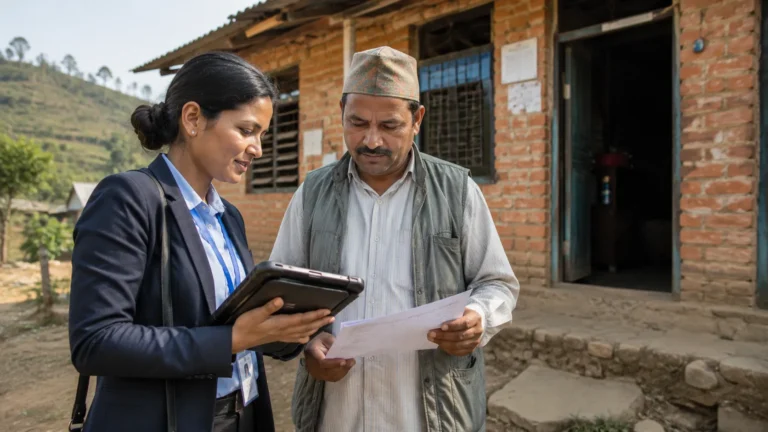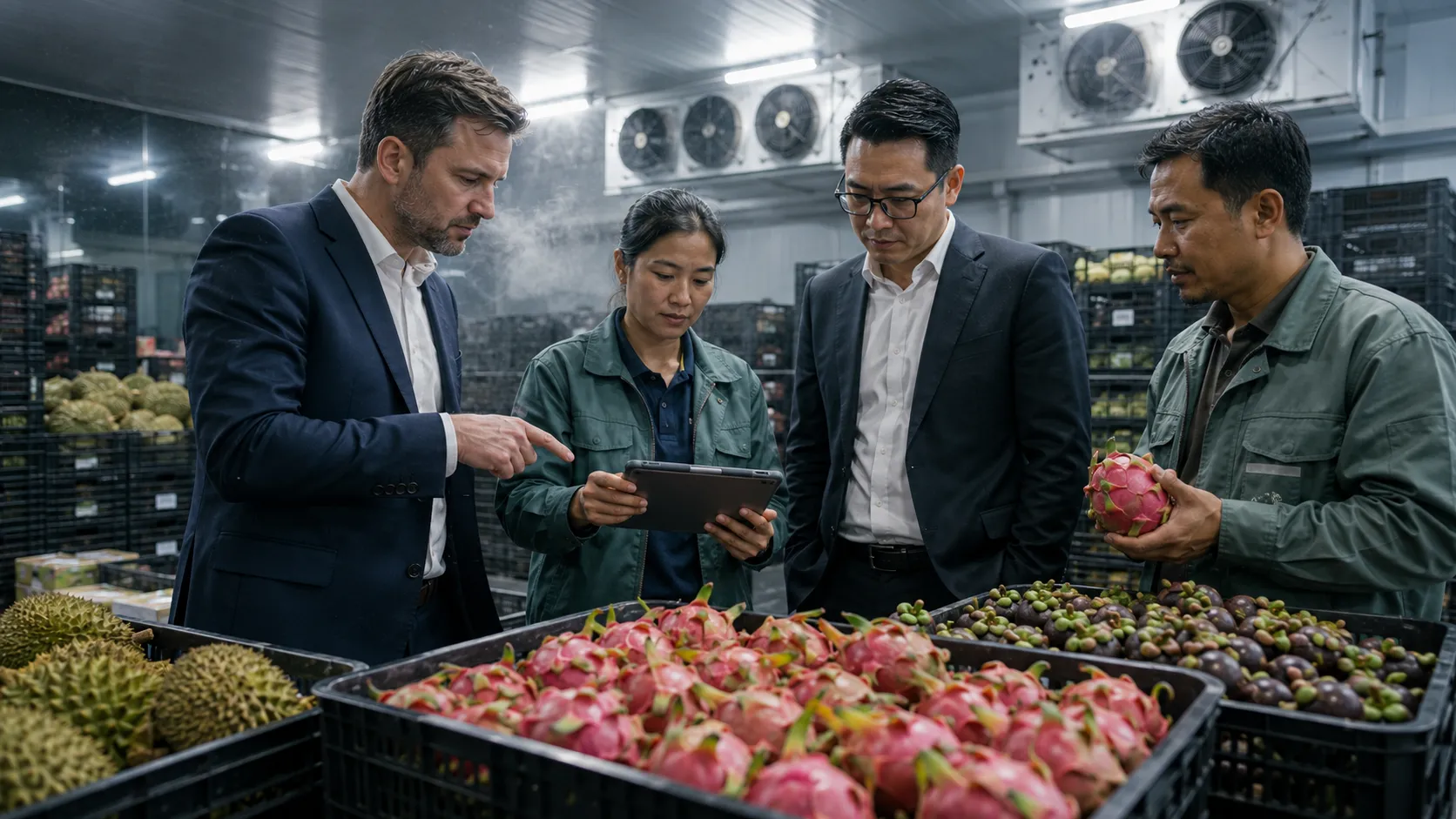
Executive Summary: The global agricultural sector faces a severe, systemic crisis that occurs entirely outside the cultivation field: post-harvest food loss. Across tropical emerging markets in Southeast Asia and sub-Saharan Africa, an estimated 30% to 45% of high-value perishable horticultural, dairy, and aquaculture output decays before it ever reaches urban retail centers or international export terminals.
Historically, agricultural development strategies and capital expenditure focused overwhelmingly on upstream yield optimization, ignoring the critical biophysical decay that occurs between harvest and processing. For institutional asset managers, AgTech venture capital funds, and private equity syndicates, resolving this mid-stream bottleneck represents one of the most lucrative and high-impact investment opportunities of 2026. The institutional answer lies in the rapid scale-up of decentralized, Solar-Powered Cold Chain Logistics infrastructure.
Traditional cold storage and refrigerated transport networks in developing economies are structurally flawed. Because rural agrarian hubs are frequently isolated from national power grids—or plagued by erratic, highly volatile electrical generation—legacy refrigeration facilities are forced to rely almost exclusively on diesel generators.
This operational dependence creates an unsustainable financial dynamic: exorbitant and volatile diesel operating expenditures (OpEx) destroy unit-level profit margins, while heavy carbon emissions violate the rigorous ESG mandates of international institutional investors. Furthermore, when fuel supply chains stall, temperature excursions occur, instantly liquidating the commercial value of stored perishable commodities.
Related Insights
The maturation of high-efficiency solar photovoltaic (PV) arrays, advanced thermal energy storage (TES), and intelligent IoT temperature telemetry has completely rewritten this economic equation. By institutionalizing off-grid, Solar-Powered Cold Chain Logistics, agribusiness developers can permanently replace unpredictable fossil-fuel operating costs with zero-marginal-cost renewable energy.
This infrastructure transformation elevates rural post-harvest storage from a high-risk, cost-draining operational bottleneck into a predictable, revenue-generating real estate asset class. This executive advisory briefing delivers an exhaustive analysis of the financial architecture, thermodynamic engineering, and operational models required to scale solar refrigeration networks across emerging agrarian economies.
Thermodynamic Engineering and the Economics of Thermal Storage
To rigorously evaluate the capital expenditure (CapEx) and operational returns of Solar-Powered Cold Chain Logistics, institutional allocators must look beyond standard electrochemical battery storage. While traditional solar installations rely heavily on lithium-ion Battery Energy Storage Systems (BESS) to maintain baseload power after sunset, utilizing chemical batteries solely to power power-hungry mechanical refrigeration compressors around the clock introduces prohibitive lifecycle replacement costs and thermodynamic inefficiencies.
The state-of-the-art engineering standard in 2026 substitutes electrochemical storage with advanced Thermal Energy Storage (TES) utilizing Phase Change Materials (PCMs) and ice-battery architectures. During peak daylight hours, high-capacity solar arrays drive commercial compressors at maximum efficiency, chilling proprietary PCM compounds or ice banks to sub-zero temperatures.
When solar generation drops at dusk, the refrigeration compressors automatically shut down; the facility maintains target interior cold-room temperatures (ranging from +4°C for horticulture to -18°C for aquaculture and proteins) through the passive phase-change transition of the stored thermal mass.
Related Insights

This thermal battery methodology reduces total system CapEx by up to 40% compared to equivalent chemical battery deployments while extending the operational lifespan of the refrigeration infrastructure from seven years to over two decades. By decoupling cooling generation from grid connectivity and chemical battery degradation, solar cold rooms achieve absolute operational autonomy.
This architectural resilience is highly complementary to broader regional investments in decentralized renewable energy micro-grids, allowing rural agrarian hubs to function as self-sustaining industrial ecosystems resistant to external macroeconomic or electrical supply shocks.
The CaaS Model: Cooling-as-a-Service and BUM Desa Aggregation
The primary structural barrier to deploying advanced refrigeration hardware in emerging markets is the economic fragmentation of smallholder farmers. Individual rural producers cultivating two to five hectares lack the balance sheet capacity to acquire multi-thousand-dollar solar cold storage units. If capital deployment relies on selling hardware directly to individual farmers, market penetration will stall indefinitely. The institutional financial solution is the adoption of the Cooling-as-a-Service (CaaS) business model, institutionalized through regional farming cooperatives and village-owned enterprises.
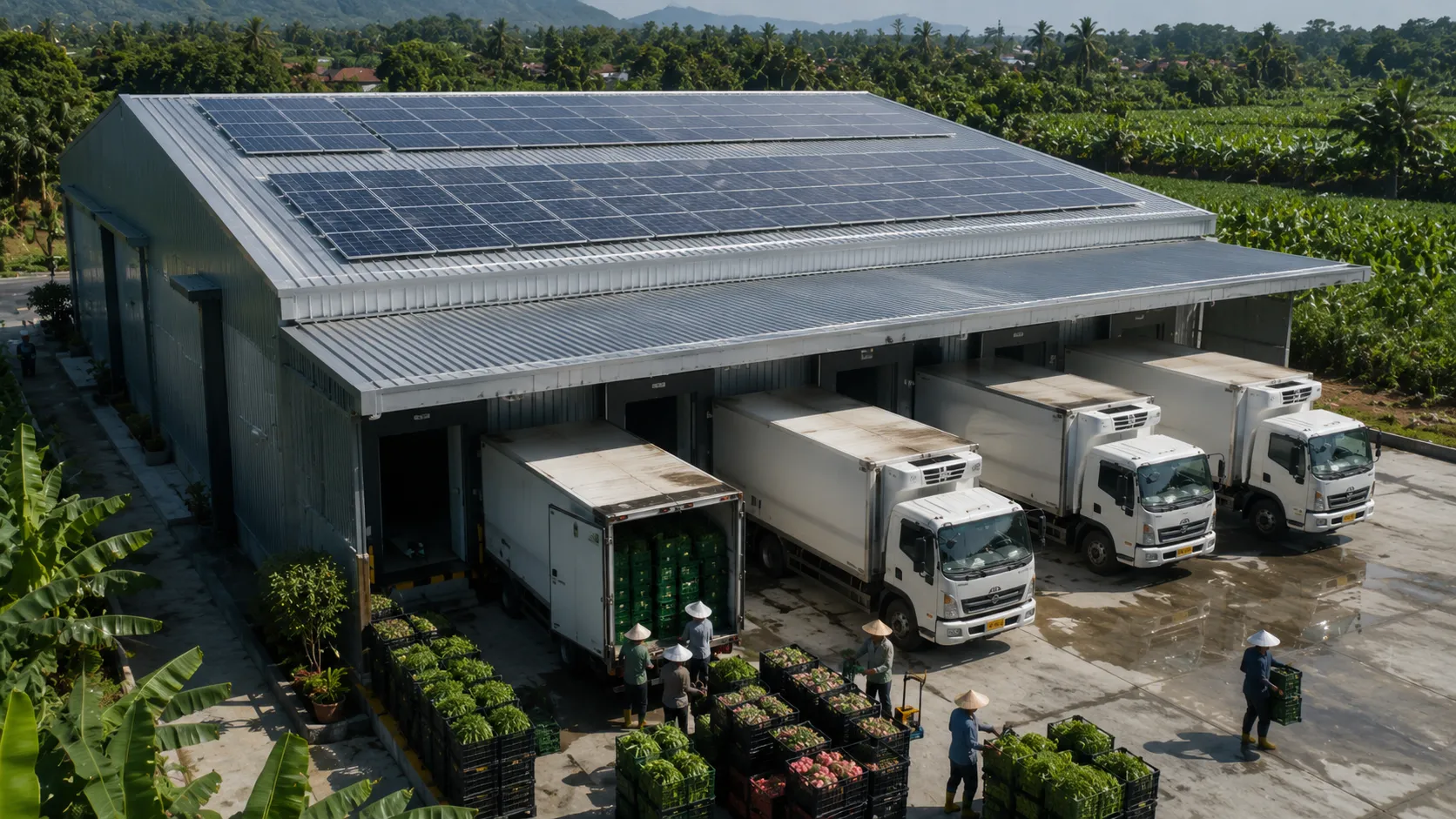
Under the CaaS framework, private equity funds and infrastructure developers retain asset ownership of the physical Solar-Powered Cold Chain Logistics facilities. These cold rooms are strategically erected at rural convergence nodes—such as village aggregation markets or primary processing hubs managed by Badan Usaha Milik Desa (BUM Desa).
Rather than purchasing the hardware, smallholder cooperatives and regional commodity aggregators pay a volumetric daily fee per crate or kilogram to store their perishable produce within the solar refrigerated facility. This structure transforms a prohibitive upfront capital expense into a manageable, highly predictable operational cost for the agricultural producer.
Related Insights


By preventing immediate post-harvest decay, the CaaS model fundamentally alters the market pricing dynamics for rural farmers. Without cold storage, farmers are forced to execute “distress sales” immediately upon harvest, dumping excess inventory onto local markets at bottom-tier prices to avoid rot.
Access to decentralized solar cold rooms allows producers to buffer their inventory, timing the release of high-value commodities to urban retail markets when supply contracts and spot prices surge. This inventory stabilization directly supports the commercial viability of the rural aggregator model for multinational supply chains, ensuring that global food and beverage conglomerates receive a continuous, standardized volume of premium raw materials.

Financing the Cold Chain: Blended Capital and AgTech VC
Scaling a nationwide or regional network of solar refrigerated warehouses demands substantial capital mobilization that must be carefully structured to mitigate sovereign and agrarian risks. For institutional allocators, pure commercial debt is often too rigid during the initial asset deployment phase. The most successful financing vehicles in 2026 utilize sophisticated blended finance architectures that combine public catalytic capital with private institutional equity.
Within these structured funds, development finance institutions (DFIs) and multilateral entities—such as the World Bank or the Green Climate Fund—inject first-loss concessional equity or provide foreign exchange risk guarantees. This public de-risking layer absorbs the initial site acquisition and construction risks across rural districts.
Once the solar cold rooms achieve operational stabilization and demonstrate consistent CaaS revenue utilization, senior institutional debt syndicates and AgTech Venture Capital funds enter the capital stack to finance rapid regional replication. This multi-tiered investment approach mirrors the rigorous structuring principles utilized in blended finance frameworks for rural micro-sovereign capital.
Related Insights


Furthermore, because solar refrigeration permanently displaces diesel consumption and directly prevents food waste—which accounts for nearly 8% of global greenhouse gas emissions—these infrastructure assets qualify for top-tier ESG debt financing and green bonds. By adhering to rigorous reporting standards published by the Food and Agriculture Organization (FAO) regarding food loss reduction, asset managers can monetize the carbon offsets and sustainability metrics generated by their cold storage portfolios.
This dual-revenue architecture—combining stable CaaS cash flows with verified carbon and sustainability credits—represents the gold standard for institutional funds dedicated to integrating ESG metrics into institutional capital allocation.
Strategic Advisory for Infrastructure and VC Allocators
For private equity directors, AgTech venture capitalists, and sovereign infrastructure funds preparing to deploy capital into emerging market cold chains, success requires strict adherence to institutional operational disciplines. We advise investment committees to mandate the following three underwriting pillars prior to capital commitment:
- Prioritize High-Margin Perishable Supply Chains: Avoid allocating refrigeration CapEx toward low-value bulk commodities such as staple grains or dry legumes, which do not require intensive chilling. Capital must be directed strictly toward high-margin, highly perishable supply chains—specifically export-grade tropical horticulture, aquaculture, floriculture, and localized dairy networks where cold storage preserves substantial economic value.
- Mandate Automated IoT Telematics and Traceability: Ensure every solar cold room is equipped with cellular or satellite-linked Internet of Things (IoT) temperature sensors and automated door-opening loggers. Integrating this telemetry with advanced agricultural IoT telematics guarantees 24/7 visibility over cold chain integrity, providing insurance underwriters and international buyers with immutable proof that temperature thresholds were never breached.
- Structure Off-Take Linkages with Commercial Finance: Combine CaaS agreements with structured trade finance facilities. When farmer cooperatives store verified perishable inventory in an audited solar cold room, that inventory should immediately serve as collateral to unlock short-term working capital loans. This architectural synergy executes complete liquidity optimization in supply chain finance, empowering rural producers while guaranteeing facility utilization rates for the asset owner.
Conclusion
The institutional deployment of Solar-Powered Cold Chain Logistics represents a transformative convergence of renewable energy infrastructure, agricultural productivity, and climate finance. By replacing diesel-dependent refrigeration with decentralized, solar-thermal cold storage managed through CaaS frameworks, global investors can systematically de-risk the post-harvest supply chain in emerging markets.
This infrastructure intervention prevents millions of tons of biological waste, protects smallholder economic yields, and delivers resilient, inflation-protected cash flows to institutional asset owners. As global food security imperatives intensify throughout 2026, those institutional allocators who master the thermodynamic engineering and financial structuring of off-grid cold chains will command a dominant position in the future of sustainable global agribusiness.