Executive Summary: The global aviation industry faces an unprecedented regulatory and structural reckoning in 2026. As international compliance frameworks—most notably the International Civil Aviation Organization’s (ICAO) Carbon Offsetting and Reduction Scheme for International Aviation (CORSIA) and the European Union’s ReFuelEU Aviation mandate—transition from voluntary guidelines into strictly enforced statutory quotas, airlines are under immense pressure to decarbonize. Because commercial battery-electric and hydrogen propulsion technologies remain decades away from viability for long-haul transcontinental flights, the entire decarbonization burden of global aviation rests upon a single drop-in technological solution: Sustainable Aviation Fuel (SAF).
However, while multi-billion-dollar refining investments in Hydroprocessed Esters and Fatty Acids (HEFA) and Alcohol-to-Jet (AtJ) synthetic pathways have expanded global processing capacity, the sector hit a severe operational wall. The defining bottleneck of the green aviation transition is no longer refinery construction; it is Sustainable Aviation Fuel (SAF) feedstock mobilization.
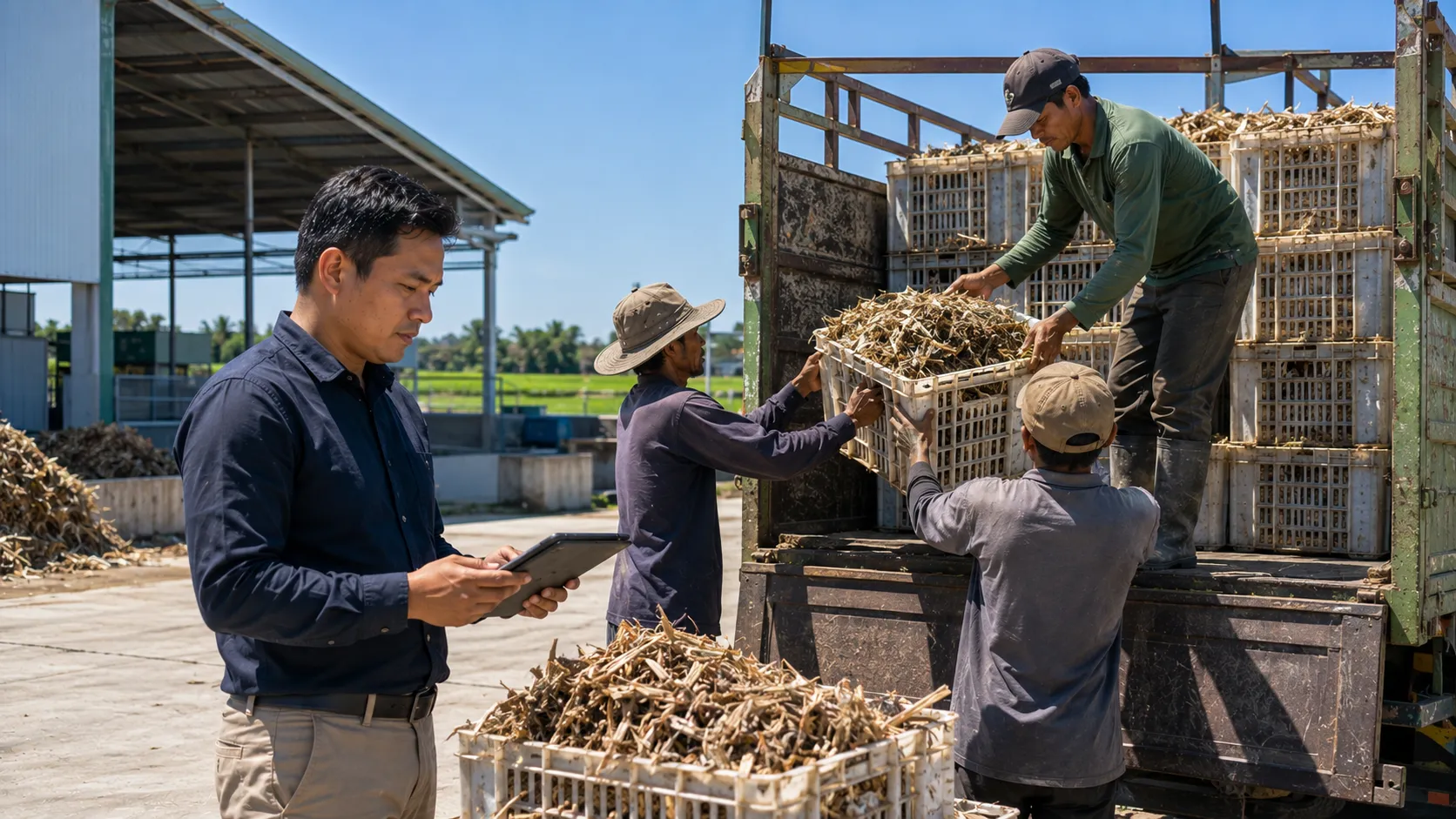
The macroeconomic challenge of Sustainable Aviation Fuel (SAF) feedstock mobilization is rooted in extreme supply chain disaggregation. First-generation feedstocks, such as refined vegetable oils, are heavily constrained by food-versus-fuel debates and stringent deforestation regulations. Consequently, the aviation industry is aggressively pivoting toward second-generation, waste-derived feedstocks: Used Cooking Oil (UCO), tallow, agricultural crop residues (corn stover, wheat straw, sugarcane bagasse), and industrial processing byproducts such as Palm Oil Mill Effluent (POME). These high-value waste streams are geographically dispersed across millions of fragmented rural households, smallholder farms, and local processing mills throughout emerging markets in Southeast Asia, Latin America, and sub-Saharan Africa.
For institutional asset managers, energy commodities syndicates, and airline treasury procurement divisions, unlocking this immense bio-resource requires abandoning traditional, transactional commodity spot purchases. To secure bankable, multi-decade supply pipelines, institutional capital must structure formalized, long-term offtake agreements directly with organized rural cooperatives and village-owned enterprises (such as Badan Usaha Milik Desa / BUM Desa).
Related Insights

This strategic advisory report delivers an exhaustive macro-financial analysis of Sustainable Aviation Fuel (SAF) feedstock mobilization. We examine the economic mechanics of waste aggregation, evaluate the legal architecture of bankable rural offtake agreements, and outline the rigorous digital traceability protocols required to monetize these green aviation inputs across international carbon compliance markets.
The Macro-Economics of SAF Supply Chains and the Feedstock Deficit
To understand the immense capital allocation opportunities within Sustainable Aviation Fuel (SAF) feedstock mobilization, institutional investment committees must analyze the structural supply-demand mismatch defining global aviation fuel markets.
By 2030, mandatory blending targets in the EU, UK, and North America will require millions of metric tons of certified SAF annually. Yet, current global lipid and agricultural waste collection networks capture less than a fraction of the raw material required to feed scheduled refinery capacity. This deficit has ignited intense cross-industry competition between renewable diesel for road transport and SAF for aviation, artificially inflating spot prices for certified UCO and agricultural waste residues.
The economic imperative for institutional capital is to build out dedicated, vertically integrated aggregation infrastructure at the agrarian root. Without structural intervention, rural agricultural residues are typically burned in open fields—generating severe black carbon pollution—or left to rot, emitting methane. Mobilizing these residues for SAF refining transforms an environmental liability into a high-margin, institutional-grade commodity. This supply chain intervention directly mirrors the structural underwriting required to resolve the biofuel supply chain feedstock dilemma, where securing non-food biomass is paramount for enterprise solvency.
However, mobilizing low-density, high-moisture agricultural waste across rural corridors introduces significant logistical friction. The transportation costs of moving raw, unprocessed corn stover or palm residues over long distances quickly erode unit-level profit margins and degrade the net lifecycle greenhouse gas (GHG) reduction profile of the fuel. Therefore, efficient Sustainable Aviation Fuel (SAF) feedstock mobilization demands decentralized, mid-stream capital expenditure.
Related Insights

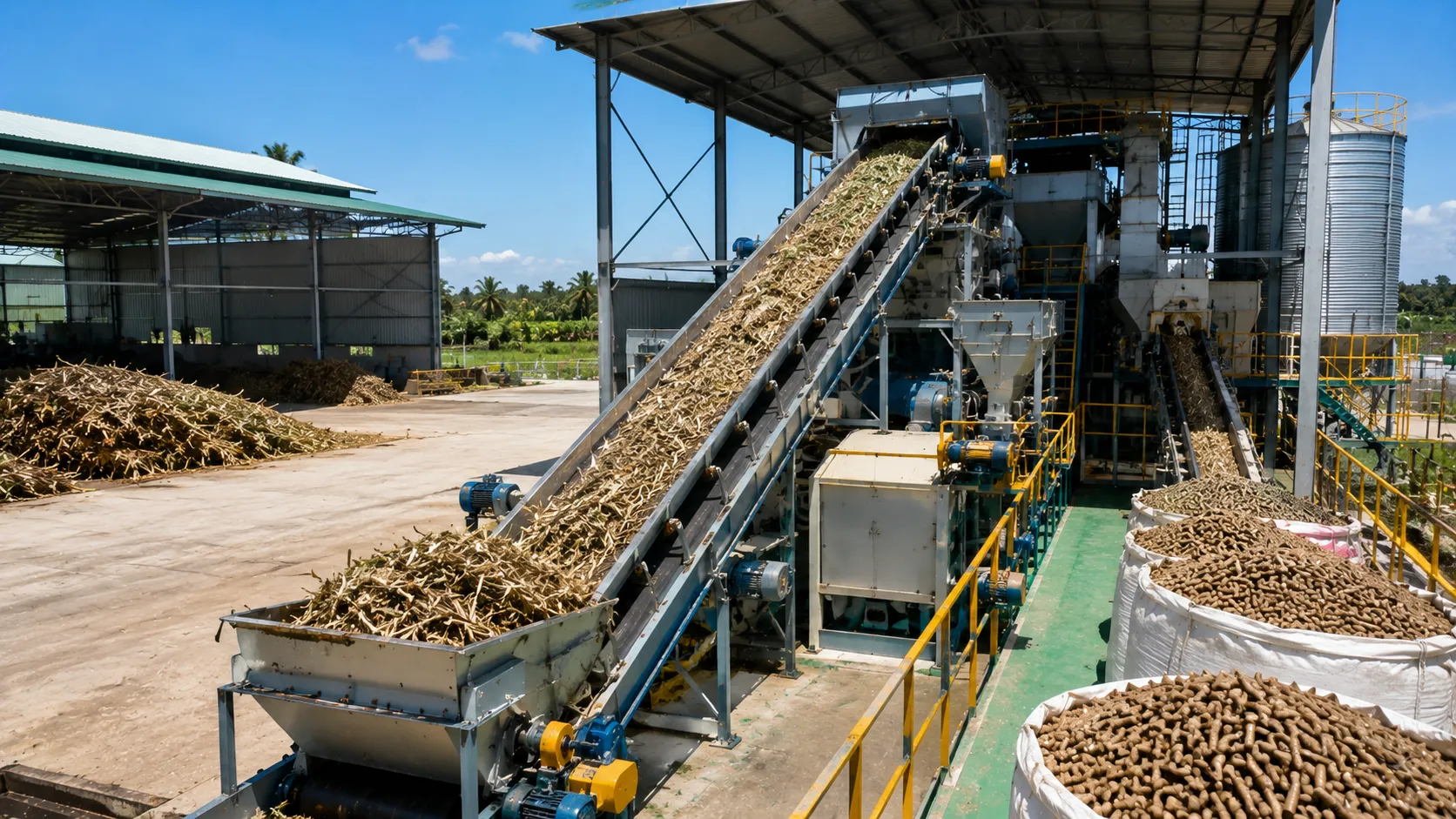
Institutional investors must finance localized pre-processing hubs—such as biomass pelletization units, mechanical compaction facilities, and anaerobic digestion tanks—co-located directly within rural agricultural cooperatives. This infrastructure investment compacts the physical volume of the feedstock, stabilizes its chemical composition, and creates an economically viable supply corridor that feeds directly into industrial SAF refining terminals.
Structuring Bankable Offtake Agreements with Rural Cooperatives
The cornerstone of institutional risk mitigation in Sustainable Aviation Fuel (SAF) feedstock mobilization is the legal architecture of the offtake agreement. Global airline syndicates and energy majors cannot contract individually with thousands of dispersed rural smallholders. The institutional solution relies on positioning legally incorporated rural cooperatives—or state-backed BUM Desa networks—as the master commercial counterparties. These cooperatives act as centralized aggregators, consolidating raw waste materials from surrounding farming communities and entering into long-term, legally binding take-or-pay offtake contracts with international SAF refiners.
To render these offtake agreements bankable for institutional project finance and senior debt syndication, legal counsel must engineer specific contractual mechanisms into the master agreement:
- Dynamic Floor Pricing and Inflation Indexing: Rural cooperatives operate in highly volatile local economic environments. Bankable offtake contracts must establish a guaranteed minimum price floor for delivered feedstock, protecting cooperatives from localized commodity market collapses. This floor must be algorithmically indexed to regional inflation and diesel transport costs, ensuring that farmer compensation remains economically viable throughout a 10- to 15-year contract tenor.
- Quality Standardization and Moisture Penalties: SAF refining catalysts are extremely sensitive to contaminants, free fatty acids (FFA), and moisture content. Offtake agreements must stipulate explicit chemical and biophysical grading matrices. Cooperatives that deliver ultra-clean, standardized feedstocks receive contractually defined quality premiums, while shipments exceeding moisture thresholds trigger automated, algorithmically calculated price deductions, protecting the refiner’s processing yield.
- Working Capital Integration via Supply Chain Finance: Because rural aggregation requires continuous cash disbursements to individual farmers upon waste delivery, cooperatives frequently face acute working capital deficits. Bankable offtake contracts must be integrated with institutional credit facilities. By pledging verified multi-year SAF offtake agreements as collateral, cooperatives can access immediate liquidity through structured liquidity optimization in supply chain finance, guaranteeing continuous operational cash flows without diluting local equity.
When structured with these rigorous parameters, rural offtake agreements transform volatile, informal waste collection into an investable infrastructure asset class. This legal standardization aligns directly with the operational frameworks established in the rural aggregator model for multinational supply chains, empowering local enterprises while providing aviation majors with absolute volume predictability.

Traceability, ESG Verification, and RegTech Mandates
In the high-stakes regulatory environment of 2026, the physical mobilization of SAF feedstock represents only half of the commercial equation; the other half is cryptographic proof of sustainability. To qualify for lucrative compliance mandates and tax subsidies—such as the US Inflation Reduction Act (IRA) Section 45Z Clean Fuel Production Credit or the European Union’s Renewable Energy Directive (RED III)—every single liter of SAF must be accompanied by an auditable, immutable lifecycle emissions certificate. If a refinery produces SAF from palm oil mill effluent or agricultural waste that cannot be definitively traced back to a sustainable, zero-deforestation origin, the fuel is stripped of its green premium and valued merely as conventional fossil jet fuel.
Related Insights
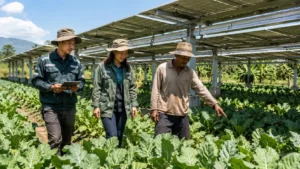

Consequently, institutional capital deploying into Sustainable Aviation Fuel (SAF) feedstock mobilization must mandate the integration of advanced Regulatory Technology (RegTech) and digital traceability protocols across the entire rural collection network. The verification lifecycle begins at the village aggregation hub, where cooperative workers utilize GPS-enabled biometric scales and Internet of Things (IoT) scanners to log the intake of agricultural waste. The exact weight, moisture level, time stamp, and geospatial polygon coordinates of the contributing farm block are cryptographically sealed onto a distributed blockchain ledger.
This digital ledger accompanies the physical feedstock through every stage of pre-processing, transport, and refining. By integrating this telemetry with established protocols for blockchain traceability in rural BUM Desa supply chains, institutional off-takers provide aviation regulatory bodies with immutable proof of provenance. Furthermore, this automated data capture eliminates double-counting and ensures compliance with strict international carbon accounting frameworks.
According to sustainability guidelines published by the International Air Transport Association (IATA), implementing end-to-end digital traceability is the single most critical prerequisite for validating lifecycle GHG reductions and securing public trust in global SAF markets.
This rigorous compliance architecture also de-risks the investment against emerging market land-use litigation. By ensuring that agricultural residues are sourced exclusively from legally titled, sustainably managed farmland, asset allocators insulate their portfolios against the severe statutory penalties and brand erosion detailed in our analysis of navigating carbon compliance and land tenure risks.
Strategic Advisory for Institutional Investors and Aviation Syndicates
As the race for sustainable aviation compliance accelerates globally throughout 2026, private equity infrastructure funds, sovereign wealth allocators, and airline procurement divisions must transition from passive spot-market buyers into active supply chain developers. To successfully capture market share and secure deflationary long-term feedstock pricing within Sustainable Aviation Fuel (SAF) feedstock mobilization, we advise executive investment committees to enforce three mandatory underwriting disciplines:
Related Insights
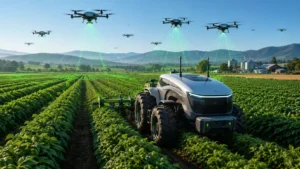

- Pre-Finance Local Aggregation and Pelletization CapEx: Do not expect rural cooperatives to self-fund the heavy mechanical equipment required to process agricultural waste for aviation refining. Institutional allocators must structure asset-backed financing facilities—similar to frameworks utilized in asset-backed drone and tractor leasing—to directly fund the installation of automated pelletizers, compaction units, and solar-powered storage silos at the cooperative level. This upfront CapEx injection locks in long-term exclusivity rights over the regional waste stream.
- Implement Automated Smart-Contract FX and Liquidity Escrows: Because cross-border SAF feedstock trade frequently involves currency mismatch between local emerging market production costs and US Dollar-denominated aviation fuel sales, deploy automated digital escrow accounts governed by smart contracts. By integrating these accounts with modern settlement infrastructure such as Wholesale CBDCs and Project mBridge, corporations can execute instant, atomic cross-border payments directly to cooperative accounts upon verified feedstock delivery, eliminating foreign exchange friction and correspondent banking delays.
- Enforce Strict Scope 3 Lifecycle Carbon Accounting: Mandate that all contracted rural cooperatives undergo rigorous carbon accounting audits to verify that the energy expended during feedstock collection and transport does not negate the fuel’s net sustainability gains. Integrate localized renewable energy—such as agrivoltaics dual-use solar infrastructure—into processing facilities to power biomass compaction cleanly, ensuring the final SAF achieves over 80% lifecycle GHG reductions compared to conventional jet A-1 fuel.
Conclusion
The global imperative to decarbonize commercial flight has elevated Sustainable Aviation Fuel (SAF) feedstock mobilization into one of the most critical and lucrative infrastructure frontiers of the modern agrarian economy. By moving beyond disaggregated, informal waste collection and structuring long-term, bankable offtake agreements directly with organized rural cooperatives and BUM Desa enterprises, institutional capital can unlock millions of metric tons of stranded agricultural biomass. When supported by decentralized pre-processing CapEx, advanced RegTech traceability, and structured supply chain finance, these rural partnerships deliver resilient, high-volume feedstock pipelines to global energy refiners.
As statutory SAF blending mandates tighten across major international aviation corridors in 2026, those institutional investors and airline syndicates who master the financial, legal, and operational mechanics of rural feedstock mobilization will secure an unassailable leadership position in the future of sustainable global transportation.