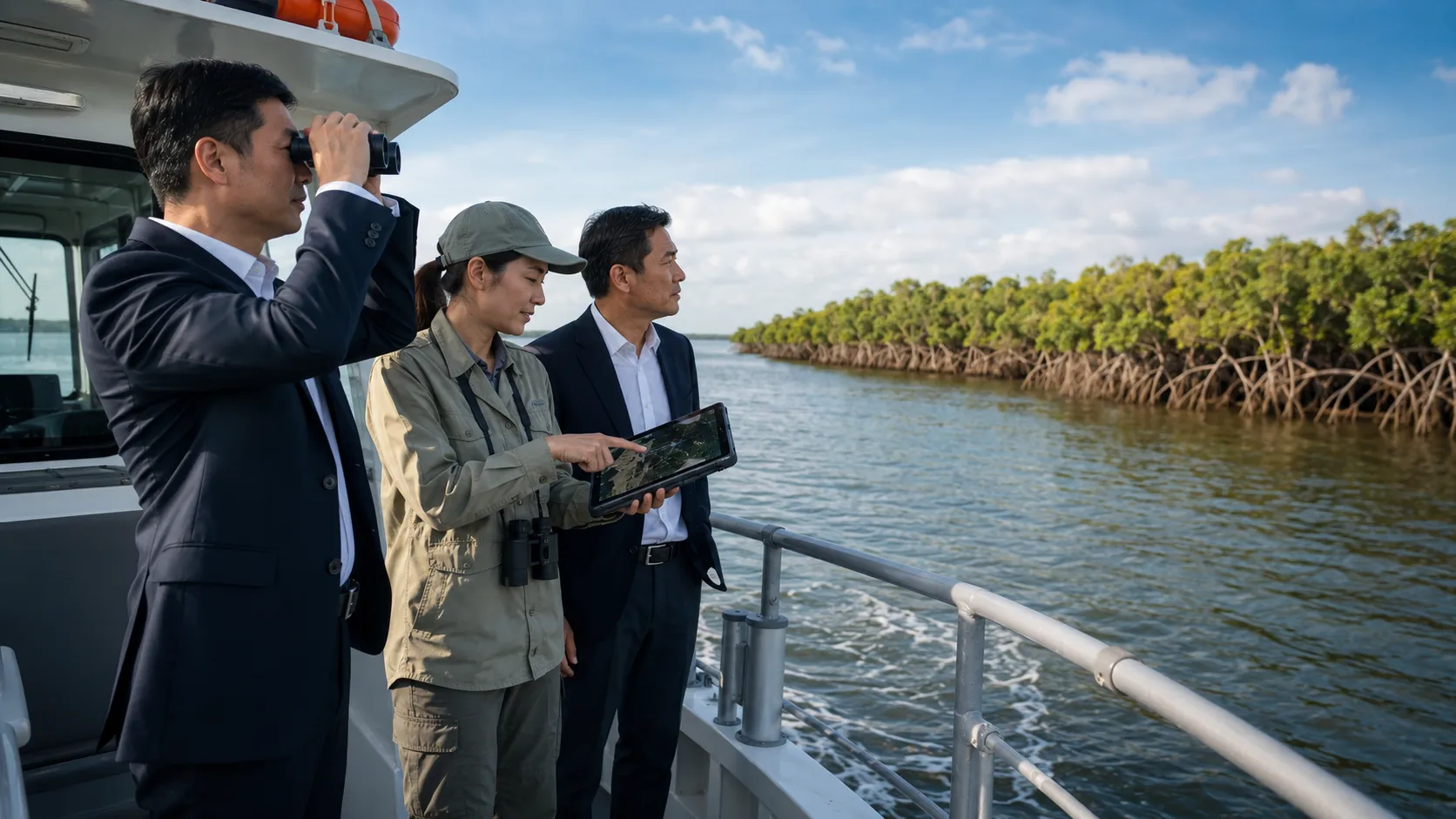
Executive Summary: The global natural capital markets are undergoing a profound, highly sophisticated evolution. For the past decade, institutional climate finance has been overwhelmingly dominated by terrestrial forestry—the traditional green carbon asset class. However, as sovereign wealth funds, Tier-1 asset managers, and corporate treasurers face increasingly stringent compliance mandates under frameworks like the Taskforce on Nature-related Financial Disclosures (TNFD), the focus of institutional capital allocation has shifted toward the marine frontier.
At the apex of this strategic rotation is the imperative of Monetizing Blue Carbon and structuring standalone Marine Biodiversity Credits. By financializing coastal ecosystems—specifically mangrove forests, seagrass meadows, and tidal salt marshes—global investors are unlocking a multi-billion-dollar asset class that delivers superior carbon permanence, exceptionally high sequestration densities, and verifiable, quantifiable biodiversity gains.
The macroeconomic rationale driving institutional capital toward coastal ecosystems is anchored in biophysical efficiency and scarcity. Although coastal vegetated ecosystems cover less than 2% of the total ocean surface, they account for approximately half of all carbon sequestration buried in marine sediments. A healthy mangrove ecosystem sequesters atmospheric carbon at a rate up to four to ten times faster per hectare than mature tropical rainforests, storing that carbon anaerobically in deep waterlogged soils for millennia rather than centuries.
Furthermore, these marine forests serve as the indispensable reproductive nurseries for global commercial fisheries and the primary biophysical barrier against destructive coastal storm surges. Consequently, Monetizing Blue Carbon represents the ultimate “stacked” nature-based asset: a single geographical concession generating high-premium carbon offsets simultaneously paired with tradable biodiversity co-benefits.
Related Insights


For chief investment officers, sovereign wealth managers, and environmental commodity syndicates, accessing this market requires navigating complex hydrological engineering, marine land tenure, and rigorous scientific verification. As the voluntary carbon market matures into a highly regulated institutional asset class, blue carbon units command a significant pricing premium over standard terrestrial credits due to their resilience against wildfires and their profound socioeconomic impact on indigenous coastal communities.
This executive advisory briefing delivers an exhaustive analysis of the financial architecture, ecological telemetry, and legal structuring required to institutionalize marine natural capital, building directly upon the foundational principles established in our guide to monetizing canopy carbon credit portfolios.
The Superior Economics of Coastal Sequestration and Mangrove Restoration
To fully appreciate the commercial valuation of blue carbon, institutional investors must first evaluate its thermodynamic and permanence advantages over terrestrial forestry. In traditional green carbon projects, carbon is stored primarily in above-ground woody biomass. This exposes the asset to severe reversal risks: droughts, pest infestations, illegal logging, and catastrophic wildfires can instantly release decades of sequestered carbon back into the atmosphere, triggering massive non-permanence buffer pool deductions. In stark contrast, over 80% of the carbon accumulated by mangrove forests and seagrass meadows is sequestered below ground within dense, waterlogged, anaerobic marine sediments.
This anaerobic environment inhibits microbial decomposition, allowing organic carbon to accrete continuously over thousands of years without reaching a saturation equilibrium. When institutional funds deploy capital into massive mangrove restoration projects across Southeast Asia or the Indian Ocean archipelagos, they are essentially financing the construction of a perpetual carbon sink.
Because the biophysical reversal risk is mathematically lower than that of terrestrial forests, carbon registries assign significantly lower buffer pool withholdings to marine projects. This operational efficiency increases the net issuance of tradable carbon credits per hectare, driving superior Internal Rates of Return (IRR) for project sponsors and equity partners.
Related Insights


Furthermore, the spot and forward market pricing for high-integrity blue carbon reflects this structural superiority. While standard avoided-deforestation credits often face pricing downward pressure due to market saturation and quality skepticism, verified mangrove restoration credits consistently trade at a 50% to 100% pricing premium. Corporate compliance buyers in heavy manufacturing, aviation, and technology aggressively seek out these credits not only to offset unavoidable Scope 3 emissions but also to secure defensible, audit-proof narrative value for their global sustainability reports.
This demand dynamic has transformed coastal ecological restoration from a philanthropic exercise into a highly scalable capital allocation strategy that mirrors the rigor of institutional infrastructure debt allocation.
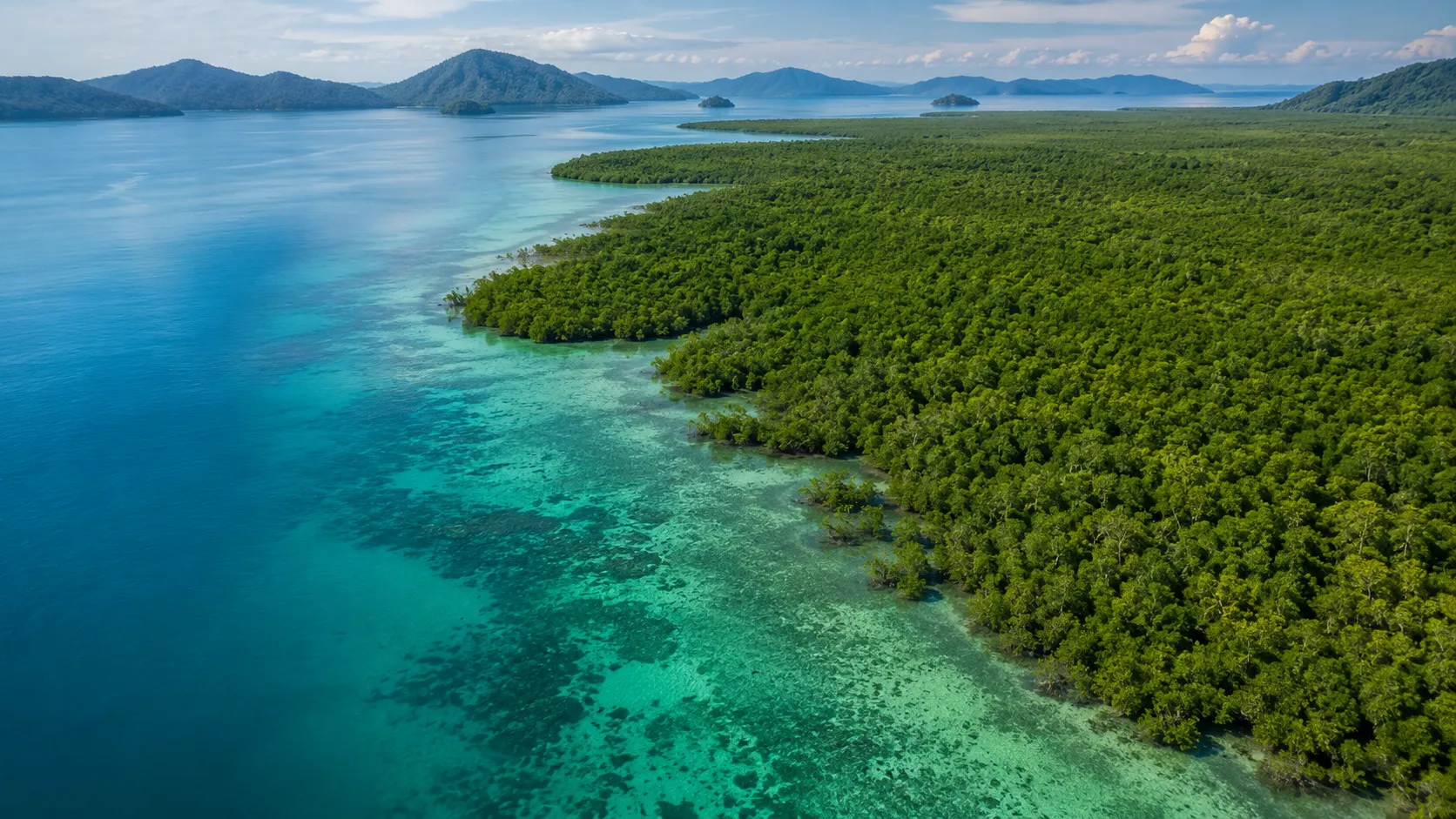
Structuring Marine Biodiversity Credits: The New Valuation Frontier
While carbon sequestration provides a robust baseline revenue stream, the true financial evolution of 2026 lies in the unbundling and independent commercialization of biodiversity gains. Historically, biodiversity was treated merely as a qualitative “co-benefit” bundled into a standard carbon credit. However, the rapid emergence of international nature-positive pledges and the institutionalization of the TNFD framework have catalyzed a distinct, highly capitalized market for standalone Biodiversity Credits (often termed biocredits or nature certificates).
A Marine Biodiversity Credit represents a scientifically quantified, permanently monitored gain in ecosystem integrity and species abundance within a defined marine habitat, entirely independent of carbon metric tons. When an institutional investor finances the restoration of a degraded coastal mangrove system, the return on investment is no longer limited to carbon sequestration.
By deploying environmental DNA (eDNA) sampling, underwater acoustic bio-logging, and high-resolution satellite benthic mapping, project developers can mathematically prove the return of endangered marine fauna, the expansion of coral reef connectivity, and the restoration of commercial fish nursery habitats.
Related Insights

These verified ecological uplifts are minted into discrete biodiversity units. Multinational food and beverage conglomerates, global maritime shipping lines, and agricultural conglomerates face intense regulatory pressure to mitigate their ecological footprint across international supply chains. These corporations purchase marine biodiversity credits to achieve net-positive nature targets, satisfy mandatory biodiversity offset requirements in European and North American jurisdictions, and de-risk their maritime operational licenses.
This dual-commodity revenue architecture—where a single hectare of restored coastal wetland simultaneously yields tradable carbon offsets and tradable biocredits—exponentially increases the revenue density of marine conservation concessions, expanding upon the methodologies utilized in the rural carbon credit frontier.
Institutional Governance, Blended Finance, and Sovereign Off-Take
Despite the compelling economics, executing commercial-scale coastal restoration requires overcoming substantial operational and capital expenditure (CapEx) hurdles. Replanting thousands of hectares of tidal mangroves is an intensive hydrological engineering exercise. It requires precise leveling of intertidal mudflats, restoring natural tidal hydrology, constructing specialized seedling nurseries, and deploying physical infrastructure to protect young shoots from hydrodynamic wave action and debris. To de-risk this upfront CapEx, sophisticated asset managers utilize structured blended finance frameworks.
In a properly structured institutional blue carbon vehicle, multilateral development banks—such as the World Bank or regional environmental funds—provide first-loss concessional capital or partial credit guarantees. This catalytic public funding absorbs the initial hydrological and biological establishment risks during the first three to five years of the project lifecycle.
Once the mangrove roots are stabilized and carbon sequestration rates are independently validated by third-party auditors (such as those applying Verra’s VM0033 methodology), senior private debt and equity tranches enter the capital stack to fund long-term project expansion and global marketing. This risk-sharing architecture is vital for institutionalizing marine assets, closely paralleling strategies seen in blended finance frameworks for rural micro-sovereign capital.
Related Insights


Crucially, the long-term biological permanence of a coastal concession is entirely dependent on localized social governance. If local coastal communities are systematically excluded from the economic value generated by the restored mangroves, the risk of timber poaching, illegal charcoal production, and aquaculture conversion soars. To neutralize this operational vulnerability, elite project developers structure binding, multi-decade revenue-sharing agreements with local village cooperatives (such as BUM Desa in Southeast Asia). By funneling a guaranteed percentage of carbon and biocredit proceeds directly into community healthcare, education, and sustainable artisanal fisheries, the local population is financially incentivized to act as armed, permanent stewards of the marine forest.

Strategic Advisory for Sovereign Wealth and ESG Fund Allocators
For sovereign wealth funds, global private equity directors, and corporate treasurers seeking to construct a resilient natural capital portfolio, deploying capital into marine ecosystems requires rigorous, specialized due diligence. We advise institutional investment committees to enforce three mandatory underwriting parameters prior to capital commitment:
- Verify Hydrological and Tenurial Integrity: Conduct exhaustive legal and geospatial audits to confirm that the target coastal zone is free from overlapping agrarian, industrial, or maritime shipping claims. Coastal land tenure in emerging markets is frequently ambiguous; investors must ensure unencumbered, statutory multi-decade concession rights issued directly by national ministries of forestry or fisheries, adhering to strict standards of carbon compliance and land tenure risk mitigation.
- Mandate Automated eDNA and Telemetry Baselines: Refuse to invest in projects relying solely on manual, infrequent visual biomass estimations. Insist on the deployment of real-time Internet of Things (IoT) tidal sensors and automated environmental DNA (eDNA) sampling protocols. This technological infrastructure provides the immutable, audit-proof biological data required by international compliance buyers, fulfilling the strictest requirements of automated RegTech compliance mandates.
- Enforce Strict Social Safeguard Escrows: Ensure that all community benefit-sharing disbursements are governed by smart contracts or transparent digital escrow accounts. Legally binding local cooperative integration is not merely a social public relations requirement; it is the primary physical security apparatus that guarantees the 100-year permanence of the standing marine biomass.
By rigorously enforcing these underwriting disciplines, institutional allocators can seamlessly navigate the complexities of marine ecological restoration. As international financial regulatory bodies, including the International Union for Conservation of Nature (IUCN), standardize global biodiversity metrics, early movers who have institutionalized high-integrity coastal concessions will control the most lucrative, defensible natural assets in the global economy. This strategic positioning is fundamental for funds dedicated to integrating ESG metrics into long-term capital allocation.
Conclusion
The imperative of Monetizing Blue Carbon and establishing standardized Marine Biodiversity Credits marks a definitive maturation point for global environmental finance. By transitioning from terrestrial carbon monocultures to complex, highly efficient coastal marine ecosystems, institutional investors can achieve unparalleled carbon permanence while capturing the immense emerging value of global biodiversity restoration. As sovereign wealth funds and corporate compliance buyers aggressively compete for high-integrity nature-based assets, the ability to engineer, structure, and verify coastal marine concessions will define the next generation of elite capital allocation. Those who master the biophysical, technological, and legal architecture of the marine frontier today will secure the foundational assets of a nature-positive global economy.